Important Disclaimer
eBikeGarageHQ provides educational content and estimates only. We are not certified installers, financial advisors, or electricians. Always consult with licensed professionals.
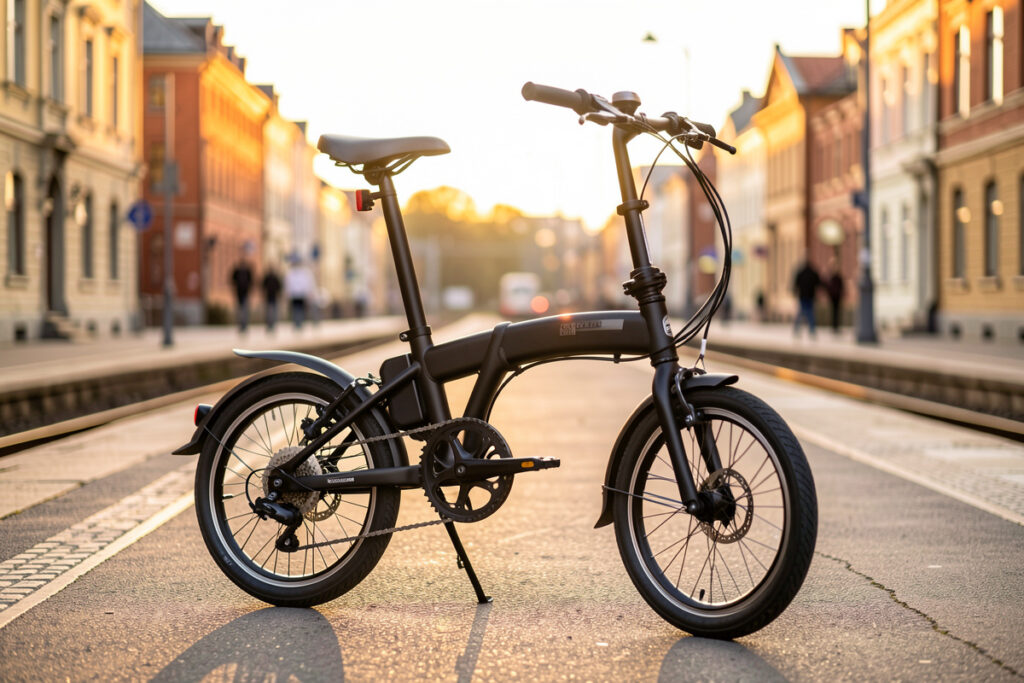
A folding e-bike is a compact, motor-assisted bike with a hinged frame and usually 16 to 20 inch wheels that packs down to roughly 80 x 65 x 40 cm so it rides a train, lives under a desk, or sleeps in a hallway. In the EU that means a 250 W motor cutting assist at 25 km/h; in the US it means a Class 1, 2 or 3 machine. The format trades a little ride composure for portability you will actually use.
I have spent four Swedish seasons measuring e-bikes the same way I measure every pack on my battery bench — Wh in, Wh per km out, range logged on a repeatable loop. Folding bikes are the class people get most wrong, because the spec sheet sells the fold and stays quiet about the ride. This guide is the honest version: what the format costs you, what it buys you, and how to pick one without believing a single marketing range number.
What a Folding E-Bike Actually Is
A folding e-bike is a small-wheel electric bike whose frame hinges at the mid-tube (and usually the stem) so it collapses to a carry-or-stow package, typically 16–20 kg, in 10 to 20 seconds. The defining trade is geometry: short wheelbase, small wheels, and a battery often hidden in the seatpost or a slim down-tube. That is what makes it portable and also what makes it ride differently from a full-size commuter.
Three things separate a folder from a normal e-bike, and all three follow from the fold. The wheels are small, so the bike accelerates quickly but feels nervous at speed. The wheelbase is short, so it is twitchy in a way a trekking bike never is. And the battery is small — most folders carry 250 to 500 Wh, where my Bosch mid-drive trekking bike runs 500 to 625 Wh. None of that is a flaw. It is the physics of a bike that has to disappear. The job is to know the trade before you buy it, not after. I cover the deepest of those trades — the small-wheel ride feel — in its own honest write-up, because it is the thing test rides are too short to reveal.
The EU and US Legal Frame (Get This Right)
In the EU and the UK, a road-legal e-bike (an EPAC) is pedal-assist only, capped at 250 W continuous and cutting motor assist at 25 km/h — no throttle-only propulsion above walking pace. In the US, e-bikes are sorted into Class 1 (pedal-assist to 20 mph), Class 2 (throttle to 20 mph) and Class 3 (pedal-assist to 28 mph). Folders sold in both markets are built to whichever frame applies, and the difference is not cosmetic.
This matters for folders more than any other class, because they are the bikes people most want to throttle through a station forecourt or carry onto regulated transport. I ride under the EU 250 W / 25 km/h rule every day, and I write to it: a “750 W folder with a thumb throttle” is a US Class 2 machine and is simply not road-legal where I live. If you are in the EU, a compliant folder is 250 W, assist to 25 km/h, pedal-first. If you are in the US, decide which class your local paths allow before you fall for the faster spec. A conversion or an imported high-power folder can quietly put you outside the law — I lay out that reality in the EU conversion legality guide. Whichever side of the Atlantic you are on, the legal class is a hard spec, not a preference, and a wrong claim here is both a tell and a genuine harm.
| Aspect | EU / UK (EPAC) | US Class 1 | US Class 2 | US Class 3 |
|---|---|---|---|---|
| Motor power (nominal) | 250 W continuous | typ. 250–750 W | typ. 250–750 W | typ. 250–750 W |
| Assist type | Pedal-assist only | Pedal-assist | Throttle + pedal | Pedal-assist |
| Assist cut-off | 25 km/h (15.5 mph) | 20 mph (32 km/h) | 20 mph (32 km/h) | 28 mph (45 km/h) |
| Throttle to speed | No (walk-assist only) | No | Yes, to 20 mph | Usually no |
| Typical folder fit | Commuter / train | Path + commute | Casual / cargo | Faster commute |
Wheel Size: 16, 20, or Why It Matters
Wheel size is the single biggest ride-feel variable on a folder, more than motor or even weight. A 16-inch folder packs smallest and feels the most nervous; a 20-inch folder is the practical compromise most good commuter folders use; anything bigger stops folding small enough to matter. Small wheels also hit potholes harder, because the same bump is a bigger fraction of the wheel.
On my test loop I can feel the difference inside the first hundred metres. The 16-inch bike wants constant small steering corrections — your hands never quite rest. The 20-inch wheel settles down enough that after a season you stop noticing it. Neither is “wrong,” but the marketing photo of someone gliding hands-relaxed on a 16-inch folder is fiction at commuting speed. Tyre choice rescues a lot of this: a 20-inch folder on a quality 2.0–2.4 inch tyre run at sensible pressure rides far better than the same bike on the hard, narrow rubber it shipped with. I go deep on exactly how small wheels behave — speed wobble, pothole strike, the pressure window — in the small-wheel ride-feel guide. The short version: pick 20-inch unless your only constraint is the size of the fold.
Weight: The Number That Decides If You’ll Carry It
Most folding e-bikes weigh 18 to 24 kg, and that number, not the fold time, decides whether the bike actually leaves the house folded. A 23 kg folder folds beautifully and is still miserable to carry up two flights of stairs or lift over a ticket barrier. The lighter end (under 18 kg) is what makes the format keep its promise, and getting there usually costs battery capacity.
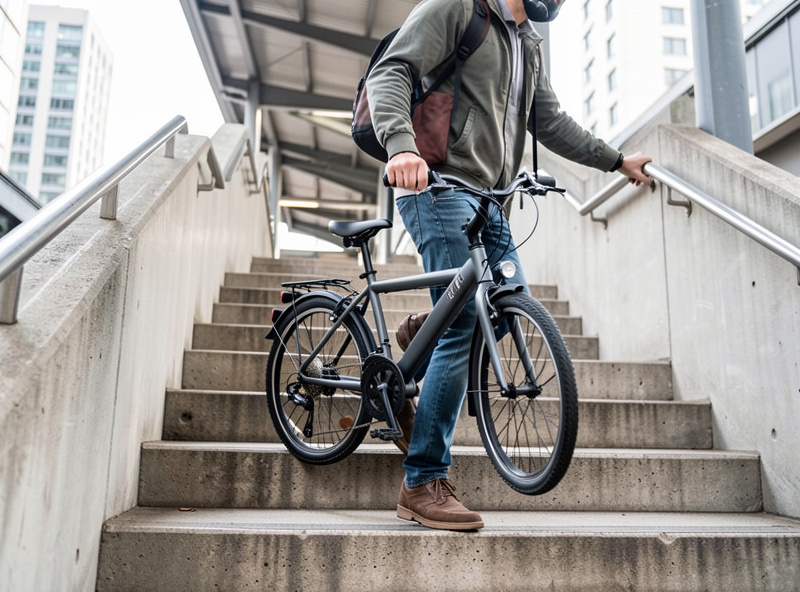
This is the trade nobody tells you on the showroom floor. The battery is the heaviest single component, so a lighter folder is almost always a smaller-Wh folder — you are trading carry weight for range, and Wh is Wh whether it is on a bike or a wall. I have hauled a 22 kg hub-drive folder up a station staircase enough times to know that the spec I should have read first was mass, not range. If you will genuinely carry the bike — stairs, trains, a third-floor flat — weight is the first filter, and I break down the real-world carrying truth (where the mass sits, how the fold balances in the hand, why “foldable” and “carryable” are different claims) in the folding e-bike weight guide. If the bike never leaves the ground — ride to the car, fold into the boot — you can chase range instead.
Range Reality on a Folder
A folder’s honest range is usually 30 to 55 km on a real commute, not the 70–100 km on the box, because folders carry small batteries (250–500 Wh) and the box number assumes flat ground, low assist, a light rider and a warm day. Budget your range from Wh, not from marketing: at a typical 12–18 Wh/km in mixed riding, a 360 Wh folder gives you roughly 20 to 30 km of genuine, repeatable range.
I treat every range claim as fiction until I have logged it, and folders are the worst offenders because the small battery makes the gap between claim and reality proportionally larger. My method is the same one I use across the whole site: same loop, logged temperature, logged assist level, energy measured at the wall on the recharge. Do that and a folder’s range stops being anxiety and becomes arithmetic — the difference I unpack in range anxiety vs range math. Two more things crush a folder’s range specifically: cold and assist greed. Winter alone can strip 20–35% off usable range — I have the winter range log to prove it — and small-battery bikes feel that loss hardest. Before you trust any number, run it through the real-world range calculator and read how I tested manufacturer claims against my own log. The full method lives in the range guide and the Wh-per-km by terrain breakdown.
Hub Motor vs Mid-Drive on a Folder
Almost every folding e-bike uses a rear hub motor, not a mid-drive, and for this format that is usually the right call. Hub motors are cheaper, need no chainline compromise on an already-tiny frame, and survive the abuse of being folded and knocked about. A mid-drive folder exists but is rare and expensive, and the short cranks and small wheels blunt the mid-drive’s main advantage.
I own both a Bosch mid-drive and a hub-drive bike, and I converted a third myself, so I will defend mid-drives all day on a trekking bike — the torque sensor ruins you for cadence sensors and it climbs better. But on a folder the calculus changes. The frame is too small and the wheel too little to exploit the mid-drive’s hill advantage, and the extra cost and weight fight the whole point of the bike. A good hub folder with a genuine torque sensor (not a cheap cadence sensor) is the sweet spot. If you want the full argument, the hub vs mid-drive guide is the deep dive, the torque vs cadence sensor piece explains why the sensor matters more than the motor location, and hub or mid-drive for commuting covers the everyday verdict. Where the mass sits matters too, and a folder’s battery placement changes the balance in the hand — see weight distribution and ride feel.
The Train and Multimodal Case
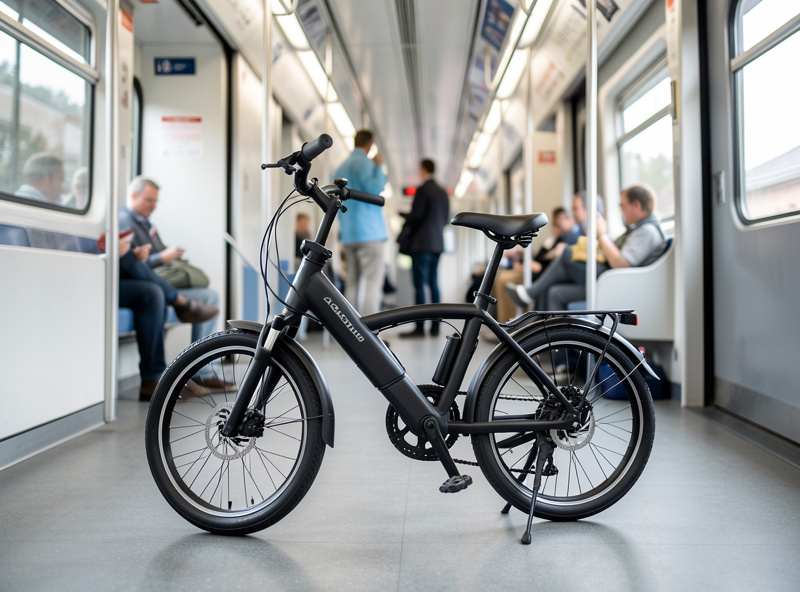
The folder’s killer feature is multimodal commuting: ride to the station, fold in 15 seconds, carry it aboard as luggage, ride the last mile at the other end. A full-size e-bike needs a bike reservation, a bike carriage and often a fee; a folded bike, on most networks, travels free as hand luggage. That single difference is why folders exist and why a rail commuter should look here first.
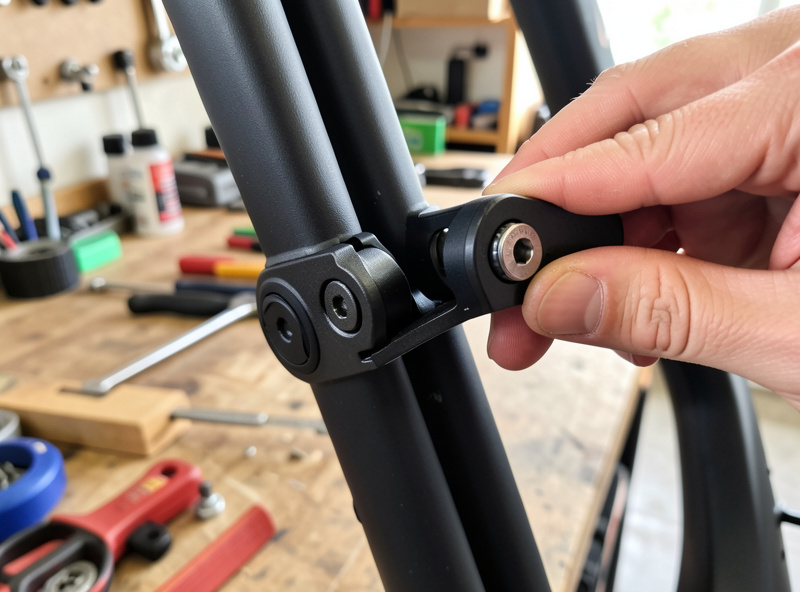
I do this regularly, and the things that make it work are unglamorous: a fold that latches in one motion without trapping your fingers, a fold that stays folded (a stray pedal swinging into a stranger’s shin on a packed carriage is how you lose the privilege), and a weight you can hold one-handed while the other hand grabs a pole. The exact requirements — fold footprint, carriage rules, where to stand, how to protect the drivetrain in a crowded vestibule — get their own full treatment in the train-commute guide. If your commute has a train in the middle of it, that is the article to read before the spec sheets.
What to Look For When Buying
Buy a folder on five specs in this order: weight (can you carry it?), wheel size (20-inch unless the fold is everything), sensor type (torque, not cadence), battery Wh against your real route, and fold quality (latches that survive a season). Price tracks all five, and a sub-€800 folder almost always cheats on the sensor and the latches first.
The honest budget tiers look like this. Under roughly €700 / $800 you are buying a cadence-sensor hub folder with a small battery and hinges I would inspect monthly — fine for short, flat, occasional trips. The €1,000–1,800 / $1,200–2,000 band is where torque sensors, decent batteries and trustworthy folds arrive, and it is where most riders should shop. Above that you are paying for lighter weight, brand-name drive systems and better folds. My standing advice across the whole garage applies here too: spend the money on the things that wear or carry load — the latches, the brakes, the battery — not on the paint. And maintain it: a folder lives a harder life than a parked commuter, so the brake-pad, hinge and torque-check rhythm in my maintenance guide matters more here, not less.
Folding E-Bike vs Full-Size Commuter
Choose a folder when you carry, store, or combine the bike with transit; choose a full-size commuter when the bike rides door-to-door and lives in a shed. The folder wins on portability and storage and loses on ride composure, range and big-hill comfort. There is no universally better answer — only the right tool for how your commute is actually shaped.
| Factor | Folding E-Bike | Full-Size Commuter |
|---|---|---|
| Wheel size | 16–20 in | 27.5–29 in |
| Typical battery | 250–500 Wh | 500–750 Wh |
| Honest range | 30–55 km | 50–90 km |
| Weight | 18–24 kg | 22–28 kg |
| Folds for transit | Yes (key feature) | No |
| Ride composure at speed | Nervous | Planted |
| Stairs / flat storage | Workable | Awkward |
| Best for | Train + last mile, small flat | Door-to-door, hills |
Accessories That Earn Their Place on a Folder
A folder needs fewer accessories than a full-size bike, but three earn their keep: a carry strap or shoulder pad (because you will carry it), compact dynamo-free lights you can leave clamped through a fold, and a frame strap or Velcro keeper so the bike stays folded when you carry it. Skip the heavy lock — a folder’s security strategy is “take it with you,” not “lock it well.”
Because the bike comes indoors, you can run a lighter security setup than a parked commuter — though if you must leave it, the two-lock strategy still applies. For the Nordic four-season folder, the loadout I actually run is good clamp-on lights and proper fenders; my winter lights guide and the fenders, racks and panniers guide cover what survives a wet autumn. And mind the battery: charge habits matter more on a small pack because every cycle is a bigger fraction of its life — the battery care guide and the charging cost math apply directly. A quick directional note on the gear below.
As an Amazon Associate I earn from qualifying purchases. If you want to browse the format, start with a 20-inch folding e-bike, a proper bike carry strap for the station haul, and a set of rechargeable commuter lights. I do not link a battery you cannot verify — buy packs from the bike’s own maker, and never build or modify a lithium pack yourself.
A Word on Battery Safety
The one non-negotiable with any folder: do not build, rewire, or modify the battery pack, and only charge it with the charger it shipped with. Folders use the same lithium cells as any e-bike, and the failure mode of a mishandled pack is a fire, not an inconvenience. This is the same discipline I keep on my stationary battery bench, where Wh and BMS behaviour are the daily vocabulary.
I understand cells, BMS behaviour and charge curves well enough to tell you exactly where the line is: charging habits, storage charge level and winter handling are yours to manage and genuinely extend pack life — opening a pack, balancing cells by hand, or bodging a charger is not, ever. A folder that gets carried, dropped and folded lives a rougher life than a parked bike, so treat any dented or swollen pack as retired. The care that does help — the half-charge winter storage, the 80% daily ceiling — lives in the battery care guide, and it is the kind of literacy that, frankly, most folder buyers never get.
Frequently Asked Questions
Are folding e-bikes any good for daily commuting?
Yes, especially for multimodal commutes that involve a train, a car boot, or a small flat. A good torque-sensor folder with 20-inch wheels and a 360 to 500 Wh battery handles a 15 to 25 km daily round trip comfortably. The trade is ride composure: small wheels feel nervous at speed compared with a full-size commuter.
How far can a folding e-bike really go on one charge?
Plan for 30 to 55 km of honest range, not the 70 to 100 km on the box. Folders carry small 250 to 500 Wh batteries, and at a realistic 12 to 18 Wh per km, a 360 Wh folder gives roughly 20 to 30 km of repeatable range. Cold weather strips another 20 to 35% off that.
How much does a folding e-bike weigh and can I carry it?
Most weigh 18 to 24 kg. Under 18 kg is genuinely carryable up stairs or onto a train; above 22 kg is a real haul. Weight, not fold time, decides whether the bike actually gets carried, and lighter folders almost always mean a smaller battery and less range.
Is a folding e-bike legal to ride and take on a train?
In the EU and UK a road-legal folder is pedal-assist only, 250 W, cutting assist at 25 km/h. In the US it is a Class 1, 2 or 3 machine. Folded, most rail networks carry it free as hand luggage where a full-size bike needs a reservation and fee. Always confirm your local class and carriage rules.
Should a folding e-bike have a hub motor or a mid-drive?
For a folder, a rear hub motor is usually the right choice. It is cheaper, needs no chainline compromise on the tiny frame, and survives folding. A mid-drive’s hill advantage is blunted by small wheels and short cranks. Prioritise a genuine torque sensor over the motor location.
What wheel size is best on a folding e-bike?
Choose 20-inch unless the only thing that matters is the smallest possible fold. A 16-inch folder packs smaller but feels nervous and hits potholes harder. A 20-inch wheel settles down enough to forget about after a season, especially on a quality 2.0 to 2.4 inch tyre at sensible pressure.