Important Disclaimer
eBikeGarageHQ provides educational content and estimates only. We are not certified installers, financial advisors, or electricians. Always consult with licensed professionals.
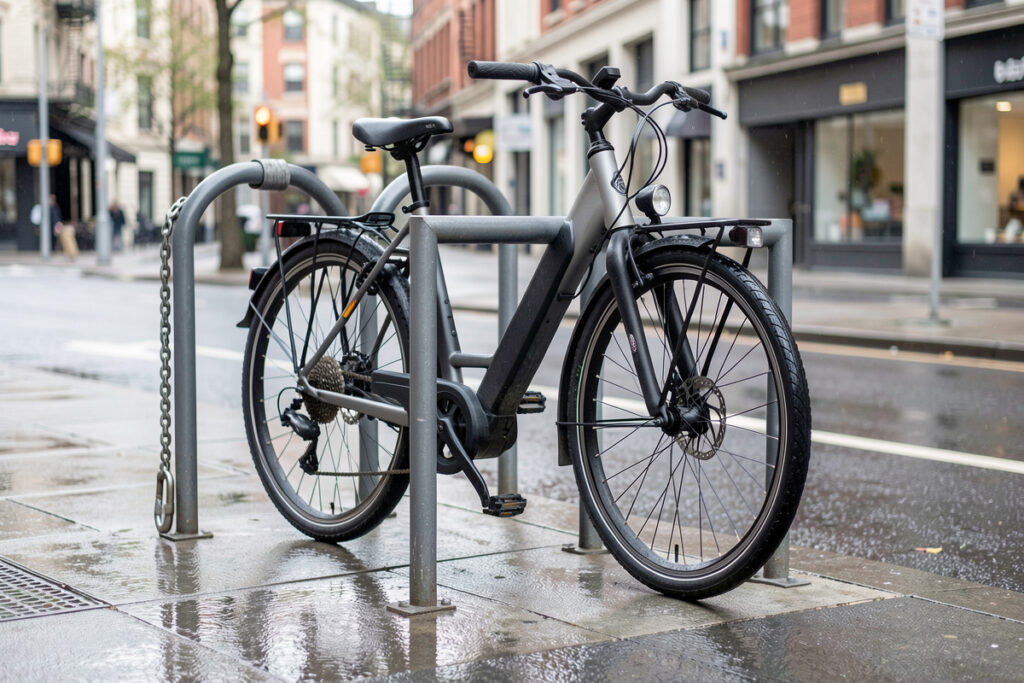
The two-lock e-bike security strategy is simple: carry two locks that defeat different tools — typically a hardened U-lock plus a chain or folding lock — and use both every time you park. A thief who shows up with one cutter is stopped cold, because beating your bike now means carrying and using two different attacks — turning a single ten-second bolt-cutter snip into two separate grinder cuts and well over a minute of sparks and noise in public — and that is enough to send most of them to an easier target.
I park an expensive bike in public most days, and the two-lock rule is the discipline that has kept it mine. This guide is about the daily commuter routine — how to actually execute the strategy at a rack, at work, and on transit — not the deep theory. For the broader anti-theft picture including trackers, battery theft and home storage, see my full e-bike security guide; this is part of the commuter loadout because a bike you can’t park safely is a bike you stop riding.
Why Two Locks Beats One Expensive Lock
Every lock can be beaten with the right tool and enough time. A U-lock resists bolt cutters but can be attacked with a portable angle grinder; a chain resists some attacks but is bulkier; a cable lock stops nobody serious. The point of two locks of different types is that no single tool defeats both quickly. A thief carrying bolt cutters is stopped by the U-lock; a thief carrying a grinder still has to make multiple cuts and spend far more time exposed, and time is the thing thieves cannot afford in public.
Spending the same money on one premium lock does not buy this, because it still falls to a single attack. Two mid-to-high locks of different types force two attacks, two tools, and double the time, which is a far better deterrent than one gold-rated lock alone. The deterrent is not “unbeatable” — nothing is — it is “not worth it compared to the next bike on the rack.”
What to Lock, and to What
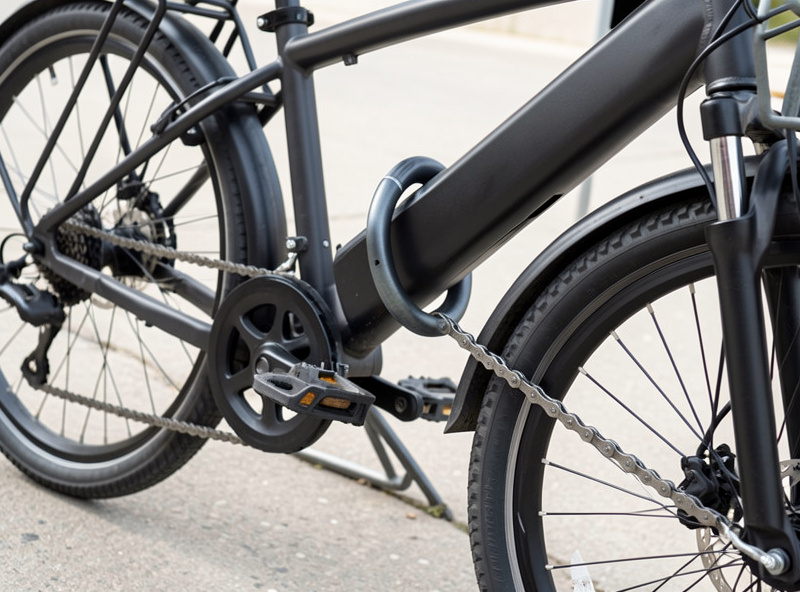
How you lock matters as much as what you lock with. The frame is the priority — a thief who frees the frame has your bike, so the primary lock goes through the rear triangle and a fixed, immovable object, ideally capturing the rear wheel too. The second lock secures the front wheel, which is quick-release on most bikes and otherwise walks away on its own. I run the U-lock through the frame and rear wheel to the rack, and the chain through the front wheel and frame.
The anchor matters as much as the locks. Lock to a proper ground anchor or a solid bike rack bolted down, never to something a thief can lift the bike over the top of or unbolt. Fill the U-lock’s interior space so there is no room to get a tool or a jack inside — a U-lock with a big air gap is easier to attack than a full one. Position the keyhole facing down and the lock body off the ground, because a lock lying on the pavement can be smashed against it.
The Daily Commuter Locking Drill
The strategy only works if you do it the same way every time, including the day you are late and it is raining. My drill is fixed: rear triangle and rear wheel to the anchor with the U-lock, front wheel and frame with the chain, both keyholes down, then a quick tug on the bike to confirm it is truly captured and cannot be lifted free. It takes maybe twenty seconds once it is habit, and habit is the whole point — the bike that gets stolen is the one locked carelessly because the owner was in a hurry.
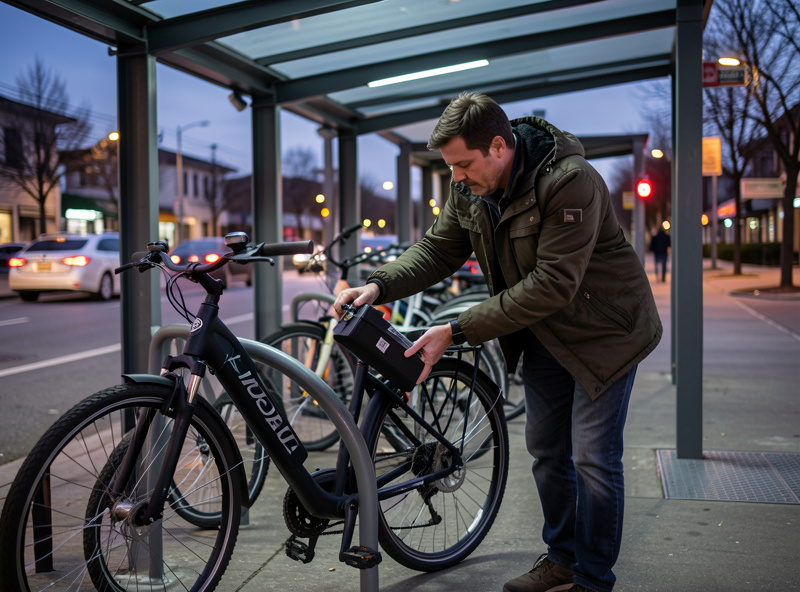
For a long park where the bike sits all day at work or a station, I add two steps: take the display or the battery with me if they remove easily, because a stripped e-bike is far less attractive and a loose battery is a theft target on its own, and I park where there is footfall and ideally a camera rather than a quiet corner. Visibility deters; isolation invites. These small habits, repeated, are what separate a bike that is still there at 17:00 from one that is not.
Choosing Your Two Locks
The goal is two locks that fail to different tools and that you will actually carry, because the best lock is the one that is on the bike rather than left at home for being too heavy. My pairing is a compact hardened U-lock as the primary and a hardened chain or a folding lock as the second. The U-lock gives the strongest single resistance; the chain or folding lock adds flexibility to reach an awkward anchor and forces the second, different attack.
Look for an independent security rating on each lock — Sold Secure Diamond or Gold in the UK, or the Dutch ART foundation’s star ratings, are the benchmarks worth paying for — and accept that real security weighs something — a serious lock is heavy, and that weight is the price of the deterrent. I carry mine in a pannier or a frame mount rather than on my back. As an Amazon Associate I earn from qualifying purchases. To browse the primary lock type, a search for hardened bike U-locks shows the rated U-locks I build the strategy around. Pair them with the deeper measures in my security guide and you have a layered defense, not a single point of failure.
Where the Two-Lock Strategy Sits in the Bigger Picture
Two locks are the front line, but they are one layer. A determined thief with a grinder and no audience can beat almost anything, which is why locking is paired with recovery and denial: a hidden tracker so a stolen bike can be located, removing the battery and display so what is left is worth less, and secure storage at home where the bike spends most of its life. Locks buy time and deter the opportunist; the other layers handle the determined thief and the worst case.
For the full layered approach — trackers that actually work, battery theft prevention, insurance, and home storage — my complete e-bike security guide covers it, and the deeper two-lock rule breakdown goes further on lock ratings. The takeaway for a commuter is the discipline: two different locks, the same drill every park, battery off for long stays. Do that and you have done the thing that stops the vast majority of e-bike thefts before they start.
Frequently Asked Questions
Why use two locks instead of one good e-bike lock?
Every lock falls to the right tool given time. Two locks of different types mean no single tool defeats both, so a thief must carry two different attacks and spend double the time exposed in public. That deterrent is stronger than one premium lock, which still falls to a single attack. The goal is to be more trouble than the next bike on the rack.
What two locks should I use on an e-bike?
A compact hardened U-lock as the primary plus a hardened chain or folding lock as the second. They fail to different tools, so beating both takes two attacks. Choose locks with independent security ratings, and accept that serious locks are heavy. Carry them in a pannier or frame mount rather than on your back so you actually bring them.
What part of the e-bike should I lock first?
The frame is the priority, through the rear triangle to a fixed anchor, capturing the rear wheel if you can. A thief who frees the frame has your bike. The second lock secures the front wheel, which is usually quick-release and otherwise walks away on its own. Lock to a bolted-down rack or ground anchor, never something the bike can be lifted over.
Should I remove the e-bike battery when parking at work?
For a long park, yes if it removes easily. A stripped e-bike is far less attractive to a thief, and a loose battery is a valuable theft target on its own. Take the display too if it detaches quickly. Combined with two locks and parking where there is footfall and a camera, this makes your bike a poor target for an all-day park.
Can a thief still steal a bike with two locks?
A determined thief with an angle grinder and no audience can beat almost any lock, so two locks are one layer, not a guarantee. They stop the opportunist and buy time against the determined. Pair them with a hidden tracker, a removed battery, and secure home storage so locking handles the common case and recovery handles the worst case.