Important Disclaimer
eBikeGarageHQ provides educational content and estimates only. We are not certified installers, financial advisors, or electricians. Always consult with licensed professionals.
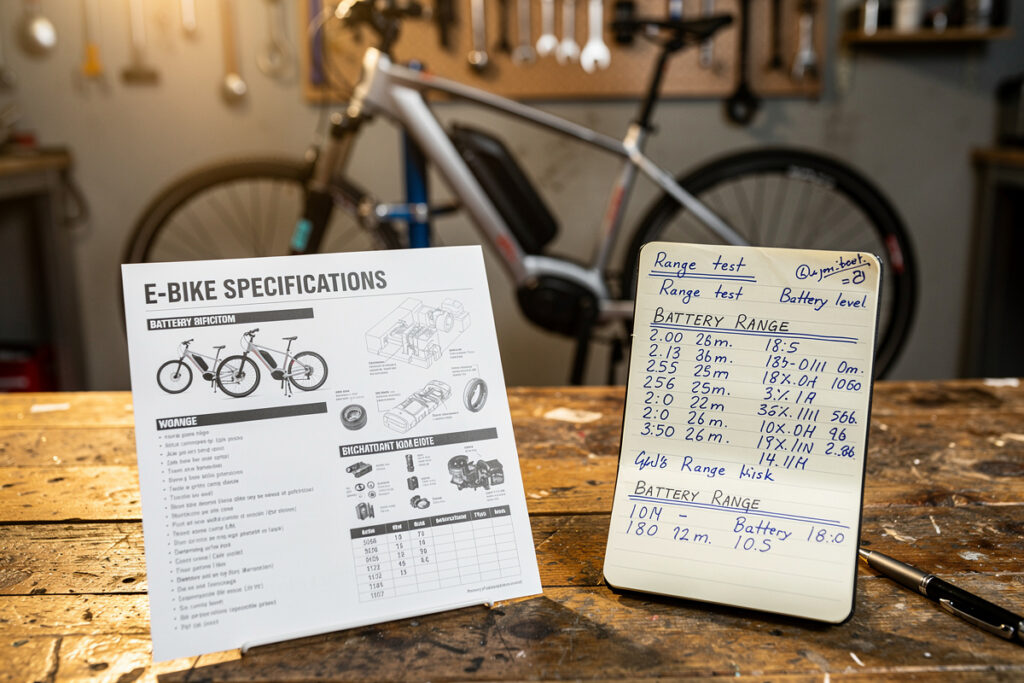
Manufacturer e-bike range claims read high because they’re best-case numbers, not everyday ones. The typical claim assumes a light rider on flat ground at the lowest assist in mild weather — conditions almost nobody actually rides in. When I put published range figures next to my own logged numbers from real conditions, the brochure number consistently behaves like a ceiling you’ll rarely touch, not an average you can plan around.
This isn’t an accusation that brands lie; it’s a translation guide. The claim is technically achievable and genuinely unrepresentative, and once you understand how it’s generated you can convert it into a number you can trust. This guide is the reality-check chapter of the range cluster, built on the same logging discipline behind the broader e-bike range guide and the real-world range calculator.
How Range Claims Are Generated
A headline range figure is produced under conditions chosen to maximise it. That usually means the lowest assist level, a light test rider, flat ground, mild temperature, smooth tarmac, and steady gentle speed — every variable set to its most economical position simultaneously. Each choice is individually defensible; stacked together they produce a number you’d only match on a perfect day doing everything to stretch the battery.
The trouble is that real riding sets those variables the other way. You ride at a useful assist level because that’s why you bought an e-bike, on the terrain you actually live on, in the weather you actually get, at your actual weight. Every one of those shifts pushes Wh/km up and range down. The claim isn’t wrong for its conditions; it’s just measuring a ride almost nobody takes.
Claimed vs Logged: The Pattern
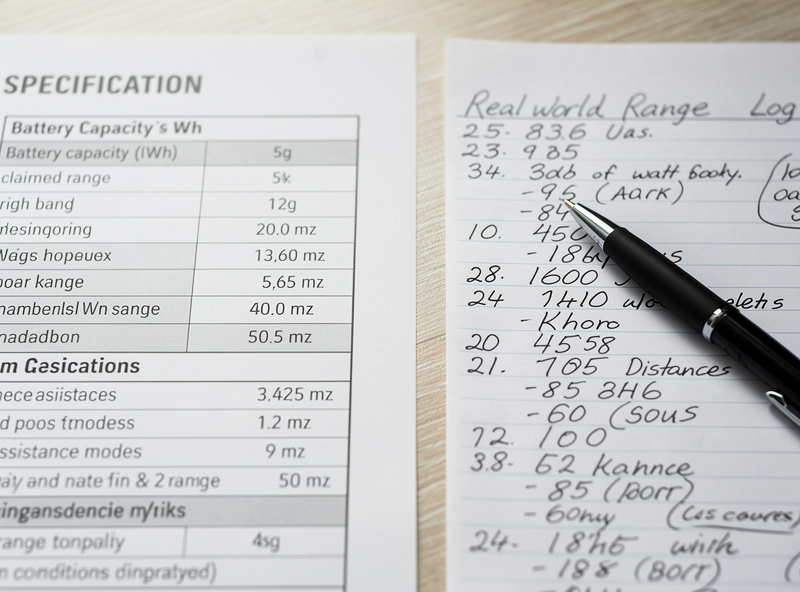
Rather than name specific models — specs and claims change with every model year — here’s the consistent pattern I see when I compare a published claim to what the same class of bike returns on my logged loop. The gap is widest exactly where real riders spend their time.
| Riding condition | Where the claim lives | What my log shows |
|---|---|---|
| Lowest assist, flat, mild, light rider | At or near the claim | Achievable on a perfect day |
| Medium assist, mixed real commute | Well below the claim | The honest everyday number |
| High assist or hills | Roughly half the claim or less | Where many real rides land |
| Cold winter + headwind | A fraction of the claim | The worst-case planning column |
The lesson holds across brands and motor systems: trust the watt-hours and your own loop, treat the brochure as the top of the range, and plan to the column that matches how you actually ride. The detailed consumption figures behind that everyday number live in my Wh per km by terrain log.
How to Translate a Claim Into a Real Number
You don’t need to distrust a claim — you need to convert it. The cleanest way is to ignore the range figure and look at the battery’s watt-hours instead, because that’s the honest, comparable spec. Take the usable energy (about 90% of rated Wh) and divide by a realistic Wh/km for your riding. A 500 Wh bike claiming a big headline range is really ~450 Wh usable; at a real-world 12 Wh/km that’s ~37 km, whatever the brochure says.
This is why I always tell people to shop on watt-hours, not on advertised range. Two bikes can quote wildly different range numbers while carrying nearly the same battery, simply because they tested under different assumptions. The watt-hour figure can’t be spun the same way — it’s the same unit I use on every pack on my battery bench, and it lets you compare bikes honestly and predict your own range before you ever ride one.
What to Actually Check Before Buying
If range matters to you, a few honest checks cut through the marketing better than any claimed number:
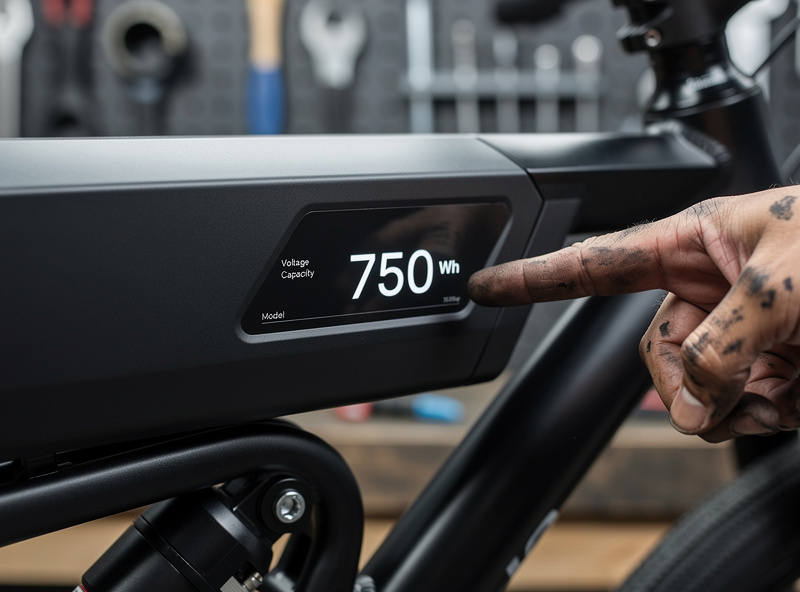
- Find the battery’s watt-hours (volts × amp-hours if only Ah is listed). This is your real comparable figure.
- Estimate your own Wh/km from your terrain and riding style, then do the division yourself.
- Ask under what conditions the range was measured — if it’s the lowest assist on flat ground, mentally halve it for hilly real riding.
- Check the sensor type — a torque sensor tends to be more frugal than a cadence sensor at the "same" assist, affecting real range.
- Plan for your worst regular conditions, not the best — cold and hills are where claims fall apart.
Do that and you’ll never be surprised by a range number again. A test ride helps too, but a test ride on a sunny flat car park tells you about as much as the brochure — it’s the watt-hour maths that travels home with you.
Claims, Speed and Legal Class
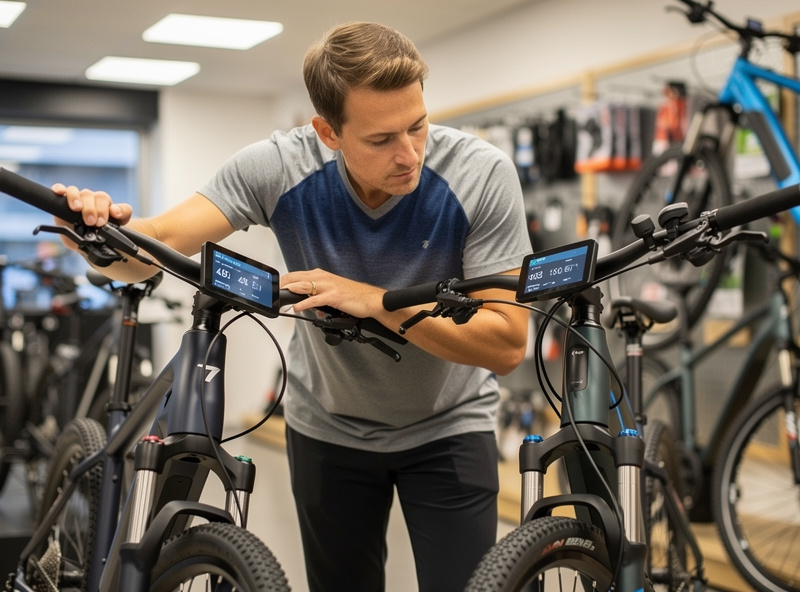
Legal class quietly shapes how optimistic a claim can be. An EU pedelec assists only to 25 km/h on a 250 W motor, so its economical test speed is naturally modest and its claim is somewhat closer to reality. A US Class 3 bike assists to 28 mph (~45 km/h); if its range was measured at a gentle speed but you ride near the cap, the drag penalty widens the gap between claim and reality considerably. Whatever the class, the watt-hour translation still works — just budget a higher Wh/km the faster you habitually ride. Confirm your local rules; this describes how the classes are defined, not legal advice.
Related Guides
- E-Bike Range Guide — the full cluster and planning grid.
- Real-World Range Calculator — turn a claim into a number you trust.
- Wh per km by Terrain — the everyday consumption figures.
- Cold Weather Range Loss — where claims fall apart hardest.
Frequently Asked Questions
Why are e-bike manufacturer range claims so high?
Claims are best-case figures measured at the lowest assist, with a light rider on flat ground in mild weather. Each assumption is defensible alone, but stacked together they produce a number you would only match on a perfect economy-focused ride.
How accurate are advertised e-bike range numbers?
They are accurate for their test conditions but rarely representative. In medium assist on a real mixed commute, range commonly lands well below the claim, and on hills or in cold weather it can be roughly half the headline figure or less.
Should I trust e-bike range claims when buying?
Trust the battery watt-hours instead. Take usable energy, about 90 percent of rated Wh, and divide by a realistic Wh per km for your riding. That gives an honest range you can compare across bikes regardless of how each claim was measured.
Why do two e-bikes with similar batteries claim different ranges?
Because they tested under different assumptions. Assist level, rider weight, terrain and speed all change the result, so range claims are not directly comparable. The watt-hour rating is the spec that lets you compare bikes honestly.
How do I estimate the real range of an e-bike before buying?
Find the battery watt-hours, multiply usable energy by your expected riding conditions, and divide by a realistic Wh per km. For hilly or cold riding, mentally halve a flat-ground claim. Plan for your worst regular conditions, not the best.
More from This Cluster
- “E-Bike Range Anxiety vs Range Math: Trusting the Numbers”
- “E-Bike Assist Level and Battery Use: Where the Wh Go”
- “Cold Weather E-Bike Range Loss: What a Winter Log Shows”
- “E-Bike Wh per km by Terrain: A Field-Logged Energy Budget”
- “E-Bike Range Calculator: Real-World Numbers
- “E-Bike Range Guide: How Far You Actually Go on a Charge”