Important Disclaimer
eBikeGarageHQ provides educational content and estimates only. We are not certified installers, financial advisors, or electricians. Always consult with licensed professionals.
E-bike range anxiety is almost always a math problem dressed up as a feeling. The worry comes from riding blind — not knowing how far you can actually go — and it disappears the moment you replace the guess with a number. If you know your loop is 30 km, you burn ~12 Wh/km, and your usable energy is ~450 Wh, you have a comfortable margin and you can prove it before you leave home.
I used to feel that flicker of doubt on longer rides too, until I started logging range properly and the doubt simply had nowhere to live. This is the mindset piece of the range cluster: how to convert anxiety into arithmetic, what margin to keep, and why the battery gauge is the thing lying to you. It sits on top of the methods in the broader e-bike range guide and the real-world range calculator.
Why the Battery Gauge Feels Untrustworthy
The root of most range anxiety is that the battery display doesn’t fall in a straight line. Lithium voltage stays high for a long stretch, then drops faster near the bottom, so a four- or five-bar gauge can sit full for ages and then shed its last bars quickly. That non-linear behaviour feels like the battery "suddenly" dying, which is exactly the experience that breeds dread.
A watt-hour budget ignores the drama entirely. Energy in, energy out: 450 Wh usable, 12 Wh/km, 37 km available — full stop. The gauge can wobble all it likes; the arithmetic doesn’t. Once you’ve ridden a few loops and watched the maths keep holding, you stop reading the gauge as an oracle and start treating it as a rough confirmation of a number you already trust. That shift, from watching a needle to knowing a figure, is the whole cure.
The Pre-Ride Calculation
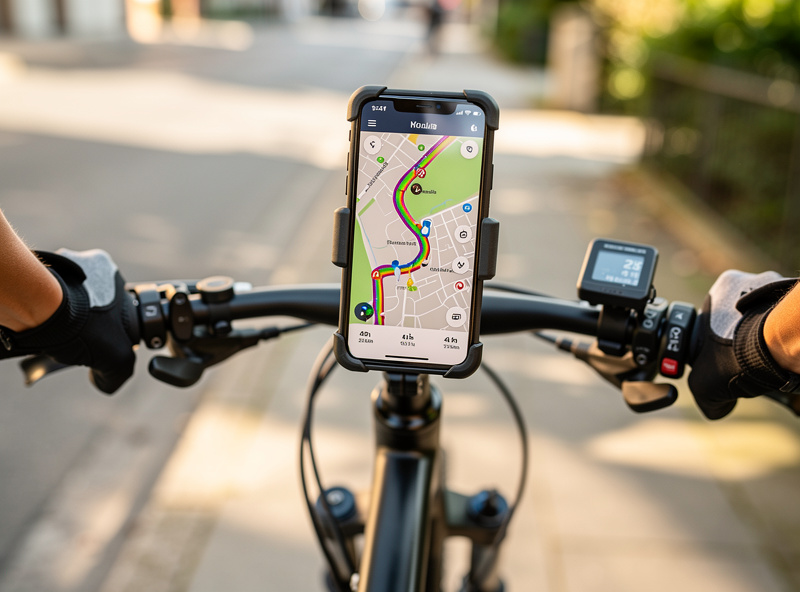
Beating range anxiety takes about thirty seconds of maths before you leave. You need three numbers: your route distance, your usable battery energy, and your Wh/km for the conditions. Multiply distance by Wh/km to get the energy the ride will cost, and compare it to your usable energy. If the ride costs less than you have, with margin, you’re fine — and now you know it instead of hoping it.
Worked through: a 25 km round trip at 12 Wh/km costs 300 Wh. On a 450 Wh usable pack, that leaves 150 Wh in hand — a third of the battery as margin. No anxiety is warranted. But run the same trip in winter at 22 Wh/km and it costs 550 Wh, more than you have — and the calculation just saved you from a dead battery 4 km from home. The maths doesn’t only reassure; it warns you when the worry is actually justified, which is when it matters most.
The Margin I Keep
I plan rides to use no more than about 80% of usable energy, keeping roughly a fifth in reserve. That margin absorbs the things you can’t predict: a surprise headwind, a detour, a colder evening than the forecast promised, a stretch of soft gravel. It’s the difference between a calculation that’s technically correct and one that survives contact with a real ride.
The reserve also protects the pack. Routinely running a lithium battery to completely flat isn’t great for it, so a habitual 20% buffer is good for both your nerves and the battery’s long-term health — the same storage-and-charge discipline I keep on every pack on my battery bench. Plan to the buffer, not to the edge, and the rare ride where you dip into it feels like a safety net rather than a near miss.
Logging Is What Actually Kills the Fear
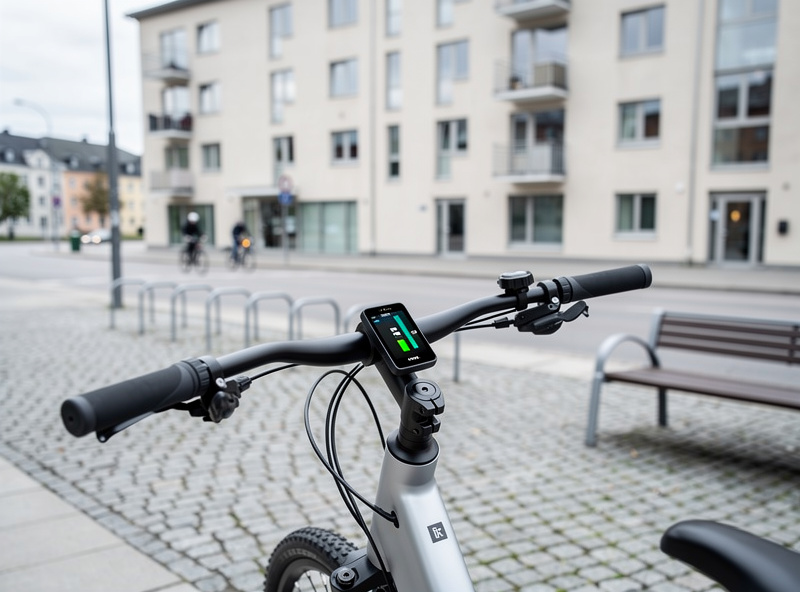
You can’t calculate with numbers you don’t have, so the foundation of a fearless ride is one honest log. Ride a fixed loop, note the watt-hours used and the kilometres covered, and you have your real Wh/km for those conditions. Do it across a few rides and seasons and you’ll own a small personal table — flat-summer, hilly-summer, cold-winter — that turns every future ride into a solved problem.
This is the practical antidote, and it’s why I push logging so hard across this whole site. Anxiety is uncertainty; a log is certainty. The deeper method, including how to read watt-hours at the wall, lives in my Wh per km by terrain breakdown and feeds straight into the calculator. Once the table exists, range anxiety stops being a feeling you manage and becomes a number you already checked.
If you’ve never logged a ride, the first one is almost comically simple and it’s the ride that ends the fear for good. Charge to full, pick a route you know the distance of, and ride it the way you normally would — don’t baby it for the test, because you want your real consumption, not a record attempt. At the end, read the watt-hours used from your display (or note the percentage drop and multiply by your usable Wh) and divide by the kilometres you covered. That one number is your Wh/km for those conditions, and from that moment on every ride on similar ground is a solved equation. I still remember how much calmer my commuting got the week I finally had my own figure written down instead of a feeling in my chest. It really is that small a piece of work for that large a payoff — thirty seconds of arithmetic at the end of one loop, and the dread is simply gone. One more variable worth solving before you commit to a motor type: hub and mid-drive motors behave very differently on a real urban commute, and the hub or mid-drive for commuting guide works through which choice suits stop-start city riding versus longer mixed routes.
The Habits That Make Anxiety Worse
A few common habits quietly feed range anxiety, and naming them helps. The first is topping up out of fear — charging to 100% before every short ride "just in case." It rarely buys meaningful extra distance for a trip you’d comfortably make anyway, and habitually sitting at a full charge isn’t the kindest thing for a lithium pack. If your calculated ride costs 250 Wh and you have 450 Wh usable, you don’t need a full battery; you need the number.
The second trap is leaning on higher assist for reassurance. It feels safer to ride in turbo "so I definitely make it," but that’s backwards: higher assist drains the pack faster, so the very habit meant to calm the anxiety is the one most likely to strand you. Riding calmer in a lower assist level both extends your range and gives you a larger margin — the opposite of what panic suggests. The third trap is trusting the percentage readout as if it were linear; it isn’t, and watching it obsessively just amplifies the non-linear drop near the bottom into a crisis it doesn’t need to be.
The fix for all three is the same single number. A real Wh/km figure and a usable-energy figure let you charge to a sensible level, ride at a sensible assist, and ignore the gauge’s theatrics — because you already know how the story ends before you start.
One variable that quietly affects how much control you have over assist is your sensor type. Torque sensors and cadence sensors behave very differently when you try to manage assist for range — I break down exactly what that difference means in my torque sensor vs cadence sensor guide.
When the Worry Is Actually Justified
Not all range anxiety is irrational — sometimes the maths agrees with you, and that’s useful information rather than a reason to panic. If your honest calculation shows the planned ride costs more than your usable energy minus margin, the answer isn’t to white-knuckle it and hope; it’s to change the plan. Drop to a lower assist to pull your Wh/km down, shorten or reroute the trip, charge partway if a stop is available, or carry a second battery if you have one.
This is the quiet power of treating range as arithmetic: it tells you not just when you’re fine, but precisely when and by how much you’re not. A vague feeling can’t be acted on; a number can. I’ve turned around or eased off plenty of rides because the budget said so, and every one of those was a calm decision made at home, not a stressful gamble made halfway out. That’s the entire difference between range anxiety and range math — one is a fog, the other is a plan.
A Note on Speed, Class and Confidence
Your legal class affects how predictable your range is. An EU pedelec caps assist at 25 km/h on a 250 W motor, which keeps consumption steady and easy to plan. A US Class 3 bike assists to 28 mph (~45 km/h), and if you habitually ride near that cap your Wh/km swings more with speed and wind, making the budget a little harder to nail. Either way, the cure is the same: log your real numbers for how you actually ride, and the class becomes just another input rather than a source of doubt. Confirm your local rules; this describes how the classes are defined, not legal advice.
Keep Building
If this reframed range as arithmetic for you, the rest of the cluster turns that mindset into method. Start with the real-world range calculator to build your pre-ride number, lean on the terrain Wh per km figures for your starting estimates, and use the main range guide for the full planning grid. Anxiety fades fastest when you stop guessing and start measuring — one logged loop is usually all it takes.
More from This Cluster
- “Manufacturer E-Bike Range Claims
- “E-Bike Assist Level and Battery Use: Where the Wh Go”
- “Cold Weather E-Bike Range Loss: What a Winter Log Shows”
- “E-Bike Wh per km by Terrain: A Field-Logged Energy Budget”
- “E-Bike Range Calculator: Real-World Numbers
- “E-Bike Range Guide: How Far You Actually Go on a Charge”