Important Disclaimer
eBikeGarageHQ provides educational content and estimates only. We are not certified installers, financial advisors, or electricians. Always consult with licensed professionals.
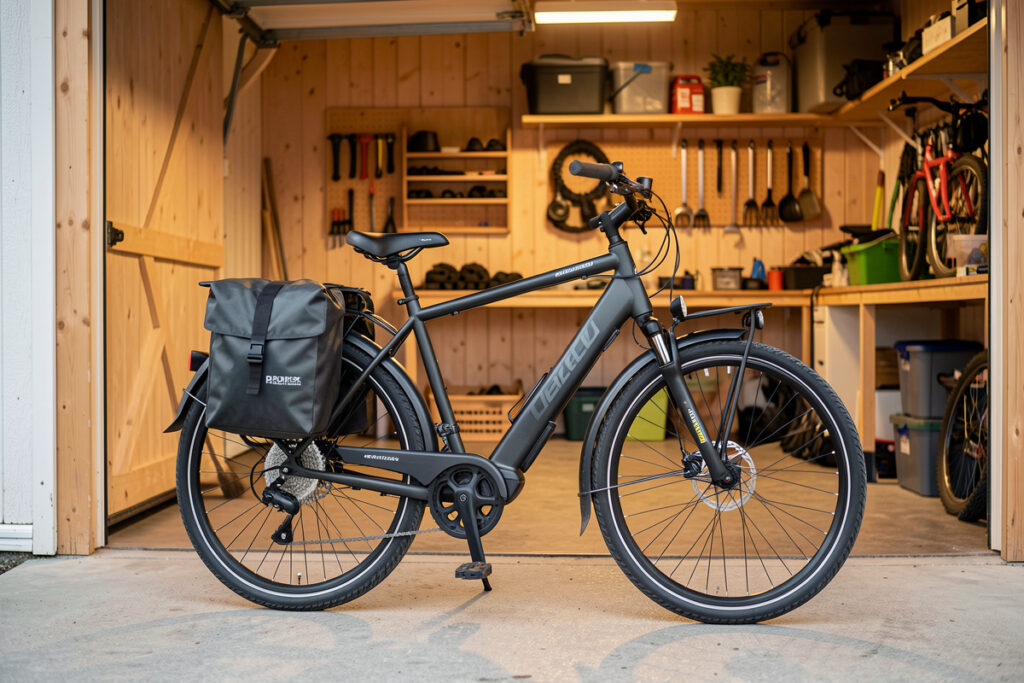
A proper e-bike fenders, racks and panniers setup is what turns a bike into a vehicle: full-coverage fenders with a mudflap to kill road spray, a rated rear rack — 25 kg and up — bolted to the frame, and waterproof panniers that carry the load off your back. On my four-season commuter, that combination retired both my backpack and most of my short car trips.
This is the cargo-and-spray layer of my e-bike commuter loadout, and it is the least glamorous, most useful money you will spend. The catch on an e-bike is that the bike is heavier, vibrates more under motor torque, and often has a non-standard frame or a fat rear tire, so gear that fits a normal bike does not always fit yours. Here is how I choose and mount each piece.
Full-Coverage Fenders: The Cheapest Drivetrain Insurance
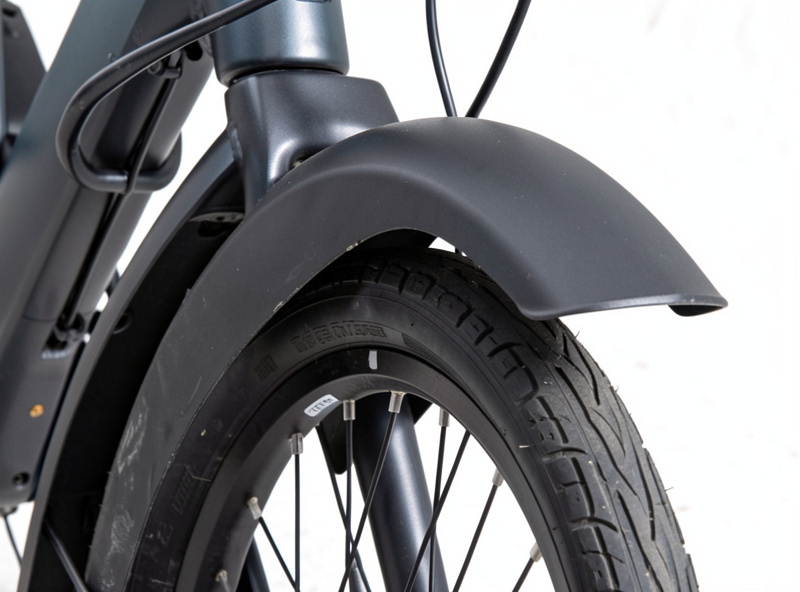
Fenders are the upgrade riders skip and then regret by the second wet week. A wet road throws a continuous stripe of grit and water up off the tire — into your back, into your face, and straight down into the bottom bracket and chain. On a mid-drive that grit is genuinely expensive, because it grinds a chain and chainring that are already working under motor torque, accelerating wear on the most costly part of the drivetrain. Full-length fenders with a front mudflap stop nearly all of it.
Clip-on stubby fenders are better than nothing but they leave your feet and the drivetrain exposed. I run full-coverage fenders that wrap close to the tire, with a mudflap on the front fender long enough that spray does not reach my shoes or the bottom bracket. On a winter bike I leave extra clearance so packed snow and a studded tire do not jam against the fender. Get this layer right and your drivetrain lasts dramatically longer between services.
Choosing a Rear Rack: Weight Rating Is Everything
The rack is a structural part, so I buy on weight rating and mounting, not looks. A commuter rack should be rated for at least 25 kg — racks tested to ISO 11243, the international standard for bicycle luggage carriers, state that load figure honestly rather than guessing it — and if you ever carry a child seat or heavy shopping, more. Check how it mounts: a rack bolted to dedicated frame eyelets is solid, while a seatpost-clamp rack flexes under load and is not for heavy panniers. On an e-bike the extra weight and motor vibration mean I always use thread-locker on the bolts and re-torque them after the first week, because vibration walks fasteners loose.
Fit is the e-bike wrinkle. A hub-motor rear wheel, a fat tire, or a frame-integrated battery can all interfere with a standard rack, so measure before you buy. Some bikes need a rack designed for their specific frame. A good rack also gives you a mounting point for a rear light and reflectors, which ties into the visibility side of the loadout — just make sure a loaded pannier will not block that light.
Panniers: Waterproof, Off Your Back, Clear of Your Heels
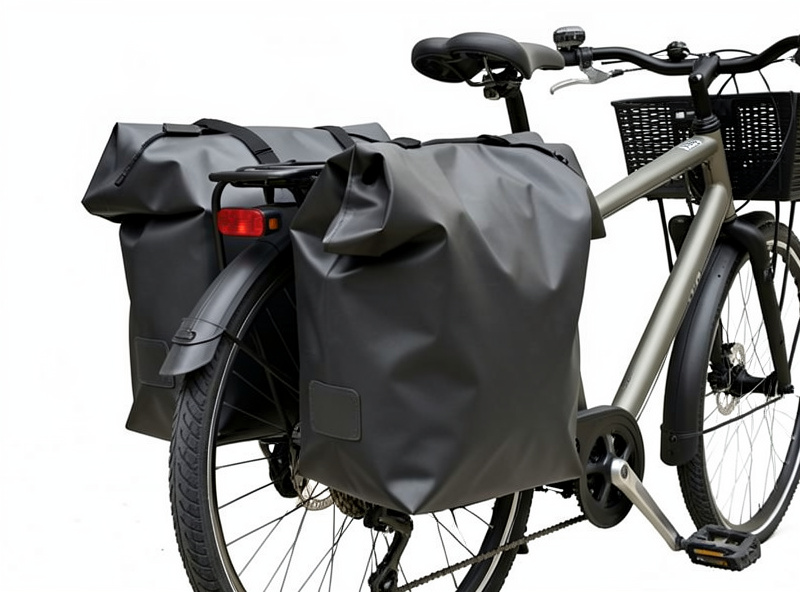
Panniers are the piece that changes your commute the most. A loaded backpack puts weight and sweat on your spine; panniers put it low over the rear axle where you barely feel it, which matters more on an e-bike because the bike is already heavy and high-up load hurts handling. I run a pair of waterproof roll-top panniers and stopped wearing a backpack the day they arrived.
Three things to get right. First, waterproofing: a true roll-top seam-welded bag keeps your laptop and work clothes dry in a downpour, where a “water-resistant” bag with a zip does not. Second, mounting: a secure hook-and-clip system that locks to the rack rail will not bounce off on a rough cycleway. Third, heel clearance — the bag must sit far enough back that your heel does not strike it on every pedal stroke, which is a maddening fault that depends on your frame and rack length. Try the loaded bag in motion before you commit.
How the Carrying Options Compare
Riders ask whether they really need panniers or whether a basket or backpack will do. Here is how the common carrying options stack up for a four-season commuter.
| Option | Capacity | Weatherproofing | Best for |
|---|---|---|---|
| Waterproof roll-top panniers | Large (pair) | Excellent | Daily commuting, all weather |
| Front/rear basket | Medium | Poor (open) | Quick errands, dry days |
| Backpack | Small–medium | Varies | Light loads, sweaty back |
| Rack-top trunk bag | Small | Good | Tools, lock, small kit |
For most commuters the answer is a pair of waterproof panniers plus a small rack-top bag for tools and a lock. As an Amazon Associate I earn from qualifying purchases. If you want to see the type I run, a search for waterproof roll-top panniers shows the seam-welded style that actually keeps a downpour out.
Mounting It All Without Creating New Problems
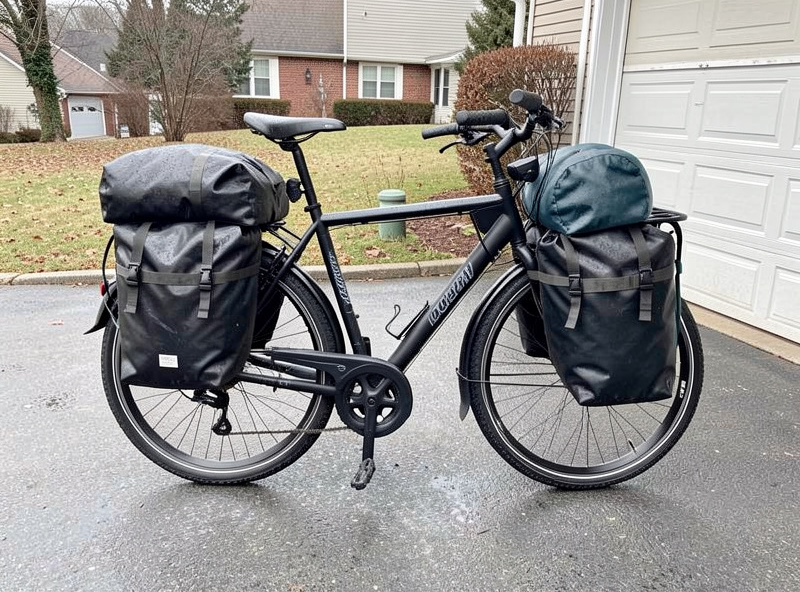
The whole layer fails if it is mounted carelessly, and an e-bike is less forgiving than an analog bike. After fitting fenders, I spin both wheels and listen for any rub, because a fender that ticks a studded tire on every rotation will drive you mad and wear a groove. After fitting the rack, I load it and check for flex and for any contact with the tire or a frame battery. After fitting panniers, I ride loaded and check heel strike at full pedal stroke.
Then I do the one job people forget: re-torque everything after the first week of riding. Motor vibration and the constant load of cargo loosen bolts that felt tight on day one, and a rack bolt backing out under a loaded pannier is how gear ends up in the road. With thread-locker and a re-torque, the whole layer goes quiet and stays put. Pair it with the rest of the loadout — winter lighting and studded tires — and you have a bike built for the eleven dark months, not just the bright ones.
Frequently Asked Questions
Do I need full fenders on an e-bike?
If you commute in the wet, yes. Full-coverage fenders with a front mudflap stop the stripe of road grit and water that a wet tire throws up into your back and down into the chain and bottom bracket. On a mid-drive that grit grinds a drivetrain already under motor torque, so fenders are cheap insurance against expensive wear.
What weight should an e-bike rear rack be rated for?
Buy a rack rated for at least 25 kg for general commuting, and more if you carry a child seat or heavy shopping. Just as important is how it mounts: a rack bolted to dedicated frame eyelets is solid, while a seatpost-clamp rack flexes and is not suited to heavy panniers. Use thread-locker and re-torque the bolts after the first week.
Will a standard rack and panniers fit my e-bike?
Not always. A hub-motor rear wheel, a fat tire, or a frame-integrated battery can interfere with a standard rack, so measure before buying and check whether your bike needs a frame-specific rack. For panniers, the key fit issue is heel clearance: the bag must sit far enough back that your heel does not strike it on every pedal stroke.
Are panniers better than a backpack for commuting?
For daily riding, yes. A backpack puts weight and sweat on your spine, while panniers carry the load low over the rear axle where you barely feel it. That matters more on a heavy e-bike, where high-up load hurts handling. A pair of waterproof roll-top panniers plus a small rack-top bag covers almost any commute.
How do I stop my heel hitting the panniers?
Heel strike depends on your frame geometry, rack length, and how far back the bag mounts. Choose a rack that positions the panniers rearward, slide the bags as far back on the rail as the mount allows, and pack heavy items toward the back of the bag. Always test with a loaded bag while pedaling before committing to a setup.