Important Disclaimer
eBikeGarageHQ provides educational content and estimates only. We are not certified installers, financial advisors, or electricians. Always consult with licensed professionals.
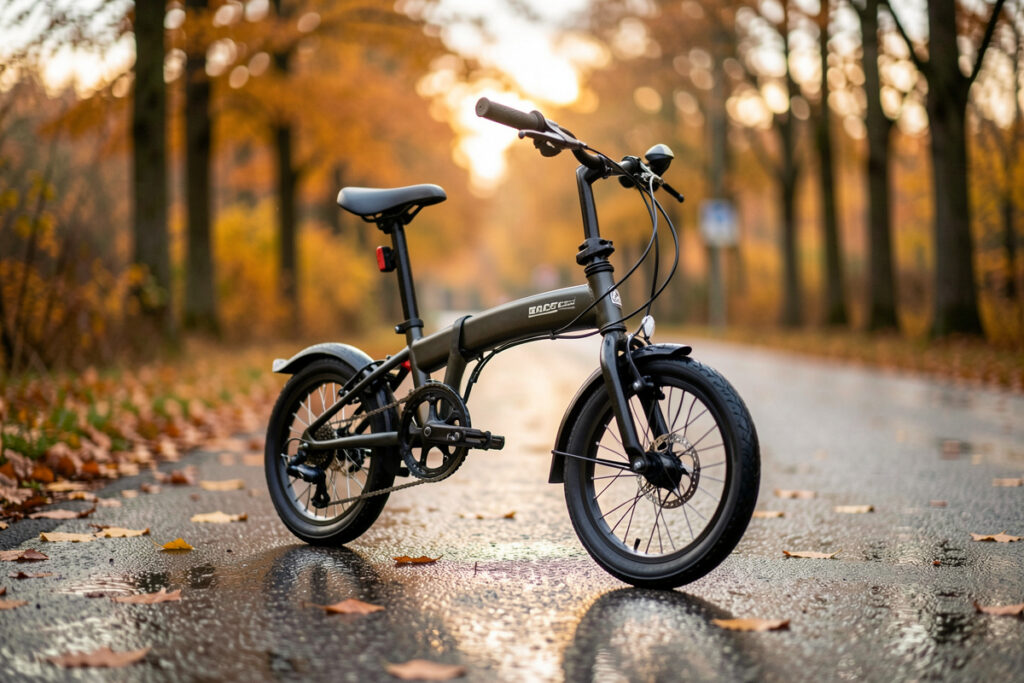
Small wheels make a folding e-bike feel quicker to accelerate but nervous at speed, harsher over potholes, and twitchier in the hands than a full-size bike — because a 16 or 20 inch wheel is a smaller fraction of the same bump and gives a shorter, more reactive steering response. None of it is a defect. It is the honest physics of a wheel built to fold, and most of it is tameable with tyres and pressure.
This is the part of folder ownership that test rides are too short to reveal. A lap of a showroom car park feels fine; a season of real commuting is where the small-wheel character shows itself. I have logged that season on my loop, so here is the truth about how small wheels actually ride — what you will feel, what you can fix, and what you simply accept.
Why Small Wheels Feel the Way They Do
A small wheel has a shorter contact-to-axle radius, so it rolls into a pothole more abruptly and transmits a sharper jolt than a big wheel, which bridges the same hole. It also has less rotational inertia, so it accelerates faster but holds a line less willingly — the bike reacts to every small steering input and every road seam. That combination is the entire small-wheel ride signature.
Think of the wheel as a lever against the road. A 29-inch commuter wheel rolls over a 4 cm edge as a gentle ramp; a 16-inch folder wheel meets the same edge as a step. The same geometry that lets the bike fold small is what makes it busy in your hands. After four seasons I have stopped fighting it — the trick is to set the bike up so the harshness is managed and the twitch becomes familiar, which the folding e-bike guide frames as the format’s core trade.
16-Inch vs 20-Inch: The Difference You Feel
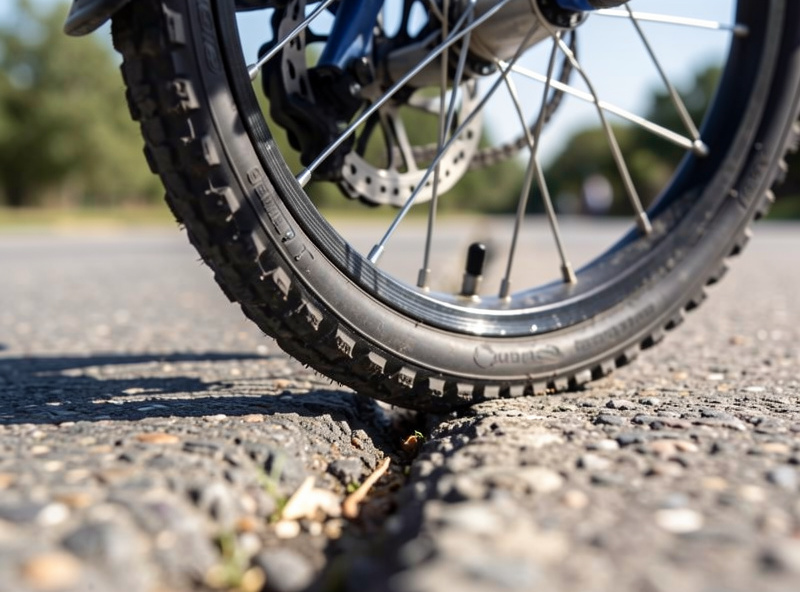
The jump from 16 to 20 inch wheels is the biggest ride-feel upgrade available on a folder, bigger than any motor change. A 20-inch wheel settles down enough that after a couple of weeks you stop actively steering it; a 16-inch wheel keeps asking for small corrections you never fully relax out of. The 16 packs smaller; the 20 rides better. That is the whole decision.
On my test loop the contrast is obvious within the first hundred metres. The 16-inch bike wants constant micro-inputs, especially in a crosswind or on a rutted bike path. The 20-inch bike tracks straight enough that I can ride one-handed to signal — something I would not trust on the smaller wheel at commuting speed. Choose 16-inch only if the smallest possible fold is your single hard constraint; otherwise 20-inch is the format’s sweet spot.
| Trait | 16-inch folder | 20-inch folder |
|---|---|---|
| Fold size | Smallest | Slightly larger |
| Stability at speed | Nervous | Settled |
| Pothole harshness | Sharpest | Noticeably softer |
| One-handed control | Sketchy | Trustworthy |
| Tyre choice | Limited | Wide and good |
| Best for | Pure portability | Daily commuting |
Tyres and Pressure: The Fix Most Owners Skip
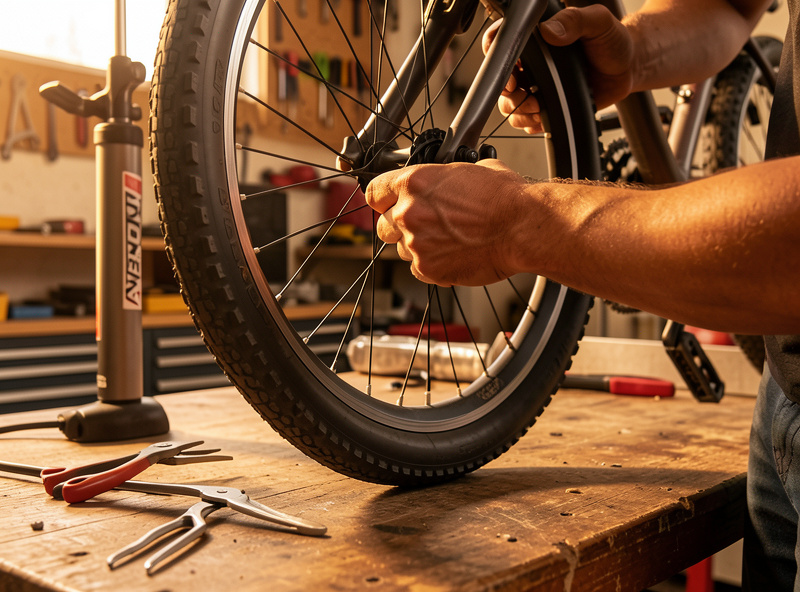
Tyre width and pressure rescue more small-wheel harshness than any other change, and most folders ship on hard, narrow rubber pumped to the sidewall maximum. Dropping to a quality 2.0 to 2.4 inch tyre and running a sensible pressure — not the 65 psi printed on the casing — turns a jittery folder into a composed one. It is the cheapest upgrade on the bike.
I run my folder’s tyres at the lower, comfort-biased end of the safe window and treat tyre-pressure discipline as part of the bike’s setup, the same way I track it across the garage. A wider tyre at lower pressure gives the small wheel a longer contact patch and a bit of air-spring to soak the sharp edges, without costing meaningful range on a commute. Get this wrong — narrow tyre, maximum pressure — and you will blame the bike for harshness that is really a setup error. Where the bike’s mass sits changes how that harshness reaches you too, which is the subject of weight distribution and ride feel.
Stability, Speed Wobble and Confidence
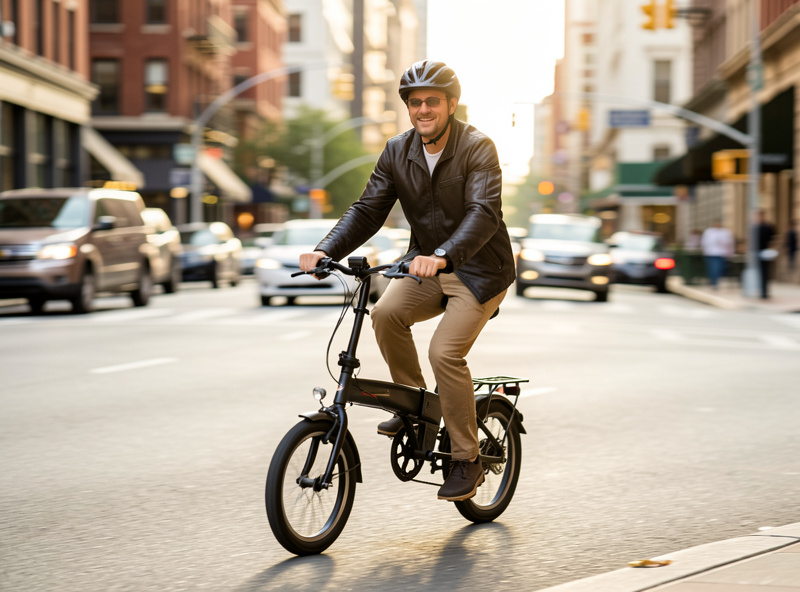
A small-wheel folder feels least stable at its top assisted speed, where the short wheelbase and quick steering can produce a faint speed wobble if your hands are tense. The cure is counterintuitive: relax your grip, drop your weight into the bike, and let the front wheel find its own line rather than fighting it. Tension is what feeds the wobble.
This caught me out on my first folder until I learned to ride it loose. At the EU 25 km/h assist cut-off a well-set-up 20-inch folder is perfectly stable; the nervousness people describe is usually a 16-inch wheel, an overinflated narrow tyre, and a death grip on the bars working together. Set the bike up properly and ride relaxed, and the small wheel stops being a liability. It will never be as planted as a full-size commuter — that is the trade you accepted when you bought a bike that folds, and it is laid out alongside the other trades in the train-commute guide for riders choosing the format for rail.
Who the Small-Wheel Ride Actually Suits
The small-wheel ride suits riders who value portability and short, urban journeys over open-road composure, and who will set the bike up properly rather than ride it as it left the box. If your commute is stop-start city riding with a train or a storage constraint, the small wheel’s quickness is an asset and its nervousness barely registers. If you ride fast, far and rural, it will wear on you.
Be honest about your route before you buy. A folder is a brilliant tool for the urban last mile and a frustrating one for a 25 km open-road blast, and no amount of marketing changes that geometry. I keep a full-size mid-drive for the long, fast rides and reach for the folder when the journey involves carrying, storing or combining with transit — the right tool for the shape of the trip, exactly as the main folding guide frames it. Maintain it well, too: small wheels and a folding frame put more cycles through the spokes and hinges, so the checks in my maintenance guide matter.
As an Amazon Associate I earn from qualifying purchases. The single best ride-feel upgrade is better rubber, so browse quality 20-inch folding-bike tyres and keep a decent floor pump with a gauge so you actually run the pressure you intend.
Frequently Asked Questions
Do small wheels make a folding e-bike unstable?
Not unstable, but nervous. A small wheel has quick steering and a short wheelbase, so the bike reacts to every input and feels twitchy compared with a full-size bike. A well-set-up 20-inch folder is stable at the 25 km/h assist limit. Most reported instability is a 16-inch wheel plus an overinflated narrow tyre and a tense grip.
Is a 20-inch folding e-bike better than a 16-inch?
For daily riding, yes. The jump from 16 to 20 inch wheels is the biggest ride-feel improvement on a folder. A 20-inch wheel settles down enough to forget about and takes better, wider tyres. A 16-inch wheel packs smaller but stays twitchy and hits potholes harder. Choose 16-inch only if the smallest fold is your one hard constraint.
Why does my folding e-bike ride so harshly?
Usually the tyres, not the frame. Most folders ship on narrow rubber pumped to the maximum printed pressure, which gives the small wheel no cushion. Fit a quality 2.0 to 2.4 inch tyre and run a sensible lower pressure within the safe window, and a jittery folder becomes composed. It is the cheapest upgrade on the bike.
Can you ride a small-wheel folder one-handed to signal?
On a settled 20-inch folder with decent tyres, yes, briefly and confidently. On a 16-inch folder at commuting speed it is sketchy because the quick steering wants constant correction. If signalling one-handed feels risky, that is the wheel and setup telling you the bike needs wider tyres or a lower pressure.
Do small wheels lose range compared with big wheels?
Marginally, and not enough to matter on a commute. Small wheels have slightly higher rolling resistance, but tyre choice and pressure swamp that effect. Budget range from battery Wh, not wheel size: at 12 to 18 Wh per km a folder’s range is set by its small battery, not its little wheels.