Important Disclaimer
eBikeGarageHQ provides educational content and estimates only. We are not certified installers, financial advisors, or electricians. Always consult with licensed professionals.
The best e-bike lights for winter commuting are a see-the-road headlight in the 50–100 lux range with a shaped cutoff beam and a steady (not strobing) rear light, ideally run off the bike’s own battery. On my dark Nordic commute, a real headlight beats a bright blinky every single morning — you cannot ride a road you cannot see.
I commute through Swedish winters where useful daylight is gone by mid-afternoon, so my lights are not an accessory, they are the thing that lets me ride at all. Below is what actually matters when you choose winter commuter lights, the spec that gets confused most often, and how the light load shows up in my range math. This is part of my e-bike commuter loadout — lighting is the first system winter takes away.
Lumens vs Lux: The Number That Actually Matters
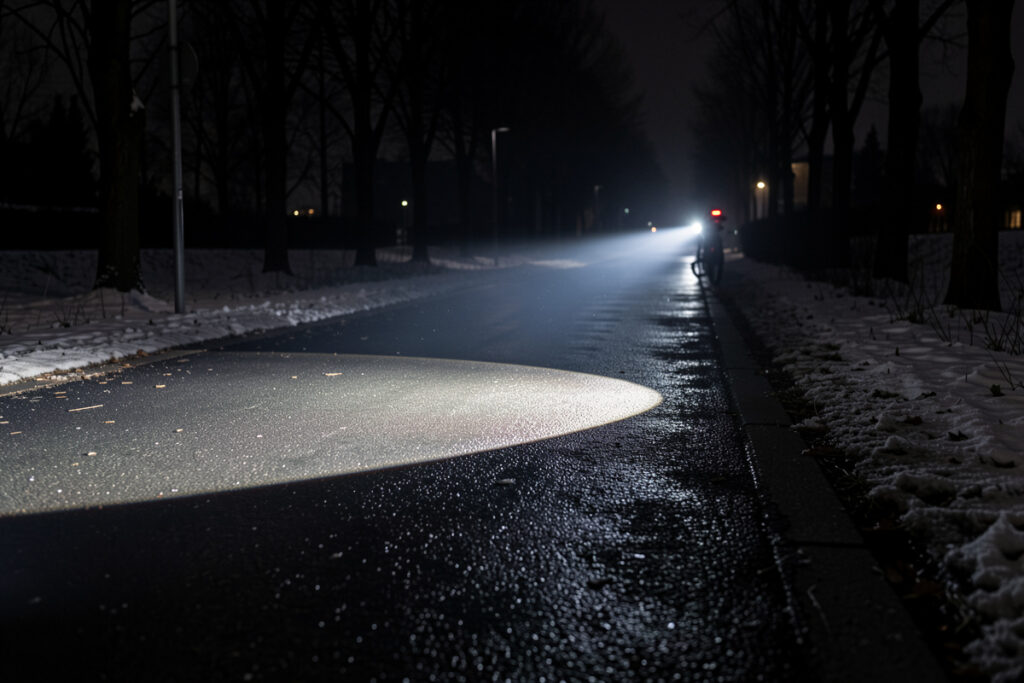
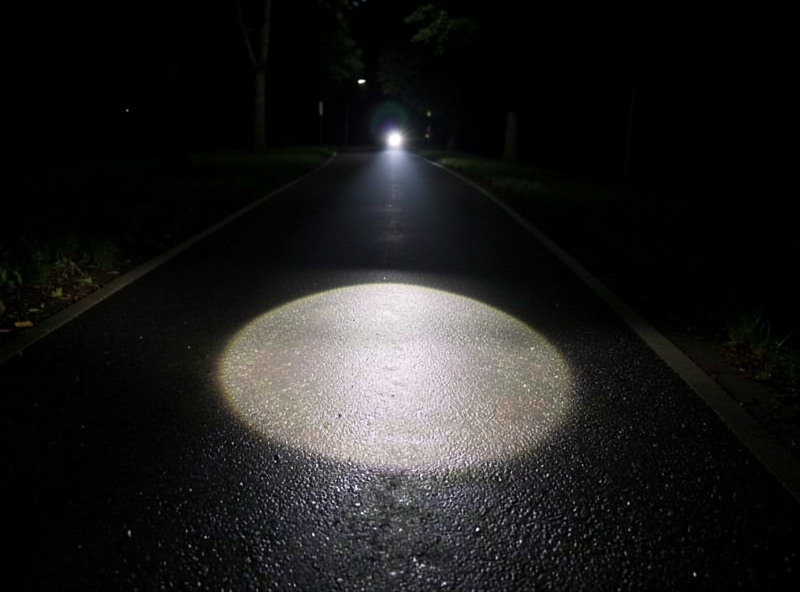
Most lights are sold on lumens, but for a commuter what you care about is lux — how much light lands on the road where you need it. A 1,000-lumen light with a round flood beam scatters light into the sky and oncoming eyes; a well-designed 100-lux light with a shaped beam puts a bright, even patch on the tarmac ahead. For unlit cycleways I want a headlight rated around 50–100 lux with a horizontal cutoff, the same beam logic car headlights use — the principle Germany’s StVZO regulation makes mandatory for bicycle headlights — so I light the road without blinding the cyclist coming the other way.
The cutoff matters more in winter because rain and snow throw glare back at you. A flood beam in falling snow is like driving with high beams in fog — it lights the snow, not the road. A shaped beam ducks under that and keeps the surface visible. If a light only advertises lumens and shows a round hotspot, it is built to be seen, not to see.
Steady Rear Light, Not a Strobe
I run a steady rear light as my primary, and this is where a lot of commuters get it wrong. A strobing rear light is attention-grabbing, but it destroys a following driver’s ability to judge your distance and closing speed — your position appears to jump. A steady red light gives a driver a stable reference to track. I add a second, slow-blinking light on my bag or helmet as a backup and for extra conspicuity, but the primary on the seatpost stays steady.
Brightness on the rear wants to be enough to be seen but not so harsh it dazzles drivers in the wet, where it bleeds and haloes. A rear in the 30–100 lumen range with a steady mode covers it. Mount it where a loaded pannier or your jacket will not block it — a rear light hidden behind a bag is no light at all, which is a mistake I see constantly on otherwise well-kitted bikes.
Battery-Port Lights vs USB Lights
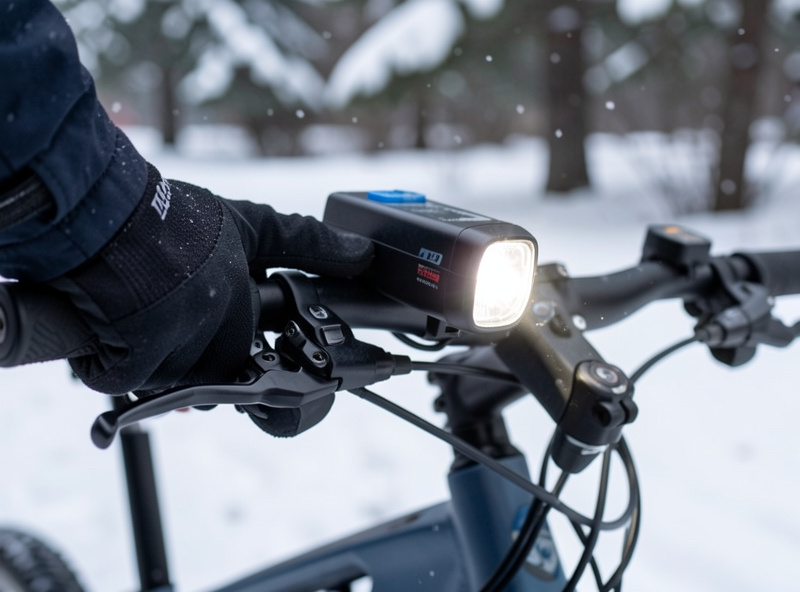
On a mid-drive like my Bosch, the headlight and tail light can run off the main bike battery through the system’s light port, switched from the display. That is the cleanest setup: no separate charging, no dead light on a cold morning, and the draw is trivial against a 500 Wh pack. The trade is that the light load is now part of your energy budget — a 3–5 watt headlight over a 40-minute commute is a small but real bite, and in the cold it competes with the motor for the same Wh.
USB-rechargeable lights are the answer if your bike has no light port or you ride a hub-drive value bike without integrated lighting. The catch in winter is that cold murders battery runtime — a USB light rated for three hours at room temperature can fade noticeably in sub-zero air, and lithium packs do not like being charged cold either. If you go USB, buy more runtime than you think you need and bring the light indoors to charge. I measure both setups at the wall with the same watt-meter discipline I use on my battery bench, and integrated lighting wins for reliability every time it is an option.
What I Look For: A Quick Comparison
Here is how I weigh the three light types a winter commuter actually chooses between. The pick depends on whether your bike has an integrated light port and how dark your route is.
| Light type | Best for | Brightness target | Winter weak point |
|---|---|---|---|
| Integrated battery-port headlight | Mid-drive / system bikes | 50–100 lux, cutoff beam | Adds to your Wh budget |
| USB rechargeable headlight | Hub-drive / no light port | Look for lux rating, not just lumens | Cold cuts runtime; charge indoors |
| Rear light (any power) | Every bike, run steady | 30–100 lumens, steady mode | Hidden behind panniers |
If your bike has a light port, use it for the headlight and add a USB rear as backup. If it does not, buy a quality USB headlight with a real lux figure and a long runtime. Either way, redundancy is cheap insurance — I never ride the dark with a single point of failure. As an Amazon Associate I earn from qualifying purchases. If you want to browse the category, a search for cutoff-beam bike headlights surfaces the shaped-beam type I describe.
Mounting, Aiming and Keeping Them Working
A great light aimed wrong is a bad light. Aim the headlight so the top of the beam lands on the road maybe 10–15 metres ahead, not into the trees — too high and you blind people, too low and you outrun your light. I check the aim after fitting and again once a loaded front bag changes the bar angle. Keep the lens clean; road spray and salt film cut output fast in winter, and a wipe before each ride is part of my routine.
Cold and wet are hard on connectors. I make sure plugs are seated and, on the integrated system, that the light port contacts stay dry and corrosion-free, because winter salt loves to creep into connectors. The good news is that running lights off the main pack means there is one less battery to die on you — the same pack that powers the motor powers the light, and you charge it once. That reliability is why, for a serious winter commuter, I steer people toward integrated lighting whenever the bike supports it.
Frequently Asked Questions
How many lumens do I need for e-bike winter commuting?
Think in lux, not lumens. For an unlit cycleway you want a headlight around 50 to 100 lux with a shaped cutoff beam, which puts an even patch of light on the road instead of scattering it. A high lumen number with a round flood beam glares off snow and oncoming eyes and lights the road worse than a lower, well-shaped light.
Should my e-bike rear light be steady or flashing?
Run a steady rear light as your primary. A strobe makes it hard for a following driver to judge your distance and closing speed because your position appears to jump. A steady red gives a stable reference to track. Add a second slow-blinking light on a bag or helmet for backup, but keep the main one steady.
Can I run e-bike lights off the main battery in winter?
Yes, and on a mid-drive or system bike it is the best option. Lights run off the main pack through the light port draw only a few watts, never need separate charging, and will not die in the cold. The small trade is that the light load becomes part of your energy budget, costing a little range on a cold ride.
Do USB bike lights work in cold weather?
They work but cold cuts their runtime sharply. A USB light rated for three hours at room temperature can fade noticeably in sub-zero air, and lithium cells dislike being charged cold. If your bike has no light port, buy more runtime than you expect to need and bring the light indoors to charge rather than leaving it on the bike.
How do winter lights affect my e-bike range?
A headlight running off the main pack pulls roughly three to five watts. Over a typical commute that is a small but real bite out of your Wh budget, and in the cold those watts compete with the motor. It is minor compared with the range loss from cold cells and studded tires, but it is part of an honest winter energy plan.