Important Disclaimer
eBikeGarageHQ provides educational content and estimates only. We are not certified installers, financial advisors, or electricians. Always consult with licensed professionals.
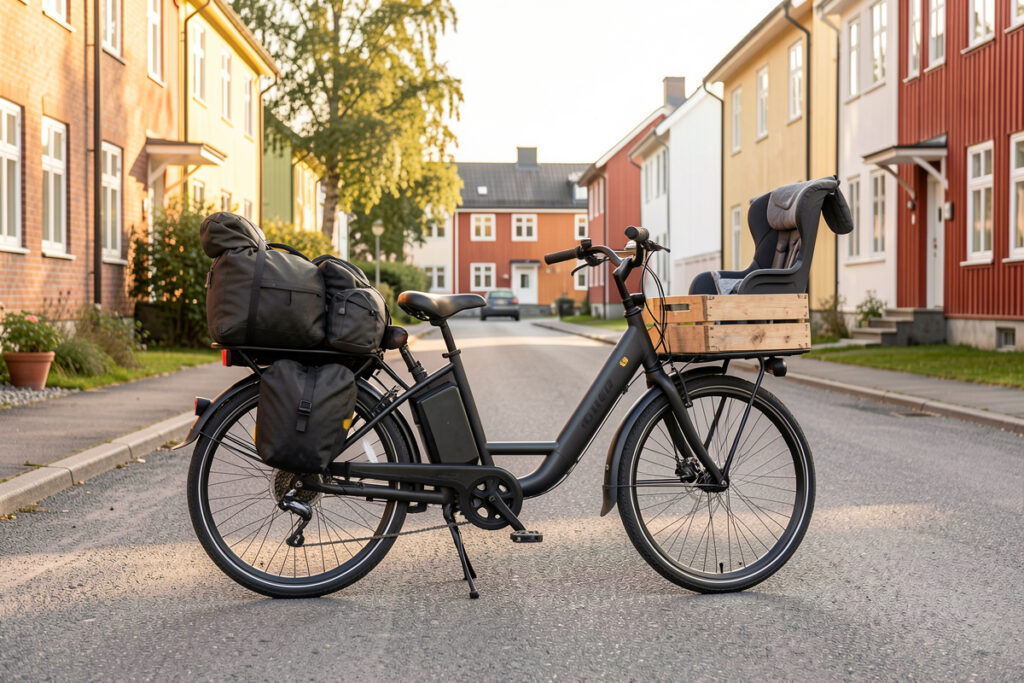
A cargo e-bike is a purpose-built bike with a stretched frame, low load deck, and a strong assist system designed to carry 50–200 kg of payload on top of the rider. The single number that decides whether it works for you is not motor wattage — it is how many watt-hours (Wh) you burn per kilometre once that load is on board, and on my loaded test loop a family longtail climbs at 18–26 Wh/km versus the 9–12 Wh/km I log unladen.
I am going to be honest about my lane up front, because that honesty is the whole point of this site. I run a battery bench, I own a Bosch mid-drive and a hub-drive value bike, and I converted a donor bike myself with a Bafang kit. I haul real load on those bikes and on a trailer, I log every charge at the wall, and I have ridden the cargo classes enough to judge them by physics rather than brochure copy. Where the topic turns into deep family-fleet logistics — three kids, two daycares, a weekly rhythm — I will tell you that is lived-experience territory I defer on. What I will not defer on is the energy, the load feel, the hill math, the motor choice, and the legal frame. That is bench work, and bench work is where most cargo-bike content falls apart.
What Actually Counts as a Cargo E-Bike
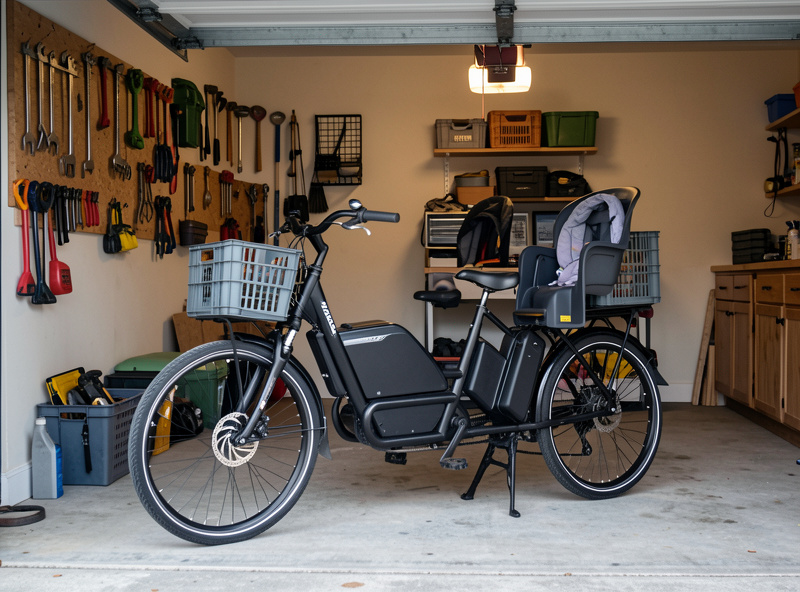
“Cargo e-bike” covers four very different machines, and they do not ride alike. A longtail stretches the rear of a normal bike to carry kids or crates behind the rider; a front-loader (bakfiets) puts a box between the rider and the front wheel; a midtail is a shorter longtail for one kid or a big shop; and a trailer turns any bike you already own into a hauler. Each moves the load to a different place, and where the mass sits changes everything about the ride.
The reason the category matters is that a cargo bike is not “a normal e-bike but bigger.” The wheelbase is longer, the centre of gravity is loaded differently, and the drivetrain spends its life under torque a commuter never sees. That is exactly why I keep coming back to where the mass sits and how it changes ride feel — on a cargo platform that principle stops being theory and becomes the difference between a confident school run and a tank-slapper at 8 km/h. I break the front-versus-rear question down in detail in front load versus rear load cargo feel, because it is the decision riders regret most.
The Legal Frame: EU 250 W / 25 km/h vs US Classes
Before you spend a krona or a dollar, get the law right, because a cargo bike that is illegal to ride is just an expensive planter. In the EU — and that includes here in Sweden — a pedelec is limited to a 250 W continuous-rated motor with assist that cuts off at 25 km/h and only works while you pedal. That is the EN 15194 frame, and a family cargo pedelec lives entirely inside it.
The EU has a faster category, the speed pedelec (S-pedelec), rated up to 45 km/h and higher power, but it is legally a moped: it needs registration, insurance, a plate, and an approved helmet, and it is barred from many cycle paths — not what most families want for a school run. In the US the framework is the three-class system: Class 1 is pedal-assist to 20 mph (32 km/h), Class 2 adds a throttle to 20 mph, and Class 3 is pedal-assist to 28 mph (45 km/h), usually with an age limit and a helmet rule. For loaded family hauling, a US buyer is almost always choosing between Class 1 and Class 3, while a throttle on a Class 2 genuinely helps launching a heavy load from a dead stop on a hill.
The practical takeaway: under the EU 250 W cap, you cannot buy your way out of a loaded hill with raw wattage the way a US Class 3 rider sometimes can. You buy your way out with torque delivery and gearing — which is the entire argument for a mid-drive on a cargo bike, covered below.
Range and Watt-Hour Math Once the Load Is On
This is where I have the most to say, because measuring energy is what my bench does. Unladen, my commuters log 9–12 Wh/km on a mixed loop in mild weather. Strap on a child seat, two backpacks, and a week of groceries — call it 35–45 kg of payload — and on the same loop I watch that climb to 18–26 Wh/km depending on terrain and headwind. Load roughly doubles your energy budget. Cold doubles part of it again, the way I document in what a winter range log actually shows.
Run the math before you trust any brochure. A 500 Wh battery at a loaded 22 Wh/km gives you roughly 23 usable km if you ride it near flat, and you should never plan to flatten a pack to zero. That is why family cargo bikes ship 600–1,000 Wh packs and why a second battery option matters more here than on any commuter — I weigh that trade in is a second e-bike battery worth it. If you want the full method behind these numbers, my field-logged Wh/km by terrain and the range guide lay out the repeatable loop I use, and the real-world range calculator lets you plug in your own load.
The loop itself is deliberately dull, because dull is what keeps the numbers comparable: a fixed 12 km mixed route I have ridden hundreds of times, held at one assist level, with the air temperature and the exact load written down before I roll. I read the energy off a watt-meter at the wall when I recharge rather than trusting the bike’s own range estimate, because the display rounds and guesses while the wall meter simply counts the watt-hours that went back into the pack. Ride the same load on the same loop on a 5°C morning and again on a 20°C afternoon and you will see 15–20% more Wh/km in the cold, every time. That is why I plan loaded winter range around the pessimistic number and treat the brochure figure as a best-case fairy tale written for a warm lab. Method is the whole reason any of these numbers mean anything — without it, a Wh/km figure is just another brochure claim.
| Cargo Type | Typical Payload | Loaded Wh/km (my loop) | Best Motor | Street Price (approx) |
|---|---|---|---|---|
| Longtail | Up to ~80 kg + rider | 18–26 Wh/km | Mid-drive | $1,800–$5,000 |
| Front-loader (bakfiets) | Up to ~100 kg + rider | 20–30 Wh/km | Mid-drive | $3,500–$8,000 |
| Midtail | Up to ~50 kg + rider | 15–22 Wh/km | Mid or hub | $1,500–$3,500 |
| Bike + trailer | Up to ~45 kg in trailer | 16–24 Wh/km | Your existing bike | $150–$900 (trailer) |
Hills Under Load: Where Cheap Cargo Bikes Embarrass Themselves
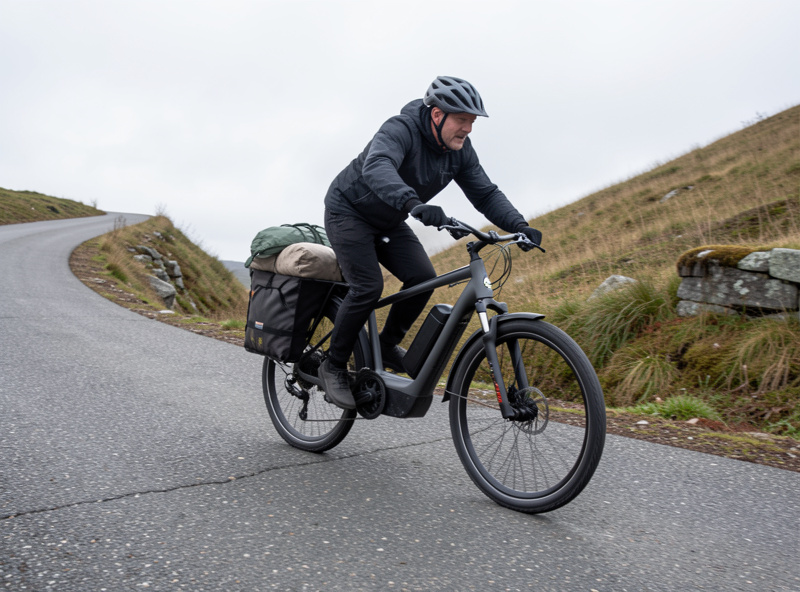
A loaded climb is the single hardest thing you can ask an e-bike to do, and it is the test that separates real cargo machines from heavy commuters with a rack bolted on. On my loaded hill testing — same bikes, same grade, weight measured in kg, energy logged at the wall — a torque-sensor mid-drive holds a steady cadence up a 6–8% grade while a cadence-sensor hub motor either bogs, overheats, or forces me to mash a gear I do not have. I document the full method and the numbers in my loaded-cargo hill test.
The physics are simple. A mid-drive sends its torque through the chain and your gears, so on a steep loaded climb you downshift and the motor keeps spinning in its efficient range. A hub motor turns the wheel directly at one fixed ratio, so on a steep loaded climb it slows, draws huge current, sheds heat, and on a hot day can throttle itself. This is the same conclusion I reach unladen in hub motor vs mid-drive on hills, only load makes the gap brutal instead of academic.
Mid-Drive vs Hub-Drive for a Cargo Bike
If you take one thing from this guide: for a loaded cargo bike, a torque-sensing mid-drive is worth the premium, and under the EU 250 W cap it is close to mandatory. The mid-drive uses your gears, climbs loaded without cooking itself, and meters power by how hard you actually push — the difference I describe in torque sensor vs cadence sensor. A hub motor is cheaper, simpler, and quieter, and on a flat city with light loads a good hub cargo bike is fine.
The honest trade is maintenance and cost. Mid-drives chew chains and cassettes faster under cargo torque — my drivetrain wear log on a loaded mid-drive runs noticeably shorter than the same parts on a hub — and that recurring cost is real, which I break out in hub vs mid-drive maintenance. If you are still choosing your platform from scratch, start with the hub vs mid-drive guide and hub or mid-drive for commuting, then add the cargo load on top of those conclusions.
Battery Sizing and Care on a Cargo Platform
Because load roughly doubles your Wh/km, battery capacity is not a luxury on a cargo bike — it is the spec that decides whether the bike does the job. I would not put a family cargo bike below 600 Wh, and 700–1,000 Wh is the comfortable band for a loaded daily run with cold-weather margin. The pack on a cargo bike obeys the exact same chemistry as every cell on my battery wall; the bike just adds load and wind chill to the discharge curve.
Care matters more here because you cycle the pack deeper every day. Charge to 80–90% for daily use and only fill to 100% before a long haul, store at a partial charge over winter, and keep the pack out of sub-zero charging — the same discipline I lay out in e-bike battery care, winter battery storage, and buying a battery pack honestly. I log every cargo charge at the wall with a watt-meter, the same way I track real charging cost. One safety red line from my bench: a bought, BMS-managed pack only. Cargo conversions stay at kit-and-bought-pack level — no cell-level pack building, no charger hacks. The stakes with a bike that lives near your kids are not worth a home-built pack.
Accessories That Actually Earn Their Place
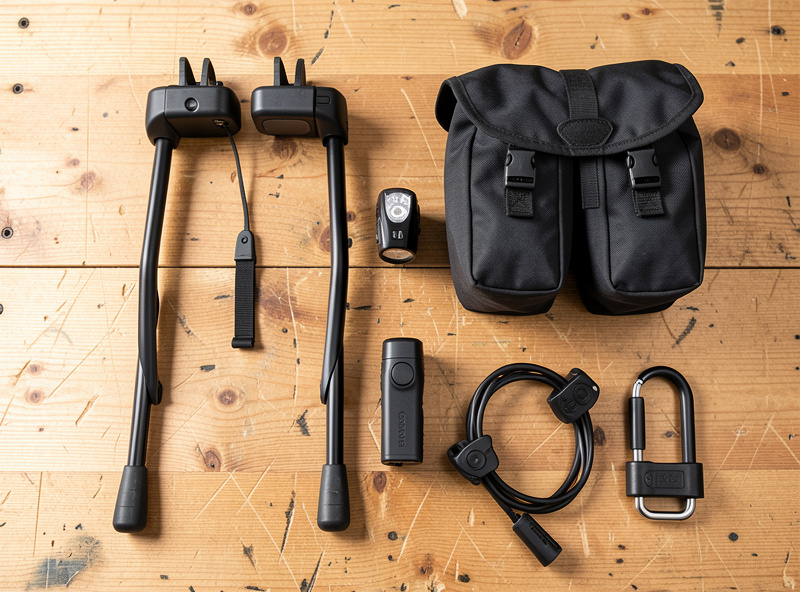
A cargo bike is a platform, and the accessories are what make it a tool. The ones I consider non-negotiable: a centre kickstand or double-leg stand stout enough to load the bike while it stands, proper hydraulic brakes and a habit of checking pad wear at e-bike weights, a strong lock because a loaded cargo bike is a theft magnet, and real lighting for the dark Nordic half of the year. I go deep on the full loadout in the cargo e-bike accessories guide, but the short version pulls straight from my commuter bench: the winter lights and studded tires I run all season, and the lock I actually trust.
If you want to start with the cheapest upgrade that changes the ride, it is a stable double kickstand and correctly inflated cargo tires. You can find a cargo e-bike double kickstand and a decent set of cargo pannier bags for the price of a tank of petrol, and both do more for daily usability than any motor upgrade. As an Amazon Associate I earn from qualifying purchases.
Cargo Bike vs Trailer: The Decision Most Families Get Backwards
If you already own a capable e-bike, a trailer is the cheapest route into hauling kids and cargo, and for a lot of families it is the right answer rather than a compromise. A trailer keeps the load low and behind you, detaches when you do not need it, and costs a fraction of a dedicated cargo bike. The downsides are width, parking, and the way it changes how the bike launches and corners. I lay out the full trade — including the school-run reality — in cargo bike vs trailer for the school run.
This is also where I stay in my lane. The mechanical and energy side of trailer hauling I can measure: a loaded trailer on my own bike logs 16–24 Wh/km on my loop and changes the launch feel exactly as much as the physics predict. The deeper family-logistics question — whether a trailer fits your week, your kids’ ages, your daycare geography — is lived experience I will point you toward rather than pretend to own at fleet depth.
Brakes: Stopping a Loaded Cargo Bike Is Not Optional
The thing nobody quotes on a spec sheet is stopping distance, and on a cargo bike it is the single most important safety number. A loaded longtail can weigh 35–45 kg empty and carry another 60–80 kg of kids and groceries on top of your own body weight — that is the better part of 200 kg trying to keep moving when a car pulls out. Rim brakes have no business on that bike. You want hydraulic disc brakes, and on the heavier front-loaders I would not consider anything smaller than 180–203 mm rotors.
Brake care also changes once load enters the picture. I check pad wear far more often on a bike that carries weight than on a bare commuter, because pads at e-bike-plus-cargo weight wear in a fraction of the kilometres. A glazed or worn pad that is “fine” on a 20 kg commuter is genuinely dangerous when you are descending a wet hill with two kids on the back. Bleed the system on schedule, keep the rotors clean, and treat a spongy lever as a stop-riding fault, not a someday job. The maintenance rhythm I follow lives alongside the drivetrain habits in hub vs mid-drive maintenance, because a cargo bike punishes neglect everywhere at once.
Tires, Pressure, and What Wears First
Tires are where load quietly steals your range and your comfort, and they are the cheapest thing to get right. A cargo bike needs a tire rated for the total system weight, run at a pressure that matches the load — too low and you get squirm, pinch flats, and a Wh/km penalty; too high on a loaded bike and the ride turns harsh and skittish on cold tarmac. I run my cargo and trailer hauls at the firmer end of the tire’s window when fully loaded and drop pressure for lighter days, and I check it weekly because an under-inflated loaded tire is the most common reason a reader’s “range suddenly got worse” with no other change.
As for what wears first under cargo duty: the chain and cassette on a mid-drive, the brake pads everywhere, and the rear tire on any bike carrying the load behind the rider. None of that is a reason to avoid a cargo bike — it is just the maintenance reality of moving real weight, and budgeting for it up front is the honest version of ownership. The conversion bench taught me this the hard way; the same lessons in my Bafang conversion write-up apply double once you load the bike, and the legal limits I respected there are documented in e-bike conversion legal reality in the EU.
So What Should You Actually Buy?
My honest decision tree, after riding the classes and hauling real load on my own bikes: if you live somewhere flat and your loads are light, a good hub-drive midtail or a trailer on the bike you already own is plenty, and you keep money in your pocket. If you have hills, heavy loads, or kids to carry every day, buy a torque-sensing mid-drive longtail with at least 600 Wh and budget for faster drivetrain wear. If you want to carry the load where you can see it and keep little ones in front of you, a front-loader is worth the extra money and the wider parking footprint.
Whatever you choose, get the legal class right for where you ride, size the battery for the loaded Wh/km you will actually pull, and treat the accessories as part of the bike rather than an afterthought. A cargo e-bike that is correctly specified replaces a surprising number of car trips. One that is under-batteried, under-braked, or illegal just sits in the garage — and a garage is exactly where I would rather you never park a good idea.
Frequently Asked Questions
Do I need a special license for a cargo e-bike in the EU?
No, as long as it is a 250 W pedelec with assist cutting off at 25 km/h, it is legally a bicycle in the EU and Sweden. Only a speed pedelec (S-pedelec, up to 45 km/h) needs registration, insurance, a plate, and an approved helmet.
How much range do I actually lose when a cargo e-bike is loaded?
On my logged loop, load roughly doubles energy use, from 9 to 12 Wh per km unladen to 18 to 26 Wh per km with a child seat, backpacks, and groceries. Cold weather adds more loss on top of that.
Is a mid-drive really necessary for a cargo bike?
For loaded hills, yes. Under the EU 250 W cap you cannot out-power a steep loaded climb, so you need a mid-drive that uses your gears to keep its torque in the efficient range. On flat city riding with light loads, a good hub cargo bike is fine.
What battery size should a family cargo e-bike have?
Because load roughly doubles your Wh per km, I would not go below 600 Wh, and 700 to 1,000 Wh is the comfortable band for a daily loaded run with cold-weather margin. A second-battery option matters more on cargo bikes than on any commuter.
Is a trailer a worse choice than a dedicated cargo bike?
Not necessarily. If you already own a capable e-bike, a trailer is the cheapest route into hauling and keeps the load low and detachable. A dedicated cargo bike wins on integration and daily convenience. The right answer depends on your hills, loads, and how often you haul.
Can I convert a normal bike into a cargo e-bike myself?
You can add a legal mid-drive kit and a bought, BMS-managed battery to a sturdy donor or longtail frame. Keep it at kit-and-bought-pack level only. Building battery packs at cell level or modifying chargers is off the menu for safety reasons.