Important Disclaimer
eBikeGarageHQ provides educational content and estimates only. We are not certified installers, financial advisors, or electricians. Always consult with licensed professionals.
The battery is the most expensive part of a conversion and the one I tell people to buy, never build. For most commuters a complete 400–500Wh pack with a quality BMS, from a reputable seller, is the right call — that’s roughly 40–60 km of real range on my logged loop, depending on terrain and weather. Range comes from watt-hours, and Wh is Wh whether it’s on my bike or my battery wall.
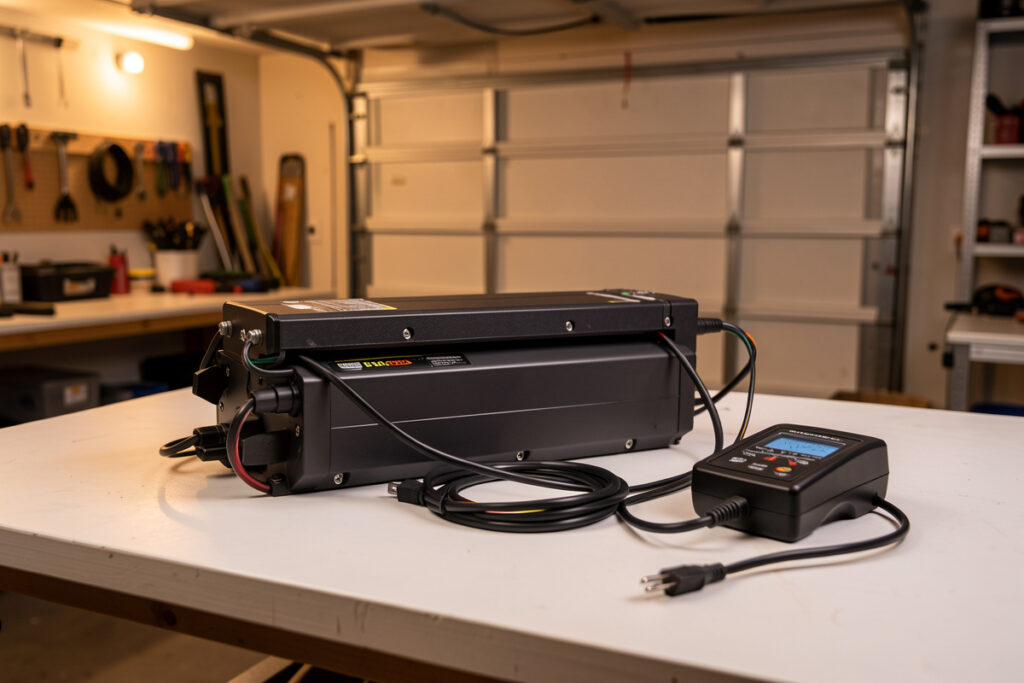
I run an actual battery bench and measure every charge at the wall, so I’ll give you the buying logic without the dangerous parts. Building or modifying packs at the cell level is off the menu here — it’s a real fire risk, not a hack. This is how to choose and buy a good pack for a conversion. For the whole build, see the e-bike conversion guide.
Watt-Hours Are the Number That Matters
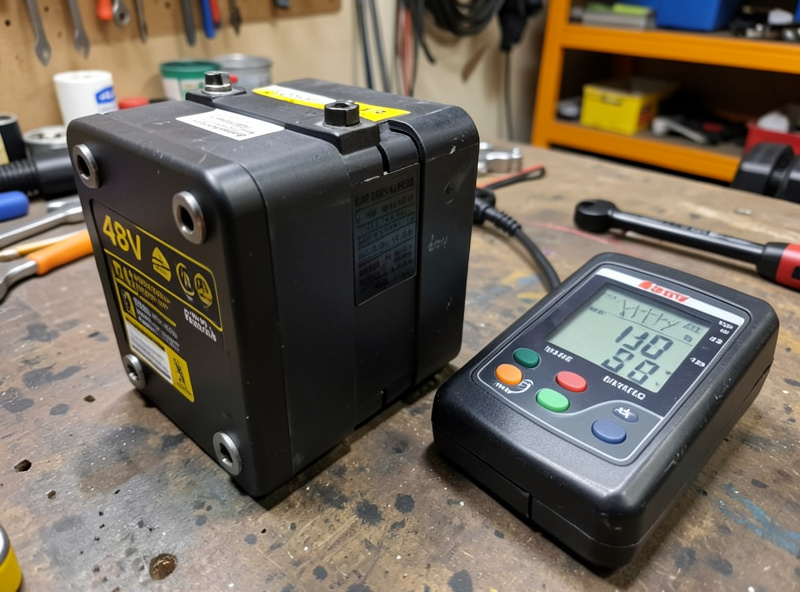
Forget “battery size” — the spec that decides your range is watt-hours, which is voltage times amp-hours. A 48V pack at 10.4Ah is about 500Wh. On my measured loop I use roughly 10 Wh/km on flat commuting at moderate assist, so 500Wh gives me a real 50 km before the math gets nervous, and noticeably less in winter or up hills. A 36V 10Ah pack is only 360Wh — fine for a short flat commute, tight for anything more.
Match the pack voltage to your kit first; a 48V kit needs a 48V pack. Then choose capacity for your actual route with a margin, not the seller’s range claim, which ignores wind, weight, hills and cold. I budget range the same way I do for any e-bike, covered in the range guide and broken down by terrain in Wh per km.
| Pack | Watt-Hours | Real Range (my loop, ~10 Wh/km) | Best For |
|---|---|---|---|
| 36V 10Ah | ~360Wh | ~30–35 km | Short flat commute |
| 48V 10.4Ah | ~500Wh | ~45–55 km | Most commuting |
| 48V 14Ah | ~672Wh | ~60–70 km | Longer / hilly routes |
| 52V 14Ah | ~728Wh | ~65–75 km | Range priority, matched kit |
Why You Buy a Pack, Never Build One
I want to be completely clear, because this is a safety red line. A finished e-bike battery is dozens of lithium cells, a battery management system, fusing, and a welded structure built and tested to handle charge and discharge safely. Assembling that yourself, or modifying a pack, or bypassing a BMS, is how house fires start. There is no money saved that’s worth that risk, and I will never publish cell-level pack building on this site.
So the entire skill here is buying well. A good pack arrives complete, sealed, with a real BMS, a known cell type, a proper charger, and a warranty. That’s the product. Everything below is how to tell a good one from a cheap gamble. You can browse complete e-bike battery packs here.
As an Amazon Associate I earn from qualifying purchases.
What a Good BMS Actually Does
The battery management system is the quiet hero. It balances the cells so they charge and discharge evenly, cuts off on over-charge, over-discharge, over-current and over-temperature, and protects the pack from the conditions that age or damage it. A pack with a vague or undersized BMS is the one I walk away from, no matter how good the price looks. The BMS is also why you should never try to charge a pack with the wrong charger — let the system and the supplied charger do their job.
You can’t see the BMS, so you judge it by the seller: clear specs, a named cell type, a continuous-current rating that matches your kit, and a warranty that suggests they stand behind the build. The same chemistry literacy I apply to my stationary banks applies here — a pack is a pack, the bike just adds wind chill to the discharge curve.
Form Factor, Mounting and Connectors
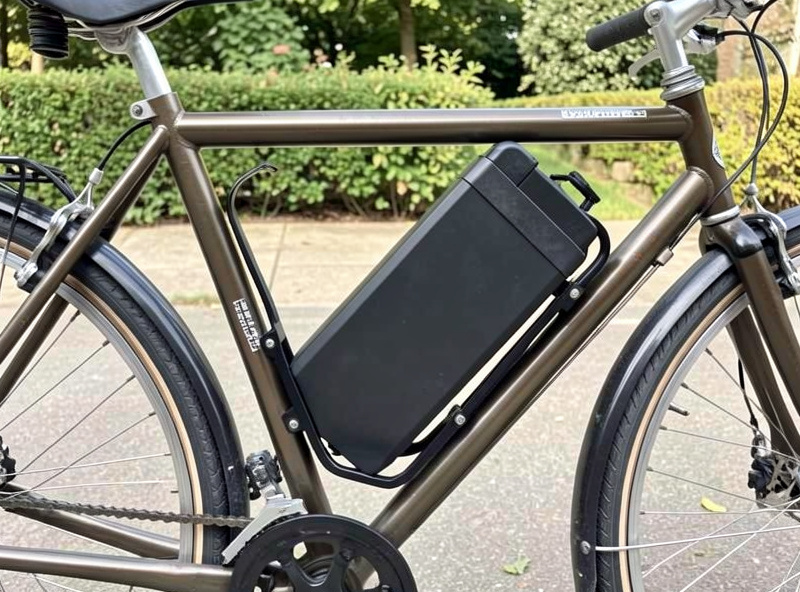
Packs come as down-tube types that bolt to the bottle-cage mounts, rear-rack packs, and in-frame styles. For a conversion, the down-tube pack on the bottle mounts is usually the cleanest — it keeps weight low and central, which helps handling the same way a mid-drive motor does. Check the pack physically fits your frame’s triangle and that the mounting cradle has solid bosses to bolt to; a heavy pack on weak mounts is a problem waiting to rattle loose.
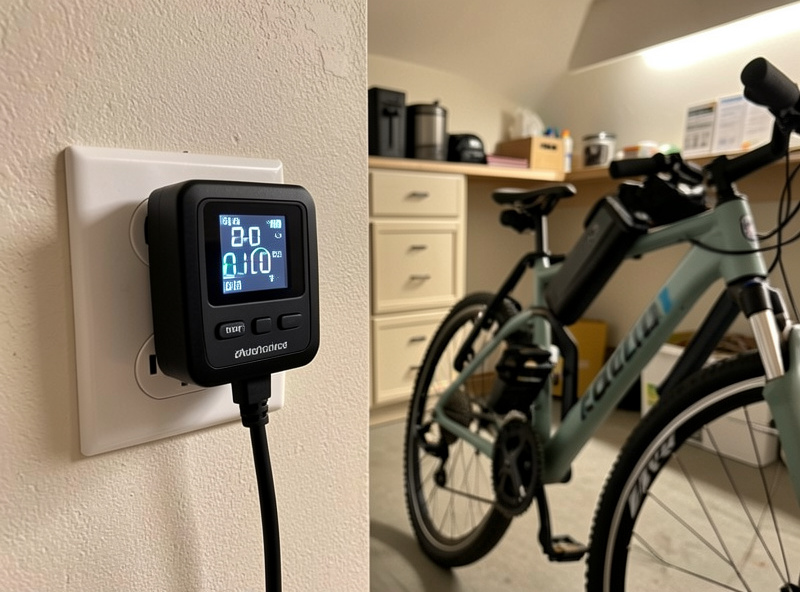
Connectors matter too. Match the pack’s discharge connector to your controller, or use the correct adapter — never bodge a high-current connection. The supplied charger should match the pack chemistry and voltage exactly. I log every charge at the wall with a watt-meter, which over time tells me the true usable capacity and flags a pack that’s fading earlier than it should.
Caring for the Pack You Buy
A good pack rewards good habits and punishes neglect. I avoid leaving a pack sitting at 100% for days, I store it part-charged over winter rather than full or empty, and I never let it freeze flat. Cold weather temporarily drops capacity — that’s the winter range hit, not damage — but charging or storing a frozen pack is where harm happens. The full routine is in the battery care guide, the 80 vs 100% charging answer, and the winter storage rule.
Treated well, a quality pack lasts years and many hundreds of cycles before it fades enough to notice, as I cover in battery lifespan. The running cost is genuinely low — the wall-outlet math shows it — which is part of why a conversion makes sense once the pack is bought right.
Judging Cell Quality Before You Buy
You can’t open a sealed pack, so the cells inside are judged on what the seller will tell you. A good listing names the cell — Samsung, LG, Panasonic or Molicel, in the 18650 or 21700 format — and gives a continuous discharge rating in amps. Unbranded or unnamed cells are the single biggest red flag; a pack that won’t say what’s inside is a pack hiding something. I match the pack’s continuous-current rating to my kit’s draw: a 48V controller pulling 15A wants cells and a BMS comfortably rated above that, or the pack sags under load and ages fast.
Capacity is the other claim worth verifying, and this is where my bench earns its keep. When a new pack arrives I run it down on a normal ride, then log the full recharge at the wall with a watt-meter. A 500Wh pack should take roughly 500Wh plus charging losses to refill from low — if it only ever swallows 380Wh, the “500Wh” label was optimistic, and I now know the real number to budget range against. I repeat that check every few months; a pack that starts accepting noticeably less energy than it used to is telling me its usable capacity is fading, long before the range drop becomes obvious on the road. That measured number, not the sticker, is what I trust — the same wall-meter discipline I run on every stationary bank carries straight over to a bike pack.
On price I think directionally rather than chasing the cheapest sticker: a complete pack with named cells, a real BMS, a matched charger and a genuine warranty costs more than an anonymous bargain, and it should. The warranty length is a useful proxy — a seller offering a real multi-year warranty is betting their own money that the build holds up, which tells you more than any spec line. The cheap pack with no named cells and a vague return policy is the expensive one the day it sags, fades early, or trips its BMS for good.
Frequently Asked Questions
What size battery do I need for an e-bike conversion?
For most commuting a 48V 500Wh pack is the sweet spot, giving roughly 45–55 km of real range on my logged loop at moderate assist. Choose capacity for your actual route with margin, and match the pack voltage to your kit.
Should I build my own e-bike battery to save money?
No. Building or modifying a pack at the cell level is a genuine fire risk, not a hack, and I never cover it. Buy a complete, sealed pack with a real BMS, a proper charger and a warranty from a reputable seller.
How much range does a 500Wh battery give?
On my measured loop, about 45–55 km at moderate assist on flat commuting, using roughly 10 Wh per km. Hills, headwind, weight and cold all reduce it, so treat seller range claims as best-case and budget with a margin.
What voltage battery for my conversion kit?
Match the pack voltage to the kit: a 48V kit needs a 48V pack, a 52V kit a 52V pack. Mismatching voltage can damage the controller or the pack. Confirm the connector matches the controller or use the correct adapter.
What is a BMS and why does it matter?
The battery management system balances cells and cuts off on over-charge, over-discharge, over-current and over-temperature. It is what keeps a pack safe and long-lived. A pack with a vague or undersized BMS is one to avoid regardless of price.
Where should the battery mount on a converted bike?
A down-tube pack on the bottle-cage mounts is usually cleanest, keeping weight low and central for better handling. Confirm it fits your frame triangle and that the cradle bolts to solid bosses so a heavy pack cannot rattle loose.