Important Disclaimer
eBikeGarageHQ provides educational content and estimates only. We are not certified installers, financial advisors, or electricians. Always consult with licensed professionals.
If you already own a capable e-bike, a child-and-cargo trailer is the cheaper, more flexible way to start the school run — it detaches, keeps the load low, and costs a fraction of a dedicated cargo bike. A purpose-built cargo bike wins on daily convenience and on carrying the load where you can see it. On my own loop a loaded trailer logs 16–24 Wh/km, almost identical to a longtail carrying the same weight, so energy is rarely the deciding factor.
I want to be straight about where my authority stops on this one. The mechanical and energy side of school-run hauling I can measure and have measured: how a trailer changes the launch, the cornering, the braking, and the watt-hours. The deeper family question — whether a trailer suits your week, your kids’ ages, your two-drop-off mornings — is lived parenting experience I will not pretend to own at fleet depth. What follows is the part I can put numbers on, plus an honest map of the trade-offs so you can make the family call yourself.
The Quick Verdict
Buy the trailer if you already have a solid e-bike, your loads are occasional, and storage or budget is tight. Buy the cargo bike if hauling kids and shopping is a daily, year-round job and you want to swing a leg over and go without hitching anything. The trailer is the low-commitment entry; the cargo bike is the committed tool. Neither is wrong — they solve the same problem at different price points and different daily-friction levels.
My own bias, as a mechanic rather than a parent-of-many: I would start most people on a trailer because it answers the “is this for us?” question for a few hundred kronor instead of a few thousand, and a good trailer holds resale value if you move up. The full platform decision sits in my cargo and family e-bike guide.
Cost: The Gap Is Bigger Than People Expect
A quality child/cargo trailer runs roughly $150–$900 and bolts to a bike you already own. A dedicated cargo e-bike is a $1,500–$5,000 machine, and a front-loader can run past $8,000. That is not a small delta — it is the difference between trying the idea and committing to it. The trailer also spreads the wear: it does not add motor or battery cost, and the bike towing it is one you already maintain.
Where the cargo bike earns its premium is integration. There is no hitching, no extra width to store, and the load sits on a purpose-built deck with a real centre stand. If you are hauling every single day, that daily friction adds up, and a lot of families decide the convenience is worth the money after a winter of clipping a trailer on in the dark. The recurring costs that do apply once you carry weight — chains, pads, tires — are the same ones I break down in the hub.
How Each One Changes the Ride
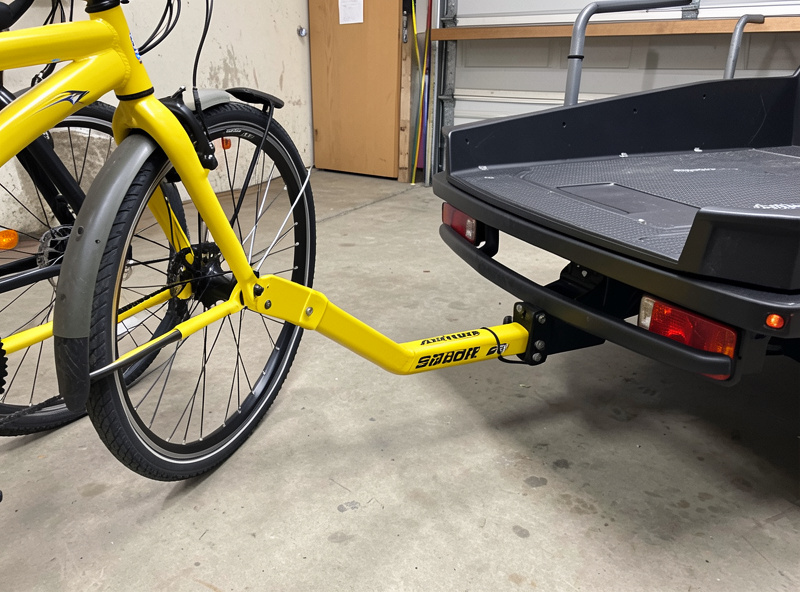
This is the part I can put a stopwatch and a watt-meter on. A trailer hangs its mass behind your rear axle, so the launch from a dead stop feels noticeably heavier and the bike pivots around the hitch when you corner — you learn to take a wider line and to start in a lower gear. Once rolling on the flat it tracks well and you mostly forget it is there, until you brake, when the extra mass behind you wants to keep going and your stopping distance grows.
A cargo bike carries the load on the bike, low and central or low and rear, so it feels like a long, planted version of a normal bike rather than something towing behind you. It launches and corners as one piece. The trade is parking and tight-space handling: a long cargo bike is a barge in a crowded bike rack. Both behaviours come straight from where the mass sits, which is the whole subject of weight distribution and ride feel and the sibling piece on front load versus rear load.
Energy and Range Under Each Setup
Here is the number that surprises people: pulling a loaded trailer and riding a loaded longtail cost almost the same energy for the same total weight. On my logged loop a loaded trailer pulls 16–24 Wh/km and a comparably loaded longtail pulls 18–26 Wh/km — close enough that you should not pick one over the other for range. The deciding variables are total weight, terrain, headwind and cold, not whether the load is towed or carried. If you want to budget your own numbers, my Wh/km by terrain log and the broader range guide give you the method.
What this means in practice: size the battery for the loaded figure, not the brochure unladen one. A trailer setup on a 500 Wh commuter and a longtail on a 500 Wh pack will both give you roughly 20–30 loaded km before you are nervous, which is plenty for most school runs but tight if your route is long or hilly. Plan around the loaded Wh/km and you will never be the person walking a dead bike home with a kid on board.
| Factor | Bike + Trailer | Dedicated Cargo Bike |
|---|---|---|
| Upfront cost | $150–$900 (uses your bike) | $1,500–$5,000+ |
| Loaded energy (my loop) | 16–24 Wh/km | 18–26 Wh/km |
| Launch & cornering | Pivots on hitch, heavier start | Planted, rides as one piece |
| Daily friction | Hitch on/off each trip | Swing a leg and go |
| Storage footprint | Trailer detaches, stores small | Long; needs real space |
| Best for | Occasional hauls, tight budget | Daily, year-round hauling |
The Legal Frame You Cannot Skip
Towing or carrying, the motor rules are the same and you must get them right. In the EU — Sweden included — your bike is a 250 W pedelec with assist that cuts off at 25 km/h and only works while you pedal; a trailer does not change that classification. In the US the three-class system applies: Class 1 (pedal-assist to 20 mph), Class 2 (throttle to 20 mph), and Class 3 (pedal-assist to 28 mph), and a Class 2 throttle genuinely helps launching a loaded trailer from a stop.
Two practical legal-adjacent points I can speak to as a mechanic: many trailer makers specify a maximum bike speed and a maximum load for the trailer itself — respect both, because they are engineering limits, not suggestions. And local rules on carrying children by bike vary; that is a “check your jurisdiction” item, not something I will paraphrase from memory, because a wrong legal claim here is a real harm.
Safety and the Gear That Matters
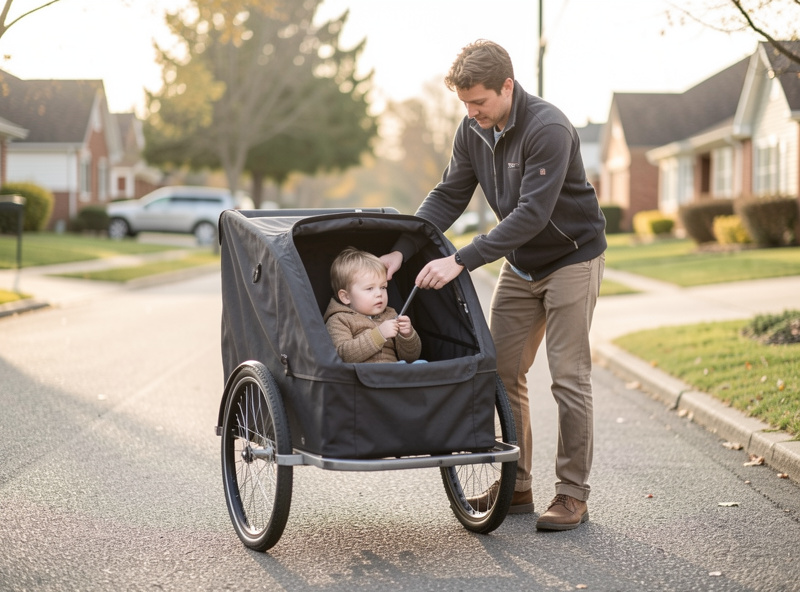
Whichever you choose, two pieces of gear move the safety needle most, and both come straight off my commuter bench. The first is braking: a bike hauling a kid needs hydraulic discs and a habit of checking pad wear far more often than a bare commuter, because pads at loaded weight wear fast. The second is being seen — the Nordic school run happens in the dark for months, and good lighting is not optional. The winter lights I run and, since a loaded family bike is a theft magnet, the lock I trust are the two upgrades I would not skip.
On the genuinely family-specific questions — at what age a child rides in a trailer versus a seat, how you handle two kids, whether your school route has a safe path — I defer to your judgment and to local guidance over anything I could invent. Treat helmets and visibility as standard practice, build the route around safe infrastructure, and let the gear I can vouch for handle the parts I actually test. For the rest of the build decisions, the accessories guide and the loaded hill test carry the mechanical detail.
As an Amazon Associate I earn from qualifying purchases. If a trailer is your starting point, a bike child and cargo trailer with a proper hitch is the cheapest way to test the whole idea before you commit thousands to a dedicated bike.
Frequently Asked Questions
Is a trailer or a cargo bike cheaper for the school run?
A trailer is far cheaper, roughly 150 to 900 dollars bolted to a bike you already own, versus 1,500 to 5,000 dollars or more for a dedicated cargo e-bike. The trailer is the low-commitment way to test whether hauling by bike fits your routine.
Does pulling a trailer use more battery than a cargo bike?
Not meaningfully. On my logged loop a loaded trailer pulls 16 to 24 Wh per km and a comparably loaded longtail pulls 18 to 26 Wh per km. Total weight, terrain, wind, and cold decide your range far more than whether the load is towed or carried.
Do I need a special e-bike to tow a child trailer in the EU?
No. A standard 250 W pedelec with assist cutting off at 25 km/h stays a legal bicycle whether or not it tows a trailer. Respect the trailer maker’s own maximum speed and load limits, and check local rules on carrying children by bike.
How does a trailer change how the bike rides?
The trailer’s mass sits behind your rear axle, so launches feel heavier, the bike pivots around the hitch in corners, and braking distance grows. On the flat it tracks well and you mostly forget it is there. Start in a lower gear and take wider lines.
Which should a first-time buyer get?
If you already own a capable e-bike and haul only occasionally, start with a trailer. If hauling kids and shopping is a daily, year-round job and you want zero hitching friction, buy a dedicated cargo bike. The trailer answers the is-this-for-us question cheaply.