Important Disclaimer
eBikeGarageHQ provides educational content and estimates only. We are not certified installers, financial advisors, or electricians. Always consult with licensed professionals.
A loaded climb is the hardest thing you can ask an e-bike to do, and my loaded hill testing is blunt about it: on the same graded hill, with weight measured in kilograms and energy logged at the wall, a torque-sensing mid-drive holds a steady cadence up a 6–8% grade while a cadence-sensor hub motor bogs, draws huge current, and sheds heat. Loaded climbing roughly doubles my flat Wh/km, and on the steep pitches it can triple it. The motor you choose decides whether the hill is a non-event or a sweat-soaked crawl.
This is the article I am most comfortable writing on the whole cargo topic, because it is measurement, and measurement is what my bench does. I am not estimating from a brochure. I load my own bikes and a trailer to a known weight, ride a repeatable hill at a logged assist level, and read the energy off a watt-meter at the wall when I recharge. The numbers below are from that method, not from a spec sheet, and they will save you from the single most common cargo-bike regret: a bike that cannot climb your hill with the load you actually carry.
How I Run the Loaded Hill Test
The method is deliberately boring, because boring is what makes numbers comparable. I use one hill I know, ride it at a fixed assist level, and control the one variable that matters: weight. I run each bike empty, then add a measured load — sandbags and crates to a known kilogram figure standing in for kids and shopping — and ride the identical line. I log the climb with GPS for grade and speed, and I measure the energy that went into the climb by logging the recharge at the wall with a watt-meter, the same discipline I bring to every pack on my battery bench. Same hill, same assist, same line; only the weight and the motor change.
That control is the whole point. Manufacturer range and climb claims almost never state the load, the grade, or the temperature, which makes them close to useless for a cargo buyer. My Wh/km by terrain log uses the same repeatable approach, and the cargo hill test is simply that method pointed at the steepest, heaviest case.
The Numbers: What a Loaded Hill Actually Costs
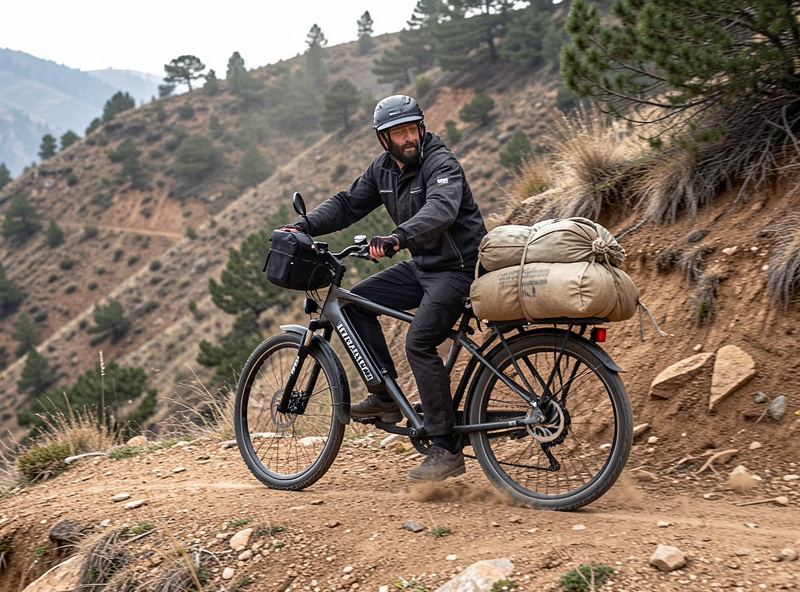
Energy use climbs with grade far faster than people expect once weight is on board. On the flat my loaded bikes pull around 18–22 Wh/km. Tip the road up to a moderate 4% and that jumps to roughly 30–38 Wh/km loaded; on a steep 8% pitch I have logged 55–75 Wh/km loaded depending on speed and how much I help with my legs. Grade is the multiplier, and load is what makes the multiplier brutal — the same hill empty costs a fraction of those figures.
The table puts the loaded-versus-empty gap side by side. Read it as direction and magnitude rather than gospel to three decimals — your hill, your weight, and your legs will shift the exact numbers, but the shape holds everywhere.
| Grade | Empty (Wh/km) | Loaded ~40 kg (Wh/km) | What It Feels Like Loaded |
|---|---|---|---|
| Flat | 9–12 | 18–22 | Easy; barely notice the load |
| 2–3% | 14–20 | 24–32 | Steady; downshift once |
| 4–6% | 22–34 | 30–48 | Working; mid-drive shines |
| 7–8%+ | 34–50 | 55–75 | Hard; hub motors start to suffer |
Why a Mid-Drive Wins the Loaded Climb
A mid-drive sends its torque through your chain and gears, so on a steep loaded pitch you simply downshift and the motor keeps spinning in its efficient range. It stays cool, it keeps its torque, and it meters power by how hard you actually push the pedals. That is why, under load on a real hill, a torque-sensing mid-drive feels like it has a reserve the hub motor does not — the conclusion I reach unladen in hub motor vs mid-drive on hills, only load turns the gap from noticeable to decisive.
The torque-sensor behaviour matters even more loaded than empty. It feeds power smoothly in proportion to your effort, so a heavy bike on a steep start does not lurch or stall; it builds. The feel difference is the whole subject of torque sensor vs cadence sensor, and on a loaded climb it is the difference between a confident, metered crawl and an on-off shove that unsettles the bike with a kid on board.
What Happens to a Hub Motor Under Load on a Hill
A hub motor turns the wheel directly at a single fixed ratio, so on a steep loaded climb it cannot downshift — it just slows down. As it slows, it falls out of its efficient range, draws far more current to make the same torque, and turns that excess into heat in the motor and the controller. On a long hot climb a hub motor can heat-soak to the point where it cuts power to protect itself, which is the worst possible moment to lose assist with a loaded bike. A geared hub handles this better than a direct-drive hub, but neither matches a mid-drive’s gears.
This is not me saying hub motors are bad — on flat city riding with light loads a good hub cargo bike is fine and cheaper. It is me saying that hills plus load is the exact scenario a hub motor is worst at, and if that is your daily reality you should not try to save money on the drive system. The recurring maintenance trade between the two is laid out in hub vs mid-drive maintenance.
The EU 250 W Cap: Why Gearing Beats Watts
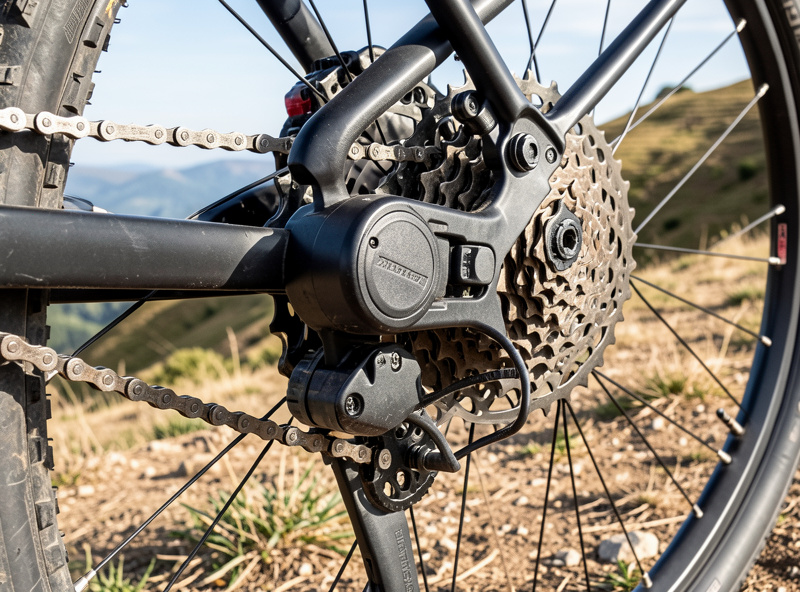
Here is the legal reality that makes the mid-drive argument decisive in Europe. In the EU — and in Sweden where I ride — your pedelec is capped at 250 W continuous with assist cutting off at 25 km/h (the EU pedelec definition). You cannot legally buy a bigger motor to bully a loaded hill the way a US Class 3 rider sometimes can. Inside that 250 W cap, the only way to multiply your climbing torque is gearing, and gearing is exactly what a mid-drive gives you and a hub motor does not.
For US readers the class system gives a little more headroom — Class 1 and Class 3 bikes can run more powerful motors in many states — but even there, a geared mid-drive climbs a loaded hill more efficiently and with less heat than a brute-force hub. Power helps; gearing helps more. Get the legal frame right for where you ride, then let the drivetrain, not the wattage, do the climbing.
How to Ride a Loaded Climb Well
Technique saves more than any spec once you are on the hill. Downshift early, before the grade bites, so you never get caught mashing a high gear at low cadence — that is what cooks a motor and your knees. Carry momentum into the bottom of the climb rather than crawling at it from a stop. Keep your cadence up and let the motor stay in its happy range. On a longtail keep your weight forward so the front does not get light; on a front-loader just trust the low, planted balance and steer gently.
And manage heat and battery on long climbs. A sustained steep climb is where cold-weather range loss compounds with high draw, so plan for the loaded Wh/km, not the brochure number, and keep an eye on remaining capacity — the habits in battery care and the realities in cold-weather range loss both apply double when you are hauling weight uphill in winter. The full platform context for all of this lives in the cargo and family e-bike guide.
Frequently Asked Questions
How much does a loaded cargo e-bike’s energy use rise on hills?
On my logged loop, loaded flat riding pulls about 18 to 22 Wh per km. A moderate 4 percent grade raises that to roughly 30 to 38 Wh per km, and a steep 8 percent pitch can hit 55 to 75 Wh per km loaded. Grade is the multiplier and load makes it brutal.
Can a hub-motor cargo bike climb steep hills with a load?
It can, but it suffers. A hub motor cannot downshift, so on a steep loaded climb it slows, draws heavy current, and heats up, and on a long hot climb it may cut power to protect itself. On flat city riding with light loads a good hub cargo bike is fine.
Why is a mid-drive better for loaded hill climbing?
A mid-drive feeds torque through your gears, so you downshift and it keeps spinning in its efficient range, staying cool and holding torque. Under the EU 250 W cap, gearing is the only way to multiply climbing torque, which makes a mid-drive close to mandatory for loaded hills.
Does the EU 250 W limit make hills harder on a cargo bike?
It removes the option of brute-force power, so you must climb with gearing instead. That is why a torque-sensing mid-drive matters so much in Europe: within 250 W, downshifting multiplies your climbing torque where a fixed-ratio hub motor cannot.
What is the best technique for climbing with a loaded cargo bike?
Downshift early before the grade bites, carry momentum into the bottom of the climb, keep your cadence up so the motor stays efficient, and keep your weight forward on a longtail. Plan around the loaded Wh per km rather than the brochure range number.