Important Disclaimer
eBikeGarageHQ provides educational content and estimates only. We are not certified installers, financial advisors, or electricians. Always consult with licensed professionals.
If you compare e-bike motor systems on the numbers alone, you will buy the wrong bike. The honest hierarchy is feel first, maintenance second, headline torque a distant third — and after four seasons of commuting in Sweden on a Bosch mid-drive, a hub-drive value bike, and a Bafang conversion I built myself, the gap between a 250 W torque-sensor mid-drive and a cadence-sensor hub is bigger than any spec sheet will tell you.
This is the garage-honest version. I am not going to repeat manufacturer marketing back to you, and I am not going to pretend a number on a website is a riding experience. What follows is how Bosch, Shimano, Bafang and Brose actually behave under a real rider, on real hills, in real cold — measured at the wall and logged on my test loop — plus where each one quietly wins and loses money over the years you own it.
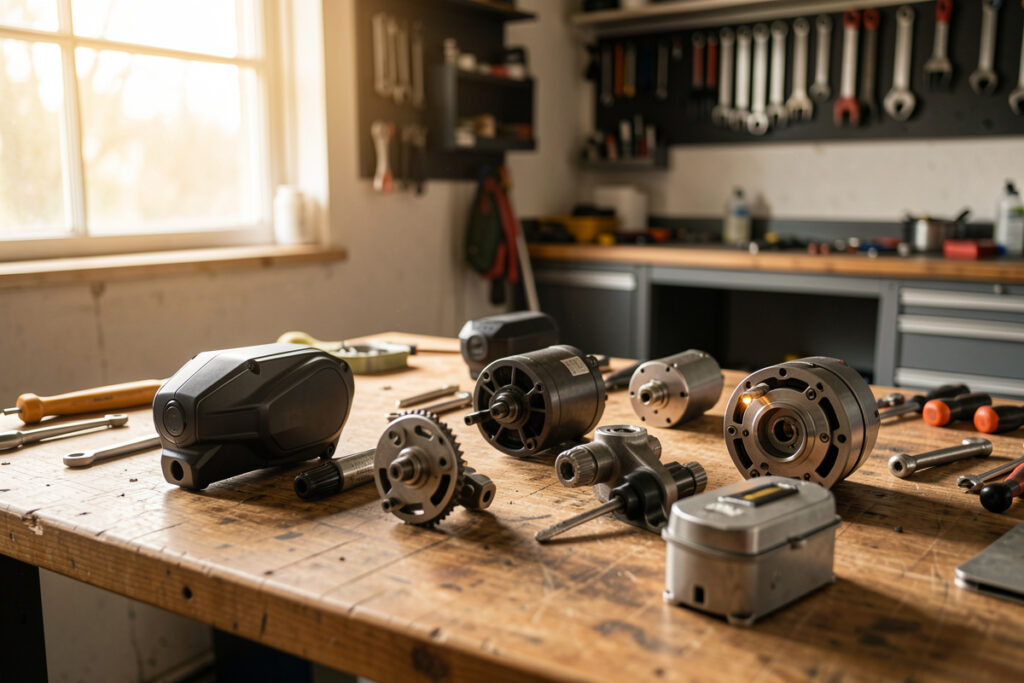
A note on where these verdicts come from, because it changes how much weight you should give them. My comparisons are not a press-launch weekend. They come from owning a Bosch mid-drive and a hub-drive value bike side by side, from building and tuning a Bafang conversion on my own bench, from riding a repeatable test loop in every season with temperature and assist level logged, and from measuring charge energy at the wall the same way I do for the stationary packs on my battery bench. Where I have not lived a system personally — high-power off-road builds, brand-specific warranty fine print — I say so and point you to the source rather than guess.
The Two Decisions That Matter Before Any Brand
Before you argue Bosch versus Shimano, settle two things: mid-drive or hub, and torque sensor or cadence sensor. Those two choices decide 80% of how the bike feels. Brand is the last 20%. A torque-sensor mid-drive from any of the big names will out-ride a cadence-sensor hub from all of them, and a cadence hub will feel the same crude on-off shove whether the controller says Bafang or something unbranded.
A mid-drive puts the motor at the cranks, so it drives through your gears and the weight sits low and centered. A hub motor lives in the wheel — cheaper, simpler, but it shifts the mass to one end and drives the wheel directly, bypassing your cassette. If that distinction is new to you, read my hub motor vs mid-drive guide and the deeper look at where the mass sits and why it changes the ride before you go further. The sensor question — whether the motor responds to how hard you push or just to whether your legs are spinning — is covered in torque sensor vs cadence sensor, and it is the single thing most first-time buyers underrate.
The Four Systems at a Glance
Here is the short version before the detail. Bosch is the reference — the most consistent assist and the best dealer network, at a price. Shimano EP8 matches it on torque and undercuts it on weight and, often, noise. Brose is the quiet one, smooth and near-silent, but its history asks for a closer reliability look. Bafang spans two worlds: budget hub motors and conversion kits at one end, and capable torque-sensor OEM mid-drives at the other.
| System | Peak torque (typical) | Drive type | Character | Best for |
|---|---|---|---|---|
| Bosch Performance Line CX | 85 Nm | Mid-drive, torque sensor | The reference: consistent, natural, well-supported | Trekking, commuting, eMTB you keep for years |
| Shimano EP8 | 85 Nm | Mid-drive, torque sensor | Light, punchy, generally quiet | Riders who want full power at lower weight |
| Brose Drive S Mag | 90 Nm | Mid-drive, belt-internal, torque sensor | The quiet one: smooth, near-silent | Quiet commuters and refined trekking bikes |
| Bafang (M-series / BBS kits) | ~95 Nm OEM / kit varies | Mid-drive or hub | Value and conversions; cadence on cheap kits | Conversions and budget builds |
| Geared hub (value bikes) | 40–65 Nm | Hub, often cadence | Cheap, simple, crude on-off feel | Flat-city commuting on a budget |
Treat the torque column as a ceiling, not a personality. An 85 Nm Bosch and an 85 Nm Shimano feel different in the first pedal stroke even though the number matches — which is exactly why I keep telling people the spec sheet is the start of the conversation, not the end. For the deep brand-by-brand rides see the systems guide and the dedicated comparisons further down this page.
How Each System Actually Rides
The difference you feel in the first 50 metres is response shape, not peak power. Bosch meters its assist so smoothly that you stop noticing it — the bike just feels like a strong version of you. Bosch publishes the specs and service documentation behind that system openly (bosch-ebike.com). Shimano EP8 is slightly more eager off the line and lighter under you, which makes a heavy trekking bike feel friskier. Brose is the one people describe as “is it even on?” — the belt-driven internals make it glassy and quiet, so the power arrives without the faint gear whine the others have.
Bafang’s torque-sensor OEM motors (the M-series) ride close to the big names; the cheap BBS conversion kits and budget hub motors are cadence-based, which means the motor responds to your pedalling cadence, not your effort. That produces the characteristic surge — you turn the cranks, and a beat later a fixed slug of power arrives whether you needed it or not. It is fine on the flat and frustrating in traffic, where you want fine control. On my own Bafang conversion I tuned the controller to soften that surge, and it helped, but it never matched the torque-sensor bikes for finesse. The full write-up is in my Bafang conversion experience.
What surprised me most was switching bikes on the same morning. Step off the torque-sensor Bosch and onto the cadence hub and your body keeps expecting the proportional push that is suddenly not there — pedal soft and the motor still shoves, pedal hard and it gives you nothing more. After a season I stopped noticing it on the hub, but only because I had learned to ride it differently, feathering the cadence of my legs to suit the controller rather than the road. That adaptation is the hidden cost of a cadence system: it works, but it trains you around its limits instead of disappearing under you the way a good torque sensor does.
Hills: Where Mid-Drive Pulls Away
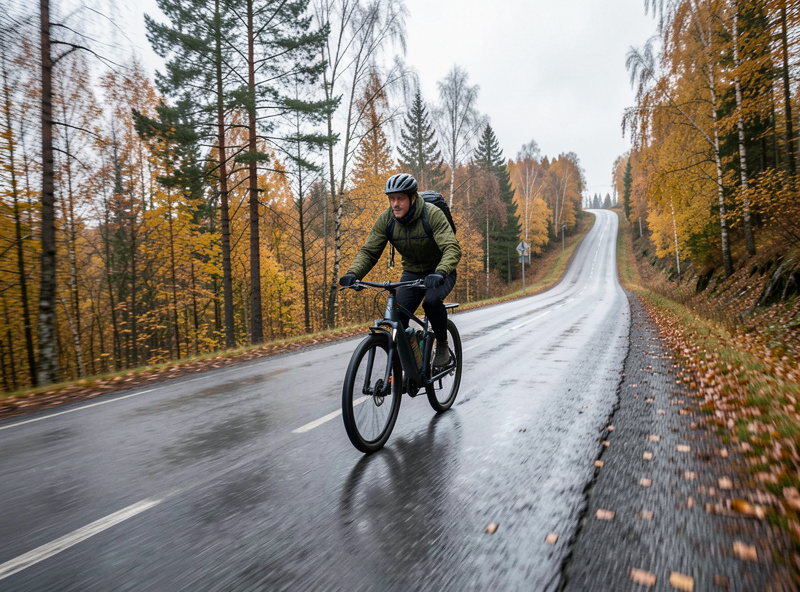
On a real climb the mid-drive advantage stops being theoretical. Because a mid-drive feeds power through your cassette, you can drop to a low gear and let the motor spin in its efficient range while your wheel turns slowly with big torque at the contact patch. A hub motor cannot do that — it is geared to the wheel directly, so on a steep, slow climb it bogs into an inefficient zone, draws more current, and gets hot. Grin Technologies’ motor simulator (ebikes.ca) plots exactly that efficiency-versus-speed curve if you want to see why a hub struggles slow. I logged this on the same hill near home: the hub bike pulled noticeably more watt-hours per kilometre by terrain on the climb than the mid-drive did, for the same effort.
If you live somewhere flat, a good geared hub is honestly fine and saves you money. If your commute has a single nasty hill, the mid-drive earns its premium every single day. I walk through the climbing difference in detail in hub motor vs mid-drive on hills.
The Maintenance Truth Nobody Prices In
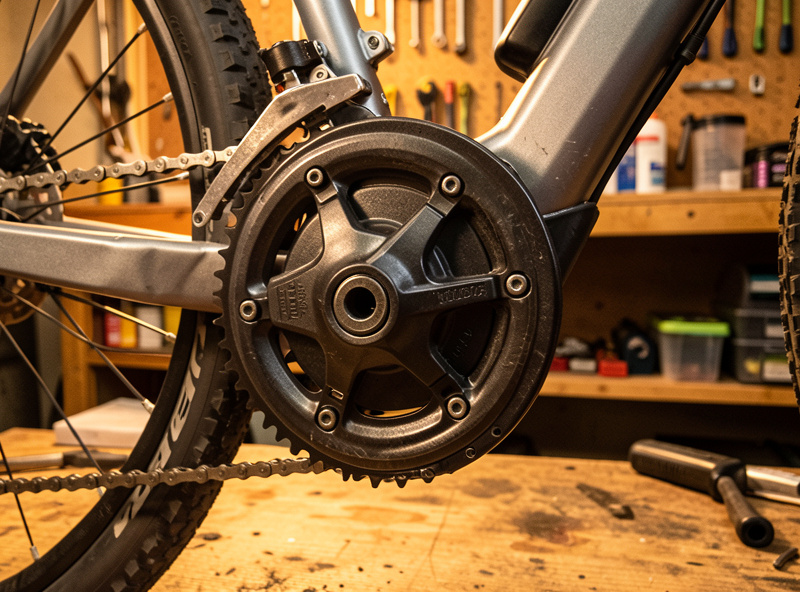
Here is the trade the brochures skip. A mid-drive drives your chain and cassette with motor torque on top of your legs, so the drivetrain wears faster — measurably faster. I track chain stretch with a wear gauge, and under mid-drive torque a chain reaches the 0.5% replacement point sooner than it would on an acoustic bike. Ignore it and you grind the cassette too. I logged the real numbers in chain wear under motor torque, and the routine that keeps it cheap is in my drivetrain cleaning guide. A cheap chain wear indicator tool pays for itself the first time it tells you to swap a chain before it eats a cassette.
A hub motor leaves your drivetrain alone — your chain only ever sees leg power — but it loads the wheel. Hub motors are heavy, and that mass plus motor reaction torque is hard on spokes; a loose or broken spoke on a motor wheel is a real failure mode, which is why I check hub motor spoke tension on a schedule. So the maintenance bill does not disappear with a hub — it just moves from the cassette to the wheel. The full side-by-side is in hub vs mid-drive maintenance, and both fit into the wider rhythm I describe in my e-bike maintenance guide and seasonal maintenance schedule.
As an Amazon Associate I earn from qualifying purchases.
Noise: The Difference You Hear Every Ride
Motor noise is the thing you notice on day two and never stop noticing. Ranked quietest to loudest in my own experience: Brose first (the belt drive is genuinely close to silent), then Shimano EP8, then Bosch (a faint but well-mannered whine that rises under high assist), then budget cadence hubs and the louder Bafang BBS kits, which whine and sometimes rattle. None of them are loud enough to ruin a ride, but on a quiet morning path the difference between Brose and a budget hub is the difference between hearing the birds and hearing your bike. I break the whole field down in the systems comparison and the dedicated noise piece in this series.
Torque, Watts and the Numbers Game
Two specs get quoted endlessly and understood rarely. Torque (Nm) is twist — it is what you feel as shove off the line and grunt on a hill. Going from 50 to 85 Nm is a real, noticeable change in how hard the bike pushes. Power (watts) is the rate of doing work, and in the EU the legal motor rating is capped at 250 W nominal regardless of brand, so “more watts” mostly matters outside that frame. That cap is set by EU Regulation 168/2013 (EUR-Lex), not by the motor makers. A 250 W Bosch and a 250 W Shimano are both 250 W bikes by the rules I ride under; what separates them is torque delivery and software, not a bigger wattage headline.
This is where buyers get fleeced: a spec sheet shouting “750 W!” is describing a bike that is not road-legal as an e-bike in the EU and, in the US, sits in a higher class with its own rules. Understand the difference before you pay for watts you cannot legally use — I lay out the EU 250 W and 25 km/h rules and the EU versus US spec differences separately.
Battery, Range and the Wall-Meter Reality
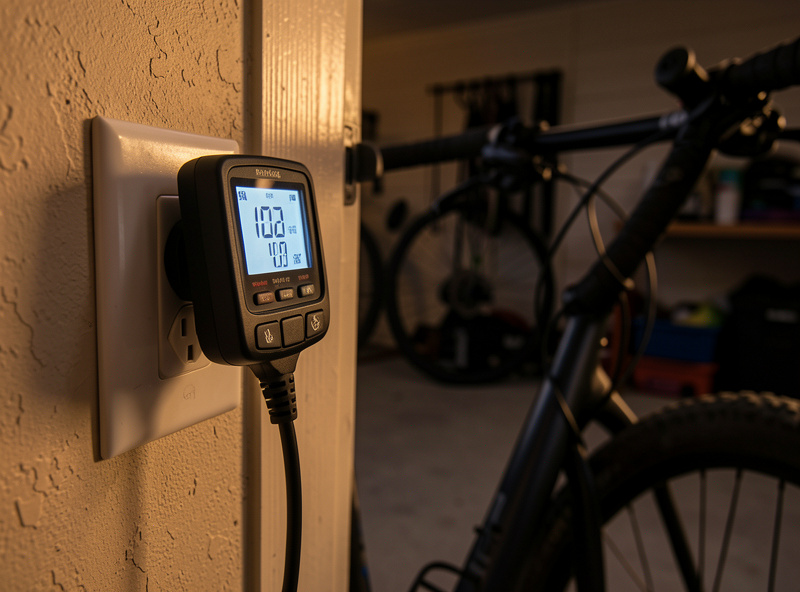
The motor you choose changes how the battery empties, and this is where my battery bench earns its keep. Wh is Wh — a 500 Wh pack holds 500 Wh whatever badge is on the motor — but an efficient mid-drive spinning in its sweet spot sips fewer Wh per kilometre than a hub motor lugging up the same hill. I log every charge at the wall with a watt-meter, the same discipline I use on every pack on my stationary battery bench, because Wh does not care what it is pushing.
None of these numbers survive winter unchanged. Cold robs usable capacity, and a system that claims 100 km in a June brochure will give you noticeably less in a Nordic January — I have the cold-weather range loss logged to prove it. Build your expectations from real range math, not the spec line, and treat the pack with the habits in my battery care guide so it still holds charge in year five — see how many years to expect and the honest charging cost math. Battery chemistry runs deeper than bikes; for the stationary-storage version I point readers to my battery work at batterystoragehq.com.
Conversions: Where Bafang Earns Its Place
If you already love a bike, a conversion can be the smartest money in this whole hobby — and it is the one place a Bafang mid-drive kit genuinely competes with the OEM names. I converted a donor bike with a Bafang-class mid-drive kit, chose a bought battery pack rather than building cells (a hard safety line I do not cross), and learned the torque-arm and dropout lessons the hard way. It rides like a slightly cruder Bosch and cost a fraction of a new bike. If that road tempts you, start with my conversion guide, the donor bike requirements, and the torque arm install, then read the hub-vs-mid-drive implications for conversions before you buy a kit.
So Which System Should You Buy?
If you want the safest long-term ownership and a dealer who can fix it, buy Bosch and stop overthinking it. If you want full power at lower weight and you are happy with the support network, Shimano EP8 is the value-against-Bosch pick. If silence and smoothness matter most and you will buy from a brand that stands behind it, Brose is lovely. If you are converting a bike or building to a budget, Bafang is the obvious tool — just go torque-sensor if the kit offers it. And if your world is flat and your wallet is the constraint, a decent geared hub is not a compromise, it is a sensible choice. The honest commuting-specific call is in hub or mid-drive for commuting, and if you are still at the very start, my first e-bike buying guide walks the whole decision.
What Tends to Fail First on Each System
Reliability is not one number, it is a pattern of what wears and what strands you. On Bosch the motors themselves are famously durable; what you actually replace is drivetrain consumables and the occasional display, and parts are everywhere. Shimano EP8 earned a reputation for the occasional creak or bearing complaint on early units, mostly resolved on later revisions, and shares the deep Shimano parts pipeline. Brose is the one I hedge on: the belt that makes it so quiet has been the subject of historical service campaigns on bikes built around it, so I tell people to buy Brose from a brand with a strong warranty and a dealer who has seen the system before.
Bafang splits again. The OEM M-series motors are solid; the budget BBS conversion kits are mechanically tough but their controllers and displays are the weak link, and support is whatever forum you can find rather than a dealer. Geared hub motors hide a wear item most owners never think about — the internal clutch pawls that let the wheel freewheel — while direct-drive hubs have almost nothing to fail but pay for it in dead weight and a faint magnetic drag you feel when the motor is off. I go deeper on every one of these failure modes in the dedicated reliability comparison in this series, and the practical upshot is simple: buy the system whose parts and service exist where you live, not the one with the best forum thread.
The Display and Ecosystem You Are Buying Into
Choosing a motor also chooses a software world, and that lock-in outlives the honeymoon. Bosch ties you to its displays — Purion, Intuvia, Kiox — and its app and eBike Flow ecosystem; it is polished and consistent, and it is also a walled garden you cannot mix and match. Shimano gives you its E-Tube app and a cleaner, lighter cockpit. Brose typically arrives wearing a bike brand’s own skin, most famously Specialized, so you are really buying that brand’s app and support as much as the motor underneath.
This matters more than buyers expect, because the display is where you live every ride — assist levels, range estimate, the trip data I cross-check against my own wall-meter logs. A good cockpit that shows honest remaining range is worth real money on a dark winter commute; a vague five-bar battery gauge is how range anxiety starts. When you compare systems, demo the display, not just the motor, and ask how firmware updates and diagnostics are handled, because a motor you cannot get serviced or updated locally is a motor that ages badly no matter how good it felt in the shop.
Frequently Asked Questions
Which e-bike motor brand is the most reliable?
Bosch has the strongest track record and dealer network, which makes it the safest long-term bet. Shimano is close behind. Brose is smooth but its belt-drive history deserves a closer look, and Bafang quality spans from excellent OEM motors to variable budget kits.
Is a mid-drive really better than a hub motor?
For hills and natural feel, yes. A mid-drive drives through your gears, so it climbs efficiently and rides like a stronger you. On flat ground a good geared hub is genuinely fine and cheaper. The right answer depends on your terrain, not on which is objectively best.
Does more torque mean a better e-bike motor?
Not on its own. Torque in Nm is the shove you feel, and 50 to 85 Nm is a real jump, but delivery and software matter more than the headline number. An 85 Nm Bosch and an 85 Nm Shimano ride differently despite the matching spec.
Why do all EU e-bikes say 250 watts?
EU law caps the nominal motor rating at 250 watts and assist at 25 km/h. Within that frame, brand differences come from torque delivery and tuning, not wattage. Higher-wattage motors exist but sit outside legal e-bike rules in the EU and in higher US classes.
Which e-bike motor is the quietest?
Brose, thanks to its belt-driven internals, is the closest to silent. Shimano EP8 is next, then Bosch with a faint whine under high assist. Budget cadence hub motors and Bafang BBS kits are the loudest, though none are loud enough to ruin a ride.
Can I convert my normal bike instead of buying an e-bike?
Yes, and a Bafang-class mid-drive kit with a bought battery pack is the usual route. It rides like a slightly cruder OEM mid-drive at a fraction of the price. Mind the torque arm and dropout strength, and never build battery cells yourself.