Important Disclaimer
eBikeGarageHQ provides educational content and estimates only. We are not certified installers, financial advisors, or electricians. Always consult with licensed professionals.
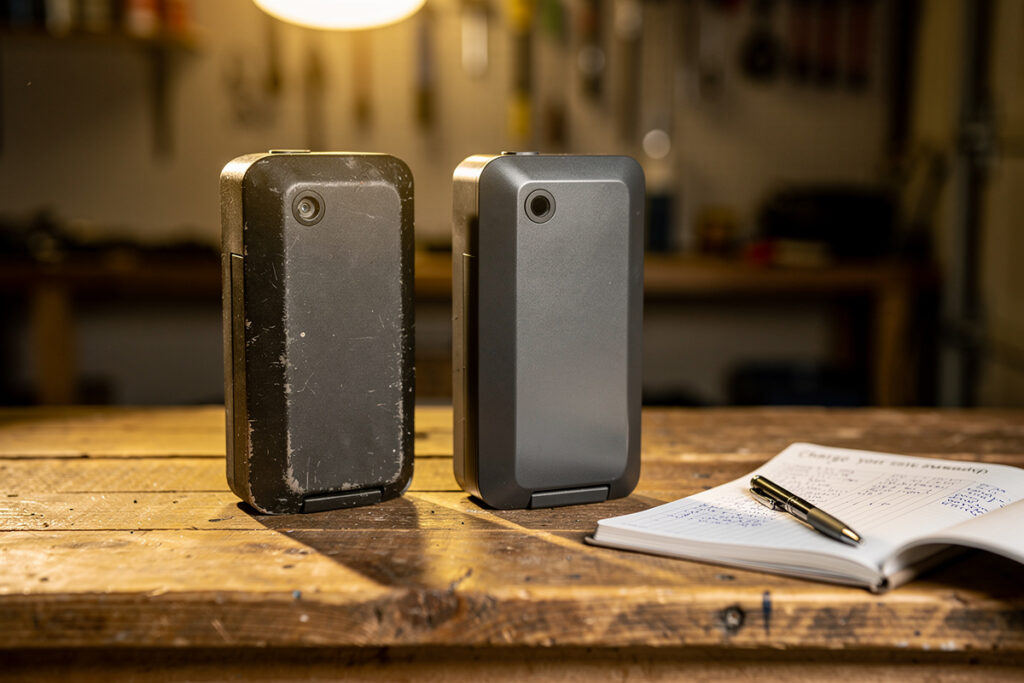
A quality e-bike battery lasts 500 to 1,000 full-charge cycles before dropping to about 80% capacity, which for most commuters is roughly three to six years of riding. The number that actually matters, though, is not cycle count but how many usable watt-hours you have left on your real route.
I track battery fade the way I track everything on this bench: with a logged route and a watt-meter rather than guesswork. The pack on my commuter and the cells on my stationary battery wall age by the same rules, and watching the usable capacity drift down a few percent a year tells me far more than any spec sheet. Here is what realistic lifespan looks like, what speeds it up, and how to tell when a pack is genuinely worn out versus just having a cold day.
How Many Years Will an E-Bike Battery Last?
Expect three to six years of useful life from a good pack under normal commuting, though heavy daily mileage can shorten that and light, careful use can extend it well beyond. The wide range exists because “lifespan” depends on how many cycles you put through it and how kindly you treat it between rides, not on calendar years alone.
A rider doing a short daily commute might take five years to accumulate the cycles a long-distance tourer racks up in two. Both packs could be rated for the same number of cycles; one simply burns through them faster. That is why I think in cycles and watt-hours rather than years, and why two riders can get very different lifespans from identical batteries. Your mileage, quite literally, varies.
It is also worth knowing that partial charges count proportionally. Charging from 50% to 100% is half a cycle, not a whole one, so the rider who tops up little and often is not “using up” cycles any faster than one who runs the pack down and charges it full. If anything, those shallow partial cycles are gentler on the cells than deep ones, which is one more reason the partial-charging habit pays off twice: it slows calendar aging at the top of the range and it spreads the cycle wear more kindly. Cycle count is a budget, and small, frequent withdrawals cost the same total as large, infrequent ones while stressing the cells less.
What Does Capacity Fade Actually Look Like?
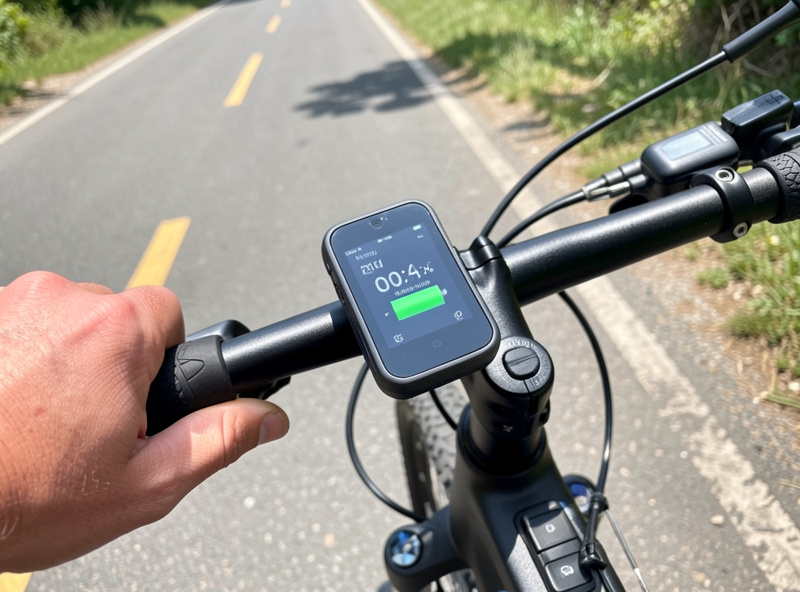
Capacity fade is gradual and front-loaded: you lose a small amount in the first year, the curve flattens for a long stable middle, then it steepens again near end of life. A pack does not usually fall off a cliff; it quietly gives you a little less range each season until one day it no longer covers your daily ride. That day is its real end of life for you, regardless of what the cycle counter says.
Concretely, a 500 Wh pack at 80% health still holds 400 Wh, which is plenty for most commutes. The point where it stops mattering is personal: if your daily route needs 300 Wh, you have years of headroom; if it needs 380 Wh, that same fade leaves you cutting it close. This is exactly why I log usable range against a repeatable loop rather than trusting a percentage, a method I lay out in full in my real-world range calculator.
Typical Capacity Over a Battery’s Life
| Stage | Approximate cycles | Rough capacity | What you notice |
|---|---|---|---|
| New | 0 | 100% | Full rated range |
| Year 1-2 | 100-300 | ~90-95% | Slight range drop, easy to miss |
| Mid-life | 300-600 | ~85-90% | Noticeable on long rides |
| End of warranty life | 500-1,000 | ~80% | Range loss now obvious |
| Beyond rated life | 1,000+ | Below 80% | May no longer cover your commute |
These figures are typical ranges for quality lithium-ion packs, not a guarantee for any specific battery; treat them as the shape of the curve rather than precise promises. A cheap unbranded pack can fall well short of these numbers, while a well-made battery treated kindly can sit comfortably above the line, which is exactly why how you charge and store the pack matters as much as which one you bought.
What Speeds Up Battery Fade?
The big accelerators are heat, sitting at extreme states of charge, and deep discharge cycling. Sustained high temperatures age the cells chemically; storing or parking the pack at 100% or near empty for long stretches adds calendar aging; and repeatedly running the battery flat is harder on it than partial cycles. Every one of these is avoidable from the outside.
Notice the theme: none of these require opening the pack to address, and none of them are mysterious. They are habits. Charge to a sensible level, keep the battery out of heat, store it at half charge, and top up before empty, and you have neutralized the main causes of premature fade. The charge-level choice is its own decision, which I cover in should you charge to 80 or 100, and the storage specifics in the winter storage guide.
How Do I Know If My Battery Is Worn Out?
The honest test is usable range on a repeatable route, measured when the pack is warm and fully charged. If a known loop that used to take 40% of the battery now takes 55%, and that holds true on warm days at the same assist level, you are looking at genuine capacity fade. A single cold-day range drop is not fade, it is temperature, and it comes back when the pack warms up.
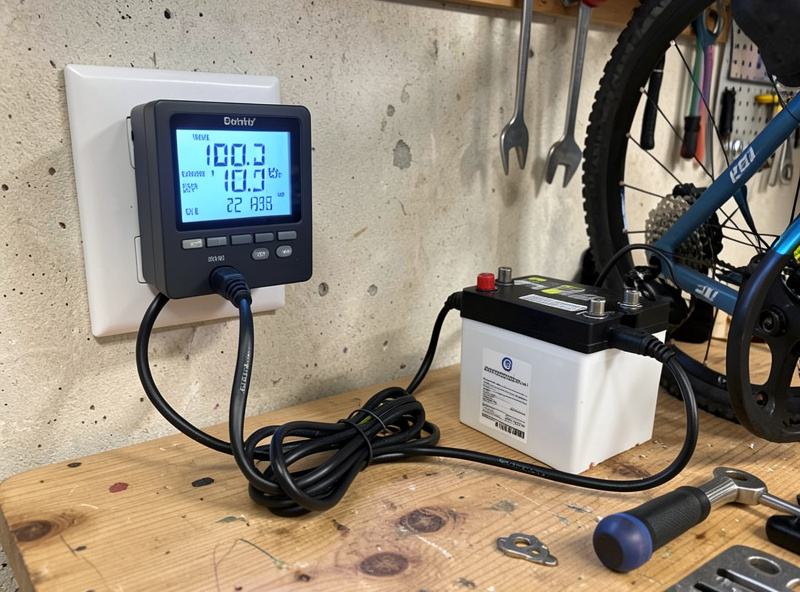
A watt-meter on the charger adds the other half of the picture: a tired pack accepts less energy to reach full than it did when new. Between the range log and the charge log you can separate real aging from a bad-weather day with confidence. What you should never do to “diagnose” a battery is open the case to probe the cells; that crosses from care into pack-level work that is a genuine fire risk and is off the menu here entirely. Everything you need to assess health, you can read from the outside.
Does Battery Chemistry Change How Long It Lasts?
Most e-bike packs use lithium-ion cells in either an NMC or, increasingly, an LFP (lithium iron phosphate) chemistry, and the chemistry does shift the lifespan story. NMC packs are lighter and more energy-dense for a given size, which is why they dominate; LFP packs are heavier for the same range but tend to tolerate more cycles and handle full-charge storage more gracefully. Neither is “better” in the abstract, they are different trade-offs.
For care purposes, the good news is that the habits in this guide help both. Partial charging, sane temperatures, and mid-charge storage extend the life of any lithium-ion pack, regardless of the specific chemistry inside. The one practical note is that you should never assume your bike uses a particular chemistry and treat it accordingly without checking, since the safe defaults are the same either way. Follow the general habits and you do not need to know which cells are in the case to get a long life out of them.
What Happens When It Reaches End of Life?
End of life rarely means a dead battery; it means a pack whose remaining capacity no longer suits your needs. At that point the choices are to live with the reduced range, buy a replacement pack, or in some cases run a second battery alongside the fading one. A pack at 70% is still perfectly usable for shorter rides even if it no longer covers your full commute.
When you do replace it, buy the pack specified for your bike and your region rather than a bargain aftermarket unit of unknown provenance, and recycle the old one through a proper battery-recycling channel rather than the bin. Whether a fresh pack or a second battery makes more sense depends on your mileage and your bike, which I weigh up in is a second e-bike battery worth it. And the whole topic sits inside the broader battery care guide, because the habits that slow fade are the same ones that get you to a long life in the first place.
Frequently Asked Questions
How many years does an e-bike battery last?
Roughly three to six years under normal commuting, depending on mileage and care. Lifespan is governed by charge cycles and treatment, not calendar years, so a light user can far exceed that while a heavy daily rider may see less.
How many charge cycles is an e-bike battery good for?
Most quality packs are rated for 500 to 1,000 full-charge cycles before dropping to about 80% capacity. Manufacturers usually quote the conservative end, and good charge and storage habits routinely push real packs past the rating.
Is it normal for e-bike range to drop over time?
Yes. Capacity fade is gradual and front-loaded: a small loss early, a long stable middle, then a steeper decline near end of life. A pack at 80% health still holds plenty of usable energy for most commutes.
How can I tell if my e-bike battery is worn out?
Compare usable range on a repeatable route when the pack is warm and full. If a known loop now uses far more battery than it used to, and that holds on warm days, it is genuine fade. A single cold-day drop is just temperature.
Can I replace just the cells in my e-bike battery?
This site does not recommend opening or rebuilding packs, as cell-level work is a genuine fire risk. When a pack reaches end of life, buy a replacement specified for your bike and region and recycle the old one properly.