Important Disclaimer
eBikeGarageHQ provides educational content and estimates only. We are not certified installers, financial advisors, or electricians. Always consult with licensed professionals.
An e-bike chain wears out faster than a regular bike chain because the motor’s torque runs straight through it. On a mid-drive, plan to check wear every 500 km and replace once the chain passes 0.75% elongation — often every 1,500 to 2,500 km, roughly half the life the same chain would give on an unpowered bike.
This is the single most expensive lesson new e-bike owners learn, and they learn it twice: once when the cassette starts skipping, and again when the bill comes for the chain and the cassette they could have saved. I’ve tracked chain wear across my own bikes — a Bosch mid-drive commuter and a hub-drive value bike — and the difference the motor makes is real and measurable. Here’s exactly why it happens and the numbers I use to stay ahead of it.
Why Motor Torque Stretches Chains Faster
A bicycle chain doesn’t actually stretch — the metal doesn’t elongate. What happens is the pins and rollers wear at their contact surfaces, so each link gets fractionally longer and the chain as a whole grows. The more force you push through the chain, the faster that wear happens. A mid-drive motor adds 50 to 85 Nm of torque on top of your legs, and all of it passes through the same chain.
On a hub-drive bike the story is different and gentler: the motor pushes the wheel directly, so the chain only ever carries your leg power, same as an analog bike. That’s why hub-bike chains last close to normal life while mid-drive chains burn through it. If you’re weighing the two systems on maintenance grounds, this is one of the real differences I cover in my hub vs mid-drive maintenance comparison and the broader hub vs mid-drive guide. The torque that makes a mid-drive climb so well is the same torque that eats its drivetrain.
The Numbers: When a Chain Is Worn
Chain wear is measured as elongation, expressed in percent. A chain wear gauge drops into the chain and tells you when you’ve crossed a threshold. The key figures are 0.5%, 0.75%, and 1.0%, and what they mean depends on your drivetrain.
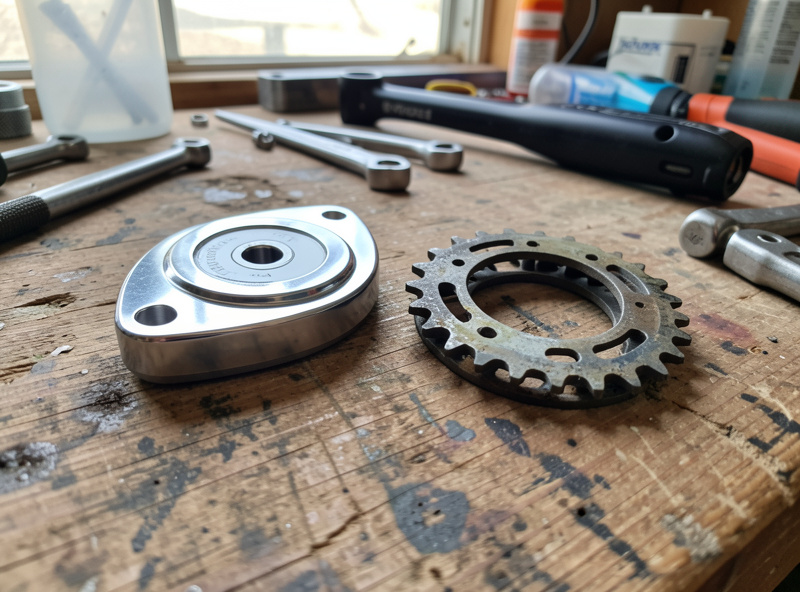
For most modern e-bikes running 9-, 10-, or 11-speed cassettes, 0.75% is the replace point. Below that, a new chain meshes fine with your existing cassette. Past 0.75%, the worn chain has reshaped itself enough that fitting a new one will skip on the old cassette — the chain and cassette have “worn in” together and now only run with each other. Ride past 1.0% and the cassette is definitely toast. The whole game is replacing the cheap part (the chain) before it forces you to replace the expensive part (the cassette and sometimes the chainring too).
| Chain elongation | What it means | Action |
|---|---|---|
| Under 0.5% | Healthy chain | Keep riding, keep lubed |
| 0.5–0.75% | Approaching limit | Plan a replacement soon |
| 0.75% (mid-drive replace point) | Worn; cassette still safe if replaced now | Replace chain |
| Over 1.0% | Cassette likely worn to match | Replace chain and cassette together |
How Often to Actually Check
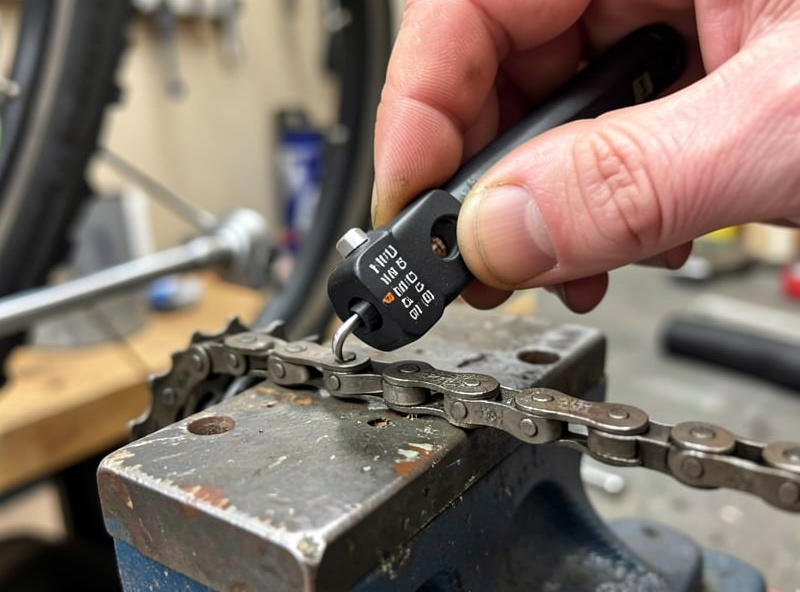
I check chain wear every 500 km on the mid-drive, which for my commuting works out to roughly every two to three weeks. It takes thirty seconds with a gauge, and it’s the cheapest insurance on the bike. On the hub-drive I check less often — every 1,000 km is plenty, because the chain only sees leg power.
If you ride in wet, gritty, or winter conditions, check more often, because grit accelerates the wear dramatically — it’s an abrasive paste working right at the pin-and-roller surfaces. A chain that might last 2,500 km in a dry summer can hit its wear limit in 1,500 km of salty winter commuting. That seasonal swing is exactly why I treat the chain as a watch-it-closely part rather than a set-and-forget one, and why it sits at the top of my seasonal service schedule.
Keeping the Chain Alive Longer
You can’t stop chain wear, but you can slow it a lot. The two biggest levers are cleanliness and lubrication, because a clean, lubed chain wears slowly and a dry, gritty one wears fast. A chain run dry under motor torque can lose its life in a few hundred kilometers.
My routine: lube every 200 to 300 km and after every wet ride, wipe the excess so it doesn’t attract grit, and do a proper degrease-and-relube whenever the chain looks dirty. Use a wet lube for winter and wet conditions, a dry lube for dry summer riding. The full method is in my drivetrain cleaning guide, but the short version is that lube lives inside the rollers, not on the outside of the chain — so you apply it, let it work in, and wipe the surface clean. A good bicycle chain lube and a chain wear gauge together cost less than a single cassette. As an Amazon Associate I earn from qualifying purchases.
Matching the Right Chain to Your E-Bike
Not every chain is equal under motor torque. Buy the chain that matches your drivetrain’s speed count — a 10-speed chain for a 10-speed cassette — and where the brand offers it, choose a chain rated or marketed for e-bike use. Those chains use harder pins and treated plates that resist the accelerated wear a mid-drive inflicts, and on my commuter they’ve earned the small price premium back in extra kilometers.
What matters more than brand, though, is fitting it correctly and at the right length. A chain run too long or too short shifts badly and wears the chainring unevenly, and on a mid-drive a poor chainline accelerates everything. If you built or converted your own bike, get the chainline right at the source — it’s one of the lessons I document in my Bafang conversion writeup. When in doubt, have the first replacement done at a shop and copy their length.
The Economics: Why On-Time Replacement Wins
The math is what makes this worth caring about. A chain is an inexpensive part. A cassette costs several times more, and a chainring more again. If you replace the chain on time, every time, one cassette will happily outlast three or four chains — you’re only ever buying the cheap part. Let the chain run long and you replace the whole drivetrain at once, paying many times over for the few hundred kilometers you “saved.”
I’ve seen riders treat a skipping cassette as a mystery fault when it’s simply a worn chain that was left too long. The drivetrain didn’t fail; it told you 800 km ago that the chain was done, and the gauge would have caught it. Treat the chain as a consumable you replace on schedule and the rest of the drivetrain becomes almost permanent. That’s the whole logic behind the e-bike maintenance system I run, which ties together in my complete e-bike maintenance guide.
Frequently Asked Questions
How long does an e-bike chain last?
On a mid-drive, expect roughly 1,500 to 2,500 km before the chain hits its 0.75% wear limit, because motor torque runs through it. A hub-drive chain lasts close to normal bike life since the chain only carries leg power. Wet and gritty riding shortens both figures significantly.
At what percent should I replace an e-bike chain?
Replace at 0.75% elongation for most 9, 10, and 11-speed e-bike drivetrains. Below that a new chain still meshes with your cassette. Past 0.75% the worn chain has reshaped itself and a replacement will skip on the old cassette, forcing you to replace both.
Does a mid-drive really wear chains faster than a hub motor?
Yes. A mid-drive feeds its torque through the chain alongside your legs, so the chain carries far more force and wears faster. A hub motor drives the wheel directly, so its chain only ever carries leg power and lasts close to analog bike life.
Can I just keep riding a worn e-bike chain?
Only briefly, and it costs you. Past 1.0% elongation the worn chain machines the cassette teeth to match, so you end up replacing the chain, cassette, and sometimes the chainring together instead of just the cheap chain. On-time replacement is far cheaper.
How do I measure e-bike chain wear?
Use a chain wear gauge, a small metal tool that drops into the chain. If the 0.75% end seats fully into a link gap, the chain has passed its wear limit and needs replacing. It takes about thirty seconds and is the cheapest way to protect the drivetrain.