Important Disclaimer
eBikeGarageHQ provides educational content and estimates only. We are not certified installers, financial advisors, or electricians. Always consult with licensed professionals.
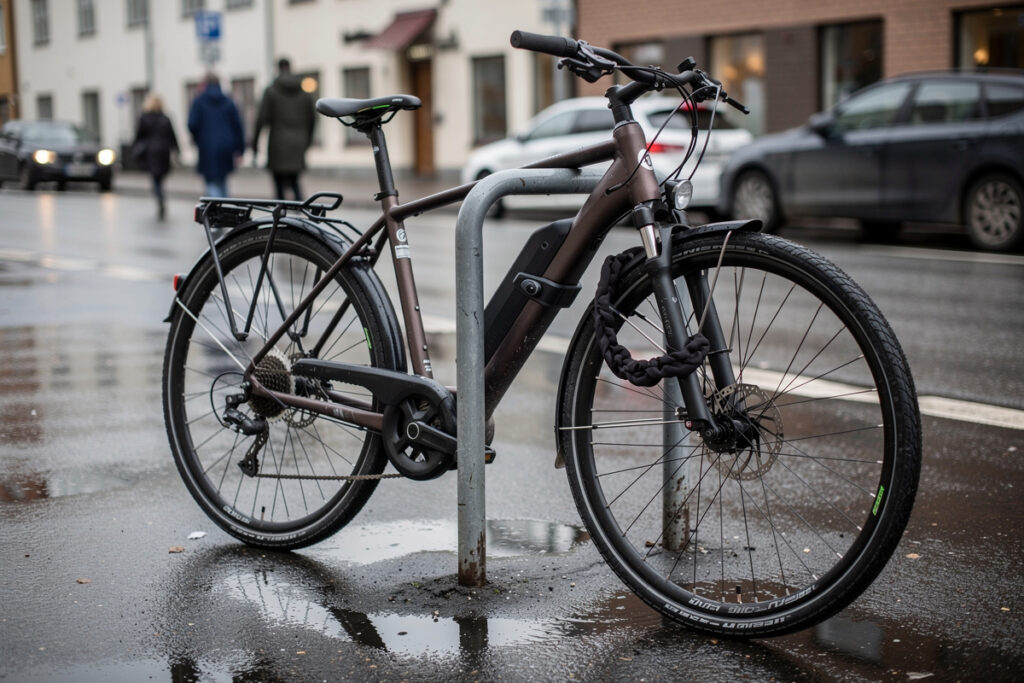
E-bike anti-theft is a layered habit, not a single gadget: use two different lock types on the frame and rear wheel, lock to something immovable, take the battery and the display with you, and add a hidden GPS tracker as recovery insurance. No lock is uncuttable, so the real goal is to make your bike slower and louder to steal than the one parked next to it.
That sentence is the whole strategy, and everything below is the detail behind it. I commute year-round in Sweden, where a good e-bike is a four-figure object left at racks, train stations, and outside shops every single day, so theft is not a hypothetical I read about, it is the risk I actually manage on the same bikes I log range on in my range methodology. My approach is the same one I bring to my battery bench: figure out the real failure modes, spend on the few things that matter, and ignore the marketing. A thief with an angle grinder beats every consumer lock eventually, so I stopped trying to win that fight and started winning the comparison instead, making my bike the harder target so the opportunist moves on.
This guide is the full picture of how I lock, store, track, and insure an e-bike, with each deeper question linked to its own article below. None of it involves opening the battery, modifying electronics, or anything that voids a warranty or starts a fire. It is all done from the outside, with bought hardware and sensible habits, which is exactly how home security should work.
What Is the Real Way to Stop E-Bike Theft?
The real defense is layering: two different, high-quality locks plus a fixed anchor, plus removing the valuable removable parts, plus a tracker for recovery. A single lock, however expensive, is one tool and one attack to defeat; two lock types force a thief to carry two sets of tools and spend two lots of noisy time, which is what actually makes them walk away.
Thieves are rational about effort. The overwhelming majority of bike theft is opportunistic, a quick cable snip or a lever on a cheap U-lock, not a planned grinder job. The layered approach targets that majority directly: it removes the easy win. Against the small number of determined, equipped thieves no consumer setup is bulletproof, which is precisely why the last layer is recovery, not prevention. You harden the bike enough that opportunists give up, and you track it so that if a serious thief does take it, you have a fighting chance of getting it back.
The mistake I see constantly is people buying one big lock and feeling safe. One lock secures one part of the bike against one attack. The frame, the wheels, the battery, and the saddle are all separately stealable, and a lock that does not pass through the frame and a fixed object is just securing your bike to itself. Layering is not paranoia, it is the minimum that matches how bikes are actually stolen.
Which Lock Should You Actually Buy?
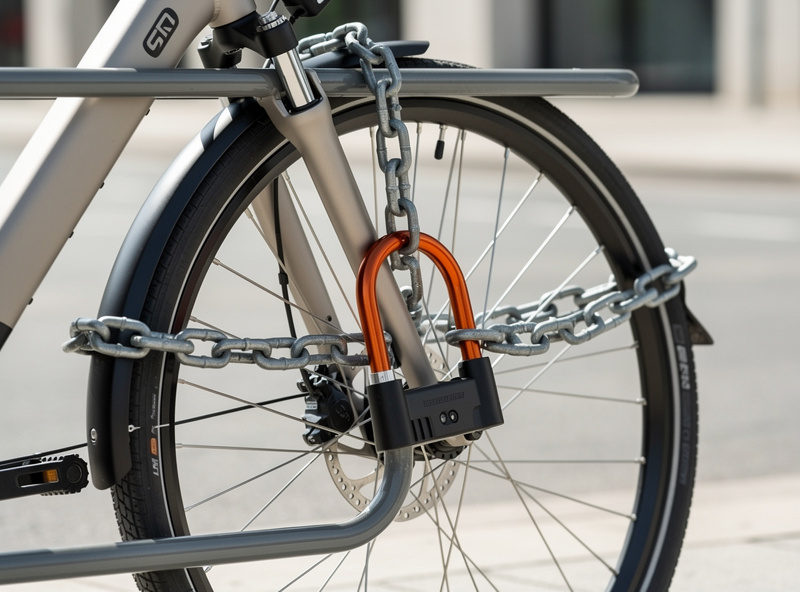
Buy a hardened-steel U-lock or a thick (at least 10-13 mm link) chain lock with an independent security rating, and treat anything with a “rating” printed only on the box as decoration. The single biggest predictor of how long a lock survives an attack is the diameter and hardness of its steel, not the brand or the marketing copy. A heavy U-lock is the floor; everything thinner is a deterrent against hands, not tools.
The honest trade-off is weight versus security. A genuinely strong lock is heavy, and a lock you leave at home because it is annoying to carry protects nothing. I run a mid-weight hardened U-lock for daily use and a long chain that lives at the rack I use most, so I am not hauling steel I do not need. Cable locks have one job and it is not security: use them only to lash a wheel or saddle to a real lock, never as the primary.
What separates a good lock from a great one at the same weight is the locking mechanism and the keyway, not just the shackle. Cheap disc-detainer copies and flat keys are pickable; the better locks use protected mechanisms that defeat the quiet attacks. I go deeper into specific lock types, the steel diameters that matter, and which independent ratings to actually trust in the best lock for e-bike security.
Why Two Locks Beat One Expensive Lock
Two different lock types defeat more attacks than one premium lock, because each attack tool beats one lock design, not all of them. A bolt cutter that shears a chain cannot defeat a hardened U-lock’s short shackle; a lever that might crack a U-lock does nothing useful against a long chain. Carrying two designs means a thief needs two toolsets and twice the time, and time at a public rack is the thing they have least of.
The “two-lock rule” is the single highest-leverage habit in bike security and it costs nothing but the second lock and thirty seconds. The classic combination is a U-lock through the rear wheel and frame to the anchor, plus a chain through the front wheel and frame. That secures three components, forces two distinct attacks, and visibly signals to a passing thief that your bike is more work than the next one.
Most riders skip the second lock because it feels like overkill, right up until the day a cable-snipped frame teaches them otherwise. The math is brutal in your favor: a second decent lock roughly doubles the effort to steal your bike for a fraction of the bike’s value. I lay out exactly how to position both locks for maximum coverage, and which two-lock pairings work best, in the two-lock rule for e-bike protection.
Do GPS Trackers Actually Recover Stolen E-Bikes?
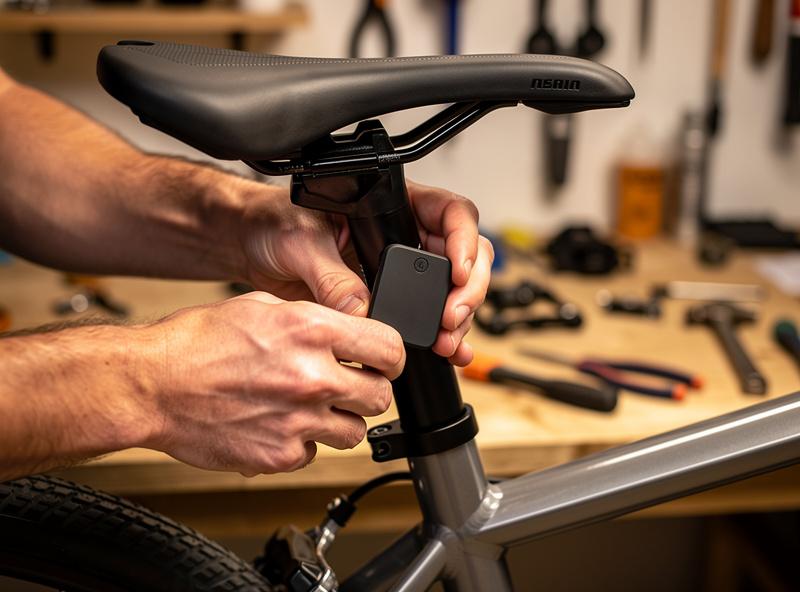
A hidden GPS tracker is recovery insurance, not prevention: it does not stop the theft, but it gives police a live location, and recovered-bike stories almost always involve a tracker the thief did not find. The key word is hidden, a tracker a thief spots and bins is worthless, so placement inside the frame, seatpost, or an accessory matters as much as the device itself.
There are two broad types. Bluetooth tag trackers (the crowd-sourced kind) are cheap and battery-frugal but only report when another phone in the network passes nearby, so they are patchy in quiet areas and excellent in cities. Dedicated cellular GPS trackers report their own position over a mobile network on their own schedule, which is far more reliable for live tracking but needs charging or wiring and usually a small subscription. For an expensive bike, the cellular type earns its keep.
The honest caveat is that a tracker is only as good as the police response and your willingness to never confront a thief yourself, which you should not. Its job is to turn “gone forever” into “located, reported, recovered.” I cover the tracker types, realistic battery life, the hidden mounting spots that survive a thief’s once-over, and the subscription math in choosing a GPS tracker for your e-bike.
How Do You Protect the Removable Battery?
The battery is often the single most valuable removable part, and on most bikes it is protected only by a small key lock you should never rely on, so the rule is simple: take it with you whenever practical, and use a battery-lock cable as a backup when you cannot. A pack worth a large chunk of the bike’s value should not be left lockless on a frame at a public rack.
Most e-bike battery mounts use a basic lock cylinder that secures the pack against bouncing out, not against a determined thief, and many share weak, common keys. That mount is a convenience feature, not security. When I park somewhere genuinely risky I pull the battery and carry it, the same pack I baby on my bench is not something I leave as a free grab. Where carrying it is impractical, a dedicated battery-lock cable that loops the pack to the frame raises the effort enough to deter the casual lift.
There is a maintenance angle too: a battery you remove regularly is a battery you can store properly and inspect, which is good practice anyway. None of this involves opening the pack, that line stays firmly drawn. I cover removable-battery security, the cable options, and the bikes where the battery cannot easily come off in e-bike battery theft prevention, and the care side, including how to store a removed pack correctly, lives in my e-bike battery care guide and the dedicated winter battery storage routine.
Is E-Bike Insurance Worth It?
For an expensive e-bike, dedicated insurance is often worth it because a quality bike is a four-figure asset that home contents policies frequently exclude, under-cover, or refuse once it leaves the property. Whether it pays off depends on the bike’s value, where you live and park it, and crucially on the policy’s lock and storage requirements, which can void a claim if you do not meet them.
This is the one part of bike security I treat as information rather than a product I push, because the right answer is genuinely personal and I will not pretend to know your situation or your local market. What I can tell you is what to read for: theft coverage away from home, the named lock standards a policy demands, whether the e-bike’s class or registration affects eligibility, single-article limits, and the excess. Many a rider has discovered after a theft that their policy required a lock standard they never used.
Regulatory class can matter here in a way it does not for locks: some insurers treat faster e-bikes (a US Class 3, or anything beyond the EU 250 W / 25 km/h pedelec definition) differently, and a derestricted bike may not be covered at all. Always read your own policy and your national rules rather than taking a forum’s word. I walk through how to evaluate a policy, the questions to ask, and when self-insuring makes more sense in is e-bike insurance worth it.
What Is the Safest Way to Store an E-Bike at Home?
The safest home storage is inside a locked, ideally alarmed space, with the bike still locked to a fixed anchor even indoors, because a surprising share of e-bike theft happens from sheds, garages, and shared hallways, not the street. An unlocked bike in an unlocked shed is the easiest theft there is, and shed break-ins are common precisely because owners relax once the bike is “home.”
The hierarchy is straightforward: inside the home beats a locked garage, a locked garage beats a shed, and any of them beats the street. Whatever the space, fit a proper ground or wall anchor and lock the frame to it, so that breaching the building is not the same as walking off with the bike. A floor-bolted anchor plus your everyday U-lock turns a garage from a soft target into a real one. Shared bike rooms and apartment basements are the highest-risk indoor spaces because many people have access, so the bike still gets the full street-level lock treatment there.
Wall-mount storage hooks are worth adding for a second reason beyond tidiness: a bike up off the floor and anchored is harder to wheel out quickly and easier to lock through. I cover anchors, wall mounts, alarms, and the apartment and shared-hallway reality in secure e-bike storage at home.
Does EU and US E-Bike Classification Affect Security?
Classification does not change how you lock a bike, but it changes the paperwork around it: an EU pedelec (pedal-assist capped at 250 W continuous and 25 km/h) and the US Class 1, 2, and 3 system carry different registration and insurance implications, and those affect recovery and coverage rather than the steel you use. A faster bike is more valuable and sometimes harder to insure, which raises the stakes on getting prevention right.
Where this bites is insurance and police recovery. A registered bike with a recorded frame number is far easier to return to its owner, and some jurisdictions register faster e-bikes like mopeds, which can be a coverage requirement. Knowing your bike’s class, keeping a photo of the frame number, and registering it where a scheme exists are zero-cost security habits. I never give legal advice here, your national transport regulator and your insurer are the authorities; what I do is make sure the lock and tracking layers underneath are solid regardless of where your bike sits in the class system.
How I Lock My Own E-Bike, Step by Step
My everyday routine takes under a minute and it is the layered strategy made concrete. The U-lock goes through the rear wheel, the frame, and the fixed anchor, capturing the most expensive-to-replace wheel and the frame in one pass; the long chain goes through the front wheel and the frame; the battery comes off and into my bag whenever I am leaving the bike anywhere I would not leave a wallet. The hidden tracker stays charged and quiet inside the bike, doing nothing until the day it has to do everything.
The point of having a fixed routine is that security fails when it is optional. I do not decide each time whether this stop is “risky enough” for the second lock, because that is how you end up under-locked on the one day it matters. Same locks, same order, every time, so it is muscle memory rather than a judgment call. If I am parking overnight away from home, the bike goes somewhere with eyes on it and stays fully locked, and if there is any doubt, I bring it inside.
If you take one thing from this guide, make it the two-lock rule plus a removed battery, because that single combination defeats almost every opportunist attack for very little money or effort. Add a hidden tracker once your bike is worth more than the tracker plus a year of subscription, and reach for insurance when the bike’s value is high enough that losing it would genuinely hurt. Build the layers in that order and you will have a setup that is harder to beat than almost anything else at the rack, which, in the end, is the whole game.
E-Bike Security Layers Compared
| Layer | What it does | Cost / effort | Stops what |
|---|---|---|---|
| Primary lock (hardened U-lock or thick chain) | Secures frame + rear wheel to a fixed anchor | Moderate cost, daily carry weight | Opportunist tools, levers, hand attacks |
| Second lock (different type) | Secures front wheel + frame, forces a second attack | Low extra cost, ~30 seconds | Single-tool thieves; bolt cutters or levers alone |
| Remove the battery | Takes the most valuable removable part with you | Free; carry weight | Battery-only theft and parts stripping |
| Hidden GPS tracker | Live location for police recovery after theft | Device + small subscription | Nothing (recovery, not prevention) |
| Home anchor + wall mount | Locks the bike to the building structure indoors | One-off install | Shed, garage, and hallway theft |
| Insurance | Financial recovery if all else fails | Ongoing premium | Nothing (financial backstop only) |
Frequently Asked Questions
What is the best lock to stop e-bike theft?
A hardened-steel U-lock or a thick chain (10-13 mm links) with an independent security rating is the floor. Steel diameter and hardness predict survival time more than brand. Use it through the frame, rear wheel, and a fixed anchor, never the bike to itself.
Do I really need two locks on one e-bike?
Yes. Two different lock types force a thief to carry two toolsets and spend twice as long, which is what makes opportunists walk away. One U-lock plus one chain secures three components and roughly doubles the effort to steal the bike.
Are GPS trackers worth it for e-bikes?
For an expensive bike, yes, as recovery insurance. A hidden tracker does not prevent theft but gives police a live location. Cellular trackers report reliably on their own schedule; Bluetooth tag trackers are cheaper but only update when another phone passes near.
Should I take my e-bike battery off when I park?
Whenever practical, yes. The battery is often the most valuable removable part and its mount lock is weak. Carry the pack with you in risky spots, or use a battery-lock cable as a backup where carrying it is impractical.
Is it safe to leave my e-bike locked in a shed or garage?
Only with the bike still locked to a fixed floor or wall anchor. A large share of e-bike theft is from sheds, garages, and shared hallways. Breaching the building should not equal stealing the bike, so anchor it indoors too.
Does my e-bike class affect insurance or security?
Class does not change how you lock it, but it can change registration and insurance eligibility. Faster bikes beyond the EU 250W/25km/h pedelec limit, or US Class 3, may be treated differently or excluded, and derestricted bikes may not be covered at all.
Related Guides
- The Best Lock for E-Bike Security
- The Two-Lock Rule for E-Bike Protection
- Choosing a GPS Tracker for Your E-Bike
- E-Bike Battery Theft Prevention
- Is E-Bike Insurance Worth It?
- Secure E-Bike Storage at Home
If you want the deeper battery-care and chemistry side of looking after that expensive pack you are protecting, it lives on my battery storage site, same bench, same instruments.