Important Disclaimer
eBikeGarageHQ provides educational content and estimates only. We are not certified installers, financial advisors, or electricians. Always consult with licensed professionals.
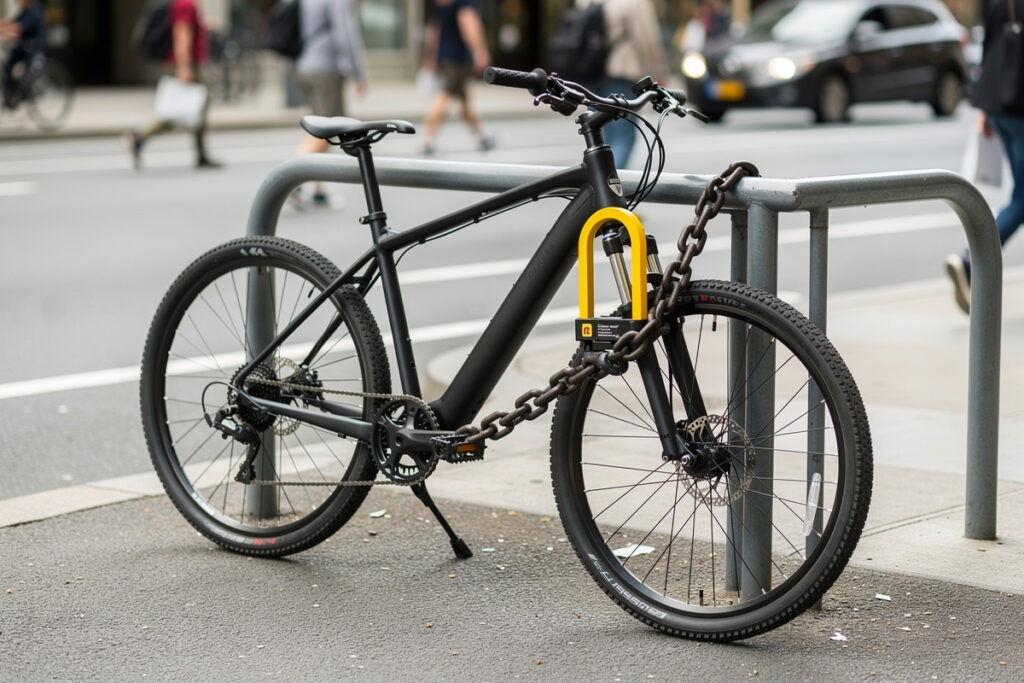
The two-lock rule for e-bike protection means securing your bike with two different types of lock at once, typically a hardened U-lock plus a thick chain, so a thief needs two separate toolsets and twice the time to win. It is the single highest-leverage habit in bike security because each attack tool defeats one lock design, not both, and time at a public rack is the one thing a thief cannot spare.
I treat the second lock as non-negotiable on any bike worth stealing, and after years of locking up year-round in Sweden I have never once regretted carrying it. This article is the case for two locks done right: why two beats one however expensive, which pairings work, how to position them, and when a single lock is genuinely enough. It is one piece of the wider strategy in my e-bike anti-theft guide, and it pairs directly with choosing the right primary lock in the first place.
Why Do Two Locks Beat One Expensive Lock?
Two different lock types defeat more attacks than any single lock because every cutting or leverage tool is specialized: bolt cutters shear chains but cannot reach a U-lock’s short shackle, while a bottle jack or pipe that might spread a U-lock does nothing to a long chain. Carrying two designs means the thief must bring and use two toolsets, doubling both the gear they carry and the noisy time they spend, which is exactly the friction that makes them move to an easier bike.
Spending the same money on one premium lock instead of two good ones is a worse bet, because a single lock is a single point of failure against the one tool that beats it. A Diamond-rated U-lock is superb, but a thief who arrives with the leverage tool that suits it has one job to do. Add a chain and now that same thief is stuck: their tool beat one lock and is useless against the other. Two mid-rated locks of different types frequently out-protect one top-rated lock alone.
There is a visible-deterrent effect too. A bike wearing two obviously different locks signals “this will take two attacks and real time” before a thief touches it. Most theft is a snap decision between adjacent bikes, and the double-locked bike loses that contest every time. The deterrent is half the value; the physical resistance is the other half.
What Are the Best Two-Lock Combinations?
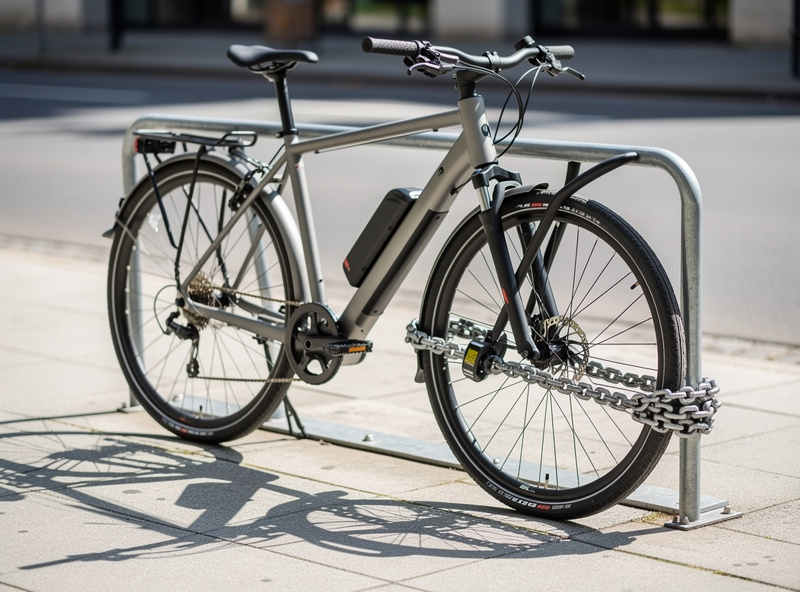
The strongest everyday combination is a hardened U-lock plus a thick chain (10-13 mm links), because it pairs the U-lock’s leverage resistance with the chain’s reach and gives you two genuinely different attacks to defeat. A U-lock plus a second, smaller U-lock also works and stays light, while a chain plus a folding lock suits riders who need flexibility around odd anchors.
The principle behind a good pairing is difference, not duplication. Two identical cable locks are still one attack (cutters), so they are not two locks in any meaningful sense. The pairing should force two distinct tools: hardened-shackle resistance on one side, link-cutting resistance on the other. My own kit is a mid-weight hardened U-lock that rides in a frame mount plus a long heavy chain that lives at the rack I use most, so I get reach where I park daily without hauling chain everywhere.
Match the pairing to where you park. A city commuter locking at the same high-theft rack daily benefits from stationing a heavy chain there and carrying only the U-lock. A rider parking in varied spots wants two portable locks. Either way the rule holds: two types, two attacks. For the second lock most riders should browse thick hardened chain locks to pair with their U-lock, and the detail on which individual locks earn their rating is in my primary-lock guide.
How Do You Position Two Locks for Maximum Coverage?
Position the primary lock through the rear wheel, the frame’s main triangle, and the fixed anchor in one pass, then use the second lock through the front wheel and frame, so that between them both wheels and the frame are captured and tied to something immovable. The rear wheel is the priority because it is the costliest to replace, and threading it with the frame secures two components with one lock.
Fill the inside of each U-lock so there is no slack for a jack to exploit, keep the lock bodies up off the ground where they cannot be smashed against pavement, and turn keyholes inward or down to make picking and drilling awkward. The anchor matters as much as the locks: something genuinely fixed, a ground anchor, a bolted stand, a substantial rack, never a sign post the bike can be lifted over or a railing that unbolts. A perfect two-lock setup around a liftable post is no setup at all.
I lock in the same sequence every time so it is muscle memory: U-lock through rear wheel, frame, and anchor; chain through front wheel and frame; battery off if I am leaving it long. Consistency is what stops you from under-locking on the one busy day it matters. The same anchoring logic carries straight over to securing the bike at home, which is its own layer in my anti-theft strategy.
Is Two Locks Overkill for a Cheap E-Bike?
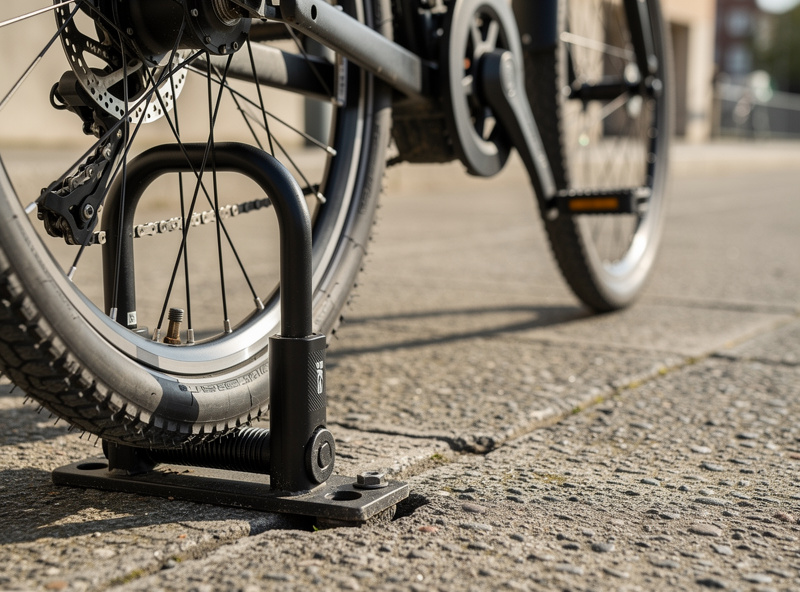
For a genuinely low-value beater bike, one solid rated lock is proportionate and a second can be overkill, because the security spend should track the bike’s value and the local theft risk. The two-lock rule earns its keep on bikes worth stealing, an expensive e-bike at a daily city rack, and matters less on a cheap bike in a low-theft town parked only briefly.
That said, the threshold is lower than people think, because e-bikes are disproportionately targeted: the motor, the battery, and the resale value make even mid-priced e-bikes attractive in a way a basic pushbike is not. If your e-bike cost four figures, it is in two-lock territory, full stop. The honest exception is a sub-budget bike where two serious locks would cost a real fraction of the bike itself, at which point one good U-lock plus taking the battery is a sensible compromise.
The cheapest second lock is the one you already own: that bundled cable from the bike’s box, demoted to leashing the front wheel back to your real lock. It is not a security lock, but as the second leg of a two-lock setup behind a hardened primary, it adds wheel coverage for almost no weight. Buy a proper second lock when the bike justifies it; until then, leash the wheel.
Some links above are affiliate links. If you buy through them I may earn a small commission at no extra cost to you. I only recommend gear I would run on my own bike.
Frequently Asked Questions
What is the two-lock rule for bikes?
Securing your bike with two different lock types at once, usually a hardened U-lock plus a thick chain. Each attack tool defeats one lock design, not both, so two types force a thief to carry two toolsets and spend twice the time, which makes them give up.
Do two locks really stop bike theft?
They stop most of it. The overwhelming majority of theft is opportunistic, and two different locks make a bike far more work than the one beside it. They do not stop a determined grinder attack, which is why a hidden tracker is the recovery backstop.
What two locks should I use together?
A hardened U-lock plus a thick chain (10-13 mm links) is the strongest everyday pairing, combining leverage resistance with reach. The key is two different designs that force two distinct attacks, not two of the same lock, which only counts as one.
Where should I attach each lock on my e-bike?
Put the primary U-lock through the rear wheel, frame, and a fixed anchor, and the second lock through the front wheel and frame. That captures both wheels and the frame, ties everything to something immovable, and forces two separate attacks.
Is using two locks overkill for an e-bike?
Not for a bike worth stealing. E-bikes are disproportionately targeted for their motor and battery, so any four-figure e-bike is in two-lock territory. Only a genuinely cheap beater in a low-theft area can justify a single solid lock.