Important Disclaimer
eBikeGarageHQ provides educational content and estimates only. We are not certified installers, financial advisors, or electricians. Always consult with licensed professionals.
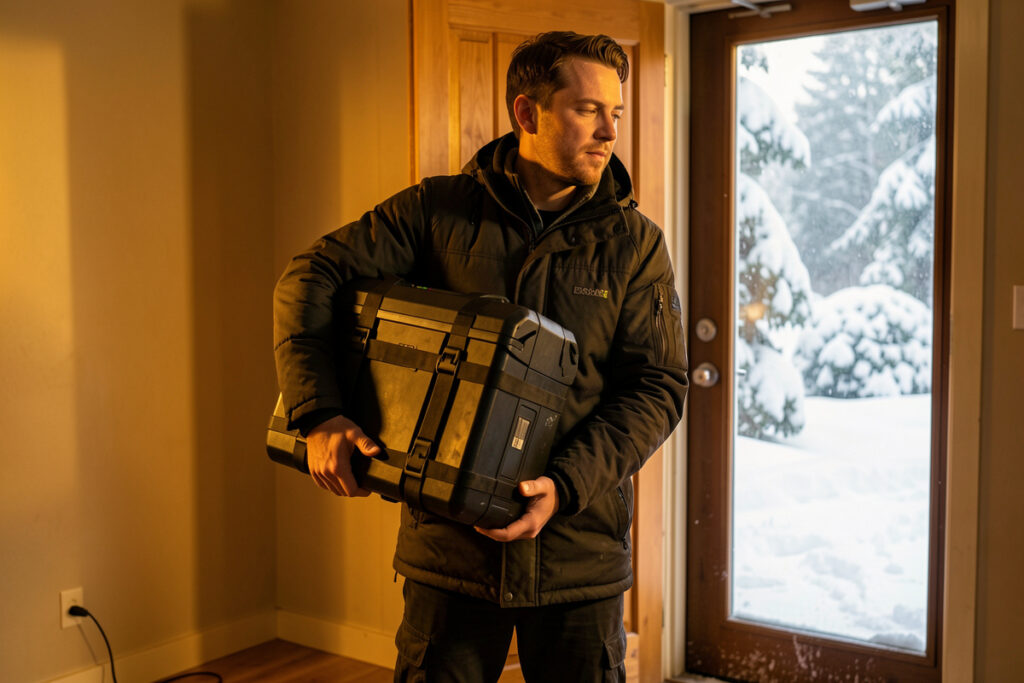
If you commute through winter, bring your e-bike battery inside overnight every single night. A cold pack loses a chunk of its usable range, charging it below freezing can permanently damage it, and a warm battery refitted in the morning simply works better. The bike can sleep in the cold shed; the battery sleeps indoors with you. That one habit is the difference between a winter pack that lasts and one that fades early.
This is the daily handling routine, and it is a different question from parking a bike for the whole season — that long-term case is the half-charge storage rule. Here we are talking about an active rider who uses the bike every day through the cold, one of the deep dives under my complete winter e-bike guide.
Why Cold Hurts an E-Bike Battery
Lithium cells deliver energy through chemistry, and chemistry slows down when it gets cold. As temperature drops, the electrolyte thickens and internal resistance rises, so the pack cannot hand over its energy as freely. The capacity is still in there; it is just temporarily harder to access. The practical result on my own loop is a 30-40% range drop at -10°C versus a mild day, which I document in cold weather range loss.
There is a harsher problem than range, though. Charging a lithium battery below roughly 0°C can cause lithium plating on the anode — permanent, irreversible capacity loss and, in the worst case, an internal safety risk. This is the single most important reason to bring the pack inside: not just so it gives you range, but so it is warm enough to charge safely. A frozen battery should never go straight onto the charger.
The Overnight Routine That Actually Works
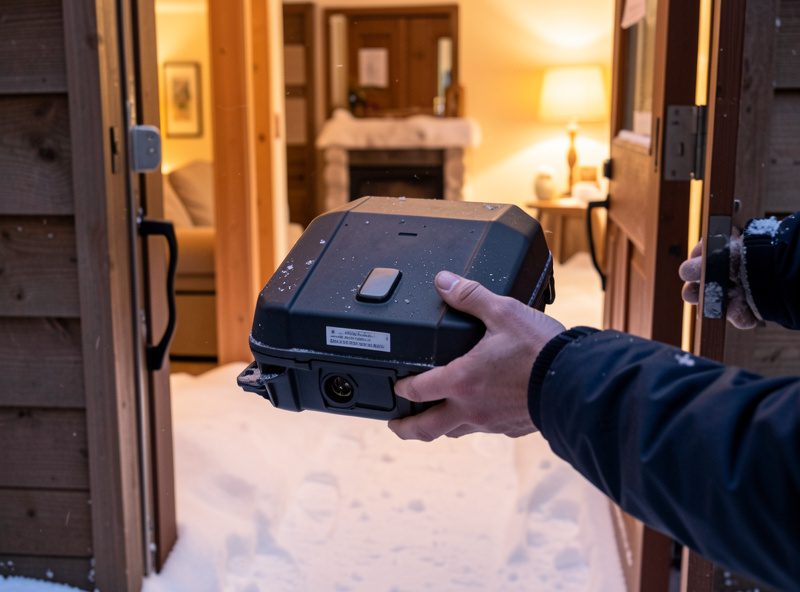
My winter routine is simple and it never changes. When I park the bike, I pull the battery and carry it inside. I let it sit and return to room temperature for at least an hour before I plug it in — charging a cold-soaked pack is the mistake to avoid. Then it charges warm, indoors, to my normal daily level. In the morning it goes back on the bike at full room temperature, which gives me the best possible range for those first cold kilometers when the pack would otherwise be sluggish.
The warm-before-charge step is the one people skip. If you ride home at -8°C and immediately plug in, the cells are still near freezing even though your hands are not. Give it the hour. The pack does not care that the charger is in a warm room if its own core is still cold. This patience costs nothing and protects the most expensive component on the bike.
Where and How to Charge Indoors Safely
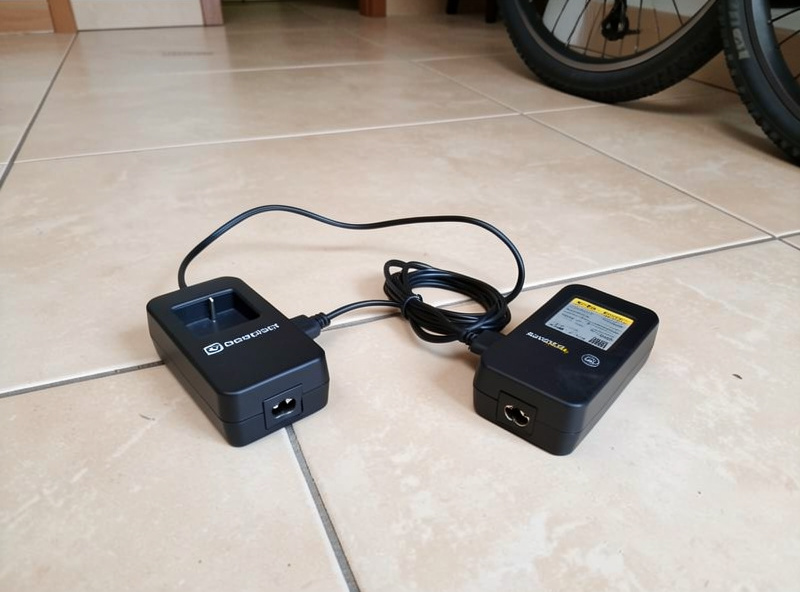
Bringing the battery inside means charging inside, so do it sensibly. Charge on a hard, non-flammable surface — a tiled floor or a steel bench, not on a sofa or carpet or a pile of jackets. Keep it away from your only exit route and from anything that would feed a fire. Use the charger that came with the battery; this is not the place for a mystery replacement. These are the same boring, sensible habits I lay out in the battery care guide, and they matter more in winter precisely because the pack is now living in your home.
I keep my charging to daytime or evening hours when I am awake and nearby, rather than leaving a pack on charge through the night unattended. A modern battery and charger manage themselves well, but attended charging is simply good practice for any lithium pack. None of this requires opening anything up — battery care is handling and habits, never cracking the case.
What Charge Level for Daily Winter Use
For a bike you ride every day, keep the pack in a moderate band rather than parking it full. I run mine between about 20% and 80% for normal commuting and only top it to 100% the night before a longer ride where I will actually use the range. Sitting at 100% for hours, especially warm indoors, ages a lithium pack faster than living in the middle, which is the logic behind the 80 versus 100 percent question and the broader charging habits that extend battery life.
Winter changes the math slightly because the cold steals usable range, so you may find yourself topping up more often to have the buffer. That is fine — the thing to avoid is leaving the pack sitting at a full charge for days on end. Charge to what the next day’s ride needs, plus a cold-weather reserve, and you have struck the right balance between convenience and longevity.
Insulating the Pack on the Bike
Sometimes the battery has to stay on the bike during the ride, and that is where the cold does its work mid-commute. A neoprene battery cover slows the heat loss so the pack stays in its happy range longer, buying you range on a long, cold ride. It will not keep a battery warm overnight in a shed — insulation only slows heat loss, it does not generate heat — but for the ride itself it genuinely helps. As an Amazon Associate I earn from qualifying purchases. A simple neoprene battery cover is a cheap way to claw back some cold-weather range.
The pack on my e-bike and the bank on my battery wall obey the same chemistry; the bike just adds wind chill to the discharge curve. Treat the battery as the precision component it is — warm when it charges, moderate in its daily charge level, and indoors when it sleeps — and it will give you honest service through years of winters.
Further Reading
- The Complete Winter E-Bike Guide — how battery care fits the whole winter picture.
- Winter Battery Storage: The Half-Charge Rule — for parking a bike all season.
- Cold Weather Range Loss — the numbers behind the cold penalty.
- E-Bike Battery Care Guide — the habits that make a pack last.
Frequently Asked Questions
Should I bring my e-bike battery inside in winter?
Yes, every night if you commute through winter. A cold pack loses 30-40% of its usable range, and charging it below freezing can cause permanent damage. Bring the battery indoors, let it warm up, charge it warm, and refit it warm in the morning for the best range.
Can I charge a cold e-bike battery right away?
No. Charging a lithium battery below about 0C can plate lithium onto the anode and permanently reduce capacity. After a cold ride, let the pack return to room temperature for at least an hour before plugging it in, even if the charger is in a warm room.
What charge level should I keep my battery at over winter for daily use?
For a bike ridden daily, keep the pack between roughly 20% and 80%, topping to 100% only the night before a long ride. Cold steals usable range, so you may top up more often, but avoid leaving the pack sitting fully charged for days, which ages it faster.
Is it safe to charge an e-bike battery indoors overnight?
Charge on a hard, non-flammable surface away from exits and flammable items, and use the original charger. Best practice is to charge while you are awake and nearby rather than fully unattended overnight. Modern packs self-manage well, but attended charging is sensible for any lithium battery.
Does a battery cover keep my e-bike battery warm?
A neoprene cover slows heat loss during a ride, keeping the pack in its efficient range longer and clawing back some cold-weather range. It does not generate heat, so it will not keep a battery warm overnight in a cold shed; for that, the pack must come indoors.