Important Disclaimer
eBikeGarageHQ provides educational content and estimates only. We are not certified installers, financial advisors, or electricians. Always consult with licensed professionals.
The charging habits that extend e-bike battery life are simple: charge at room temperature, do not leave the pack at 100% for long, top up before it runs flat, and always use the supplied charger. Deep discharges and sustained heat are the two biggest avoidable stressors on the cells.
I log my e-bike charges at the wall with the same watt-meter discipline as every pack on my stationary battery bench, because Wh does not care what it is pushing. That habit has taught me which charging routines genuinely move the needle and which are folklore that survives only because nobody measures. Here is the honest ranking, the myths to drop, and the small changes that pay off most.
Charge at Room Temperature, Not Hot or Frozen
Temperature is the charging factor most people ignore and the one that matters most. Charge a pack in the roughly 10-30 degrees C range, never below freezing, and let a hot post-ride battery cool for ten minutes before plugging in. Charging a near-freezing lithium-ion pack can cause permanent internal damage, and charging a hot one stacks heat stress on top of the charge.
In a Nordic winter this means the battery comes indoors to warm before it sees a charger; in summer it means not plugging in a pack that is still warm from a hard ride. Neither costs anything but a little patience. I keep the charging spot itself moderate too, away from radiators and out of direct sun, so the pack is not fighting ambient heat while it works. Get temperature right and you have handled the single biggest charging variable.
The reason cold charging is the strict red line rather than just a preference is that the damage is immediate and permanent, not gradual. Pushing charge current into a sub-freezing lithium cell can plate metallic lithium onto the internal structure, which both reduces capacity and creates a long-term safety risk. Riding in the cold does none of this, it only reduces range temporarily, so the rule is narrow and specific: ride cold all you like, but never charge a pack that has not warmed up. When in doubt, if the battery is cold to the touch, let it sit indoors for an hour before plugging in.
Don’t Leave It Sitting at 100%
Charging to 100% is fine; leaving it there for days is what ages the pack. The top of the charge window holds the cells at peak voltage, where calendar aging accelerates, so a battery that hits full and then sits full for a week loses more than one that is ridden soon after charging. For daily use, charging to about 80-90% and topping to full only before a long ride is the gentler default.
If your bike or charger offers a charge limit or scheduled charging, use it: timing a charge to finish near departure means the pack spends an hour at full instead of overnight. The deeper trade-off between 80 and 100 has its own article, should you charge to 80 or 100, but the habit version is just this: do not park it full.
Top Up Before Empty, Don’t Run It Flat
Lithium-ion packs prefer partial cycles to deep ones, so topping up before the battery hits empty is easier on the cells than repeatedly running it to zero and recharging. A partial charge from, say, 30% to 80% is gentler than a full 0-to-100 cycle, and it accumulates cycle wear proportionally rather than punishing the cells at the low-voltage extreme.
This runs against the old “fully discharge to keep it healthy” advice, which is nickel-battery folklore that does real harm to lithium packs. There is no memory effect to fight and no calibration cycle that requires draining the battery flat. Top up when convenient, keep it off the empty mark, and the cells last longer. The way assist level drives how fast you reach that empty mark is worth understanding too, which I cover in e-bike assist level and battery use.
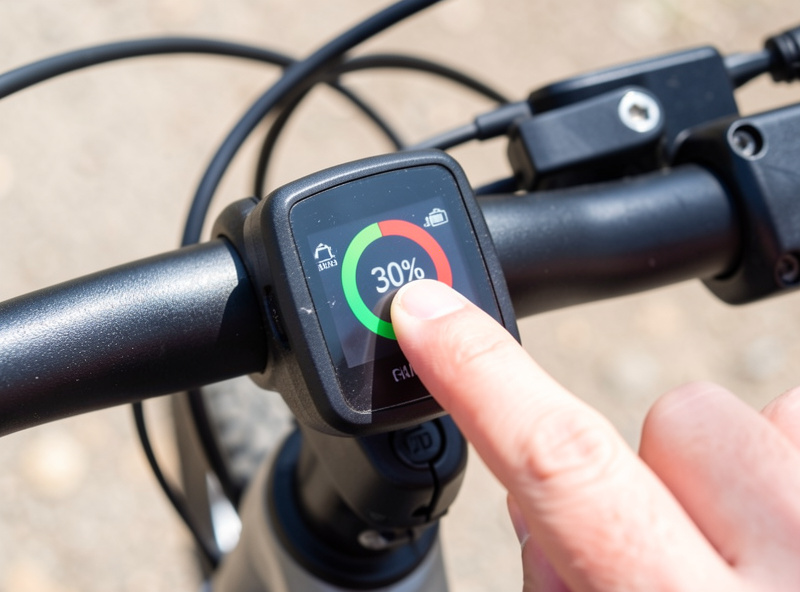
There is a sweet spot worth aiming for in daily use: keep the pack roughly between 20% and 90% most of the time, dipping lower or charging higher only when a ride demands it. That mid-band is where lithium-ion cells are least stressed, and it is genuinely easy to hit without thinking once you stop treating “0 to 100 every charge” as the default. On my commuter I plug in most evenings when the pack is somewhere in the middle, let it reach 90%, and ride off in the morning. I almost never see either extreme, and the pack has rewarded that with very slow, predictable fade.
Use the Charger That Came With the Bike
The supplied charger is matched to your pack’s voltage, current, and BMS, and using it is the safest and one of the more longevity-friendly choices you can make. A mismatched or cheap third-party charger can deliver the wrong voltage or current profile, and a modified charger is a genuine fire risk that this site will never recommend. If you need a spare, buy the manufacturer’s own or a reputable certified replacement specified for your battery.
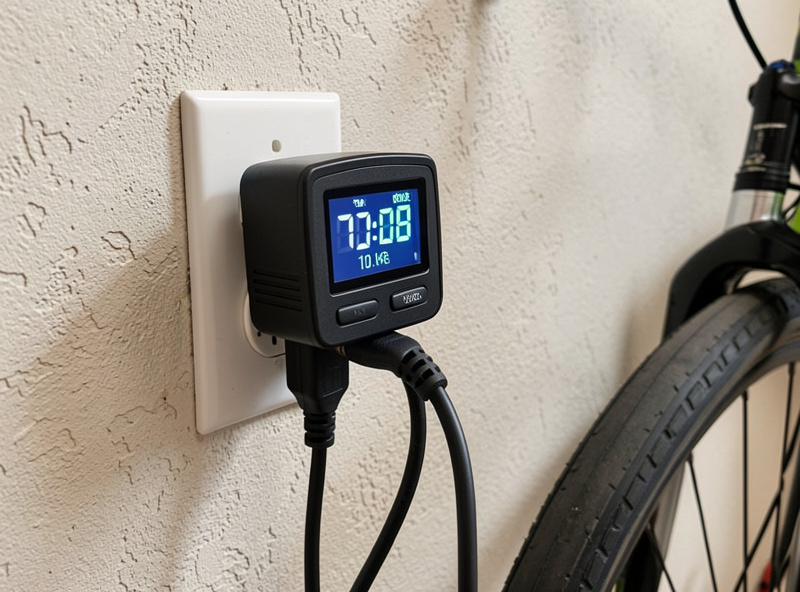
I do keep a watt-meter inline on my charging setup, which is the one accessory genuinely worth owning, because it shows the energy going into the pack and quietly flags trouble: a battery that suddenly draws more to reach full, or takes much longer than usual, is telling you something about its health long before the range collapses on the road. A simple plug-in energy meter is inexpensive and turns charging from guesswork into data. As an Amazon Associate I earn from qualifying purchases.
Charging Habits Ranked by Impact
| Habit | Impact on lifespan | Effort |
|---|---|---|
| Charge at room temperature | High | Low (a little patience) |
| Avoid sitting at 100% | High | Low (a setting or timing) |
| Top up before empty | Medium-high | Low |
| Use the supplied charger | Medium (and safety-critical) | None |
| Let a hot pack cool first | Medium | Low |
| “Conditioning” / full discharges | Negative (a myth) | Avoid entirely |
Where Should I Charge for Safety?
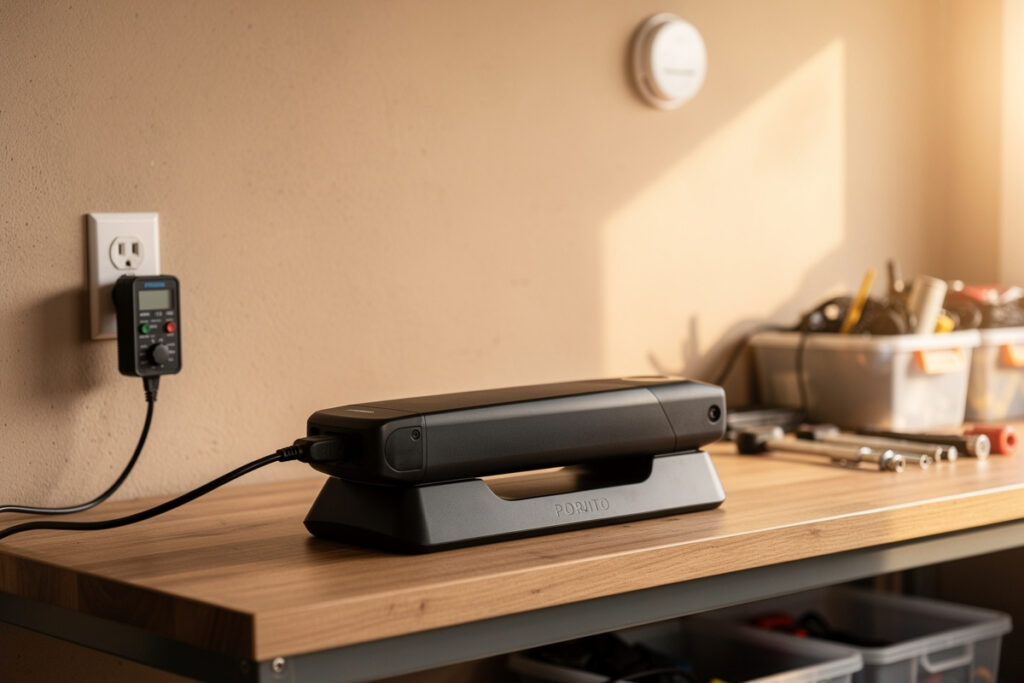
Charge on a hard, non-flammable surface, in a space with a working smoke alarm, and not blocking your exit route. Lithium-ion battery fires are rare with quality, undamaged packs charged on the correct charger, but they are serious when they happen, so the sensible habits cost nothing: do not charge a visibly damaged or swollen pack, do not cover the battery or charger while it works, and do not leave a charge unattended in a way that would trap you if something went wrong.
This is the practical safety floor, not fear-mongering. A garage workbench or a tiled utility area is ideal; a pile of cardboard in a hallway is not. If a pack is ever damaged, swollen, or behaving oddly during a charge, unplug it, move it somewhere safe if you can do so without risk, and contact the manufacturer or a professional rather than trying to nurse it back yourself. Safe charging is mostly about where and on what, and it pairs naturally with the room-temperature rule above.
The Charging Myths to Drop
Three pieces of advice need to die. First, you do not need to fully discharge a lithium battery to “condition” it; that is nickel-cell thinking and it stresses the pack. Second, leaving it on the charger overnight is not an overcharge fire risk on a properly built bike, because the BMS stops charging at full, the downside is only the time spent at 100%. Third, a faster charger is not automatically worse, provided it is the correct, certified charger for your pack, though gentler charging does run cooler.
What ties the real habits together is that they all reduce stress on the cells without ever opening the pack. That boundary is deliberate: charging care is everything you do from the outside with the supplied equipment, and pack-level work is off the menu. For the full picture of how these charging habits fit alongside storage and temperature, see my e-bike battery care guide.
Frequently Asked Questions
What is the best way to charge an e-bike battery?
Charge at room temperature with the supplied charger, avoid leaving it at 100% for long, and top up before it runs flat rather than draining it empty. Partial charges are gentler than deep cycles, and heat is the main avoidable stressor.
Is it okay to charge my e-bike battery every day?
Yes, daily charging is fine and partial top-ups are actually gentle on the cells. What matters is avoiding the extremes: do not leave it parked at 100% for days, do not run it flat repeatedly, and do not charge it hot or frozen.
Should I discharge my e-bike battery fully before charging?
No. That is old nickel-battery advice that harms lithium-ion packs. There is no memory effect and no calibration that needs a full drain. Top up before empty; partial cycles last longer than deep ones.
Can I use a faster or third-party charger?
Use the charger specified for your battery, ideally the supplied one or a reputable certified replacement. A correct fast charger is acceptable but runs warmer. Never use a mismatched or modified charger, which is a genuine safety risk.
Does leaving it on the charger overnight damage the battery?
It will not overcharge on a properly built bike because the BMS stops at full, but the pack then sits at 100% for hours, which adds calendar aging. Charging to about 90% or timing the charge to finish near departure is gentler.