Important Disclaimer
eBikeGarageHQ provides educational content and estimates only. We are not certified installers, financial advisors, or electricians. Always consult with licensed professionals.
A Bafang mid-drive conversion kit replaces your bottom bracket with a motor that drives the chain through your gears. I built mine with one, configured to the EU 250W limit with assist cutting at 25 km/h, and after a season of commuting on it I’d recommend it over a hub kit for anyone riding hills. The install took me an afternoon; getting the chainline and torque settings right took a little longer.
This is the hands-on account from my own bench — what’s in the box, what I had to buy separately, the controller settings I run, and the two things that nearly tripped me up. For the wider picture of where this kit fits, start with the e-bike conversion guide.
Why I Chose a Mid-Drive Bafang Kit
I went mid-drive because I ride a hilly route and a mid-drive uses the bike’s gears to climb. At the legal 250W, a mid-drive in a low gear walks up a grade that makes a hub motor of the same rating bog and overheat. The Bafang-class unit also drops the motor weight low and central at the bottom bracket, so on my test loop the bike still steers and leans like a normal bicycle rather than a barbell with wheels.
The kit is also genuinely serviceable. The motor mounts to a standard bottom-bracket shell, the wiring is connectorized, and parts are available. That matters when you’re the manufacturer now. I compared the two motor types in depth in the conversion-kit implications article and the broader hub vs mid-drive guide — but for a geared, hilly commute the mid-drive won easily.
What’s Actually in the Box
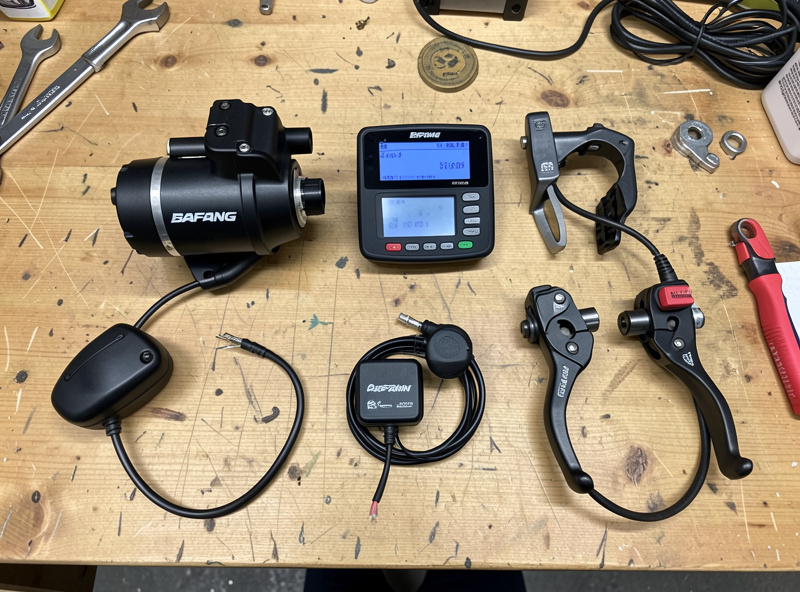
My kit arrived with the motor unit, the lockring and mounting hardware, an integrated controller, a display, a pair of brake levers with cut-off switches, a pedal-assist sensor, a speed sensor with a spoke magnet, and a wiring loom. What it did not include — and this catches people — was a battery, a chainring guard, or, in some kits, the correct bottom-bracket adapter for an unusual shell. I keep a current search at the Bafang mid-drive kit listings.
As an Amazon Associate I earn from qualifying purchases.
| Part | In My Kit | Buy Separately? |
|---|---|---|
| Motor + integrated controller | Yes | No |
| Display + speed sensor | Yes | No |
| Brake cut-off levers | Yes | No |
| Battery pack | No | Yes — biggest cost |
| Bottom-bracket adapter | Standard only | Maybe, for odd shells |
| Chainring/bash guard | No | Optional but worth it |
The Install, From My Bench
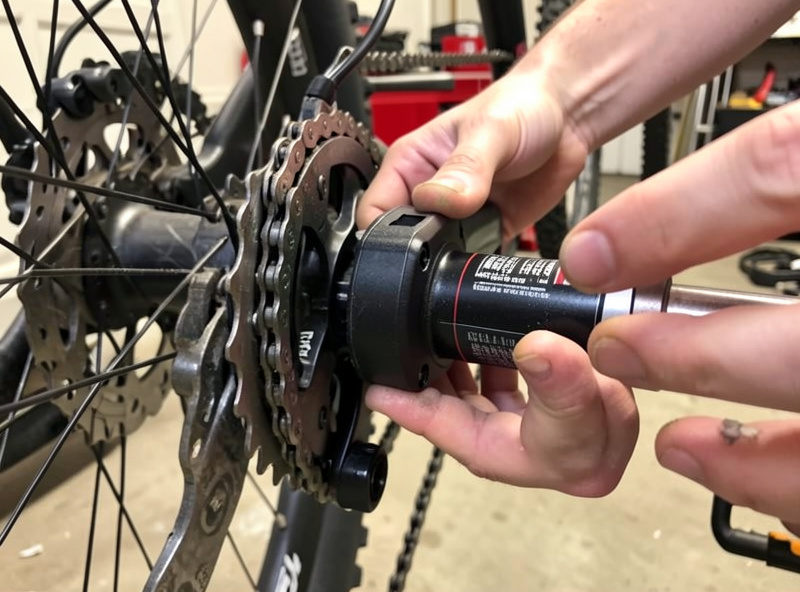
The job is mechanically simple if your bottom-bracket shell is standard. I pulled the old cranks and bottom bracket, slid the motor’s axle through the shell, fitted the fixing plate and lockring, and torqued the lockring to spec — this is the bolt people under-tighten, and it’s the one that lets the whole motor rock if it’s loose. Then the cranks went back on, the display and sensors clipped to the bars, and the loom got cable-tied along the frame clear of the cranks.
The two things that took real attention were chainline and the speed-sensor gap. Chainline matters because the motor’s chainring sits where the bike never had one; if it’s off, you get noisy shifting and accelerated chain wear under motor torque. I shimmed mine to line up with the middle of the cassette. The speed sensor needs the magnet passing within a few millimetres of the pickup, or the 25 km/h cut-off reads wrong — and a cut-off that reads wrong is both a legal and a safety problem.
Keeping It Legal: The Settings I Run
This is where I’m careful, and where I won’t help you go the other way. I run the kit configured to the EU limit: 250W continuous rated power, pedal-assist only, and the speed cut-off set so motor assist stops at 25 km/h. The display lets you set wheel size and the speed limit, and getting wheel size right is what makes the speedometer — and the cut-off — honest. A kit reporting the wrong wheel size will cut at the wrong speed.
I will not publish derestriction settings, throttle-unlocking, or how to misreport wheel size to fool the cut-off. A kit kept at these limits is legally a bicycle where I ride; pushed past them it becomes an unregistered, uninsured motor vehicle, and that’s a different machine with real consequences. The full legal frame is in the EU conversion legal reality guide. Configure it right once and forget it.
Torque Sensor vs Cadence Sensor on These Kits
Many Bafang-class kits use a cadence sensor — assist kicks in when the pedals turn. The upgrade worth paying for, where offered, is a torque sensor, which meters power to how hard you actually push. On my bikes the torque-sensor feel is night and day: it’s natural, like a strong tailwind, instead of an on/off shove. I broke down the difference in the torque vs cadence sensor article. If your kit is cadence-only, you can still tune the assist levels down for a smoother takeup.
Living With It: Range and Maintenance
Paired with a 500Wh pack, my converted bike returns a real 45–55 km on my logged loop at moderate assist, and less in winter — the same range math as any e-bike, which I cover in the range guide and budget by terrain in Wh per km. The maintenance reality is the mid-drive’s one real tax: it runs your chain and cassette under motor torque, so I track chain stretch with a gauge and replace it earlier than I would on an unpowered bike. Choosing the right pack is its own decision — see the battery pack buying guide and the battery care routine.
What I Got Wrong the First Time
Two mistakes cost me time, and I’ll own both so you can skip them. The first was under-torquing the lockring on the initial fit. It felt tight by hand, but after about 30 km I got a faint knock under load — the motor was rocking a hair against the shell. I pulled it, cleaned the threads, and torqued it properly to spec with the right tool, and the knock vanished. On a mid-drive that lockring is the single fastener that holds the whole motor steady; hand-tight is not tight. I now re-check it after the first ride and again at 50 km, the same way I re-check a torque arm on a hub build.
The second was reusing the chain I already had. It was serviceable on the unpowered bike, but under motor torque a worn chain skips and chews the cassette fast. I should have started the build with a fresh chain and a wear gauge in hand. I replaced it within the first month and now treat the drivetrain as a consumable that wears faster than on a normal bike — I check chain stretch every few hundred kilometres and swap early, because a stretched chain ruins a cassette and chainring that cost far more than the chain.
Neither mistake was dangerous, but both were avoidable, and both came from treating the conversion like a normal bike build instead of a powered one. The motor changes the loads on everything downstream of it. Build it with that in mind from the first bolt, and the bike rewards you with a season of quiet, reliable commuting.
Frequently Asked Questions
Is a Bafang mid-drive kit legal in the EU?
Yes, when configured to 250W continuous with pedal-assist that cuts at 25 km/h and no unrestricted throttle. Set the wheel size correctly so the speed cut-off is honest. Derestricting it makes the bike an unregistered motor vehicle, which I do not cover.
How long does a Bafang conversion take to install?
With a standard bottom-bracket shell, the mechanical install took me an afternoon. Getting the chainline shimmed correctly and the speed-sensor gap right took a little longer, and I re-torqued everything after the first 50 km of riding.
Does a Bafang kit come with a battery?
No. Mid-drive kits include the motor, controller, display, brake cut-off levers and sensors, but the battery pack is bought separately and is the single biggest cost. Buy a complete pack with a real BMS from a reputable seller.
Do I need a torque sensor on a Bafang kit?
It is the upgrade worth paying for where offered, because it meters power to how hard you pedal for a natural feel. Many kits are cadence-sensor only, which works fine but feels more on-off; you can soften it by tuning the assist levels down.
What size battery for a Bafang mid-drive?
A 400–500Wh pack suits most commuting. On my logged loop a 500Wh pack returns a real 45–55 km at moderate assist, less in cold weather. Match the pack voltage to the kit and pick capacity for your actual route, not the marketing range.
Will a Bafang kit fit my bike?
It needs a standard bottom-bracket shell of compatible width and a frame stiff enough for the torque. Check the shell width before buying, and confirm chainline clearance. Odd or proprietary shells may need an adapter or rule the frame out entirely.