Important Disclaimer
eBikeGarageHQ provides educational content and estimates only. We are not certified installers, financial advisors, or electricians. Always consult with licensed professionals.
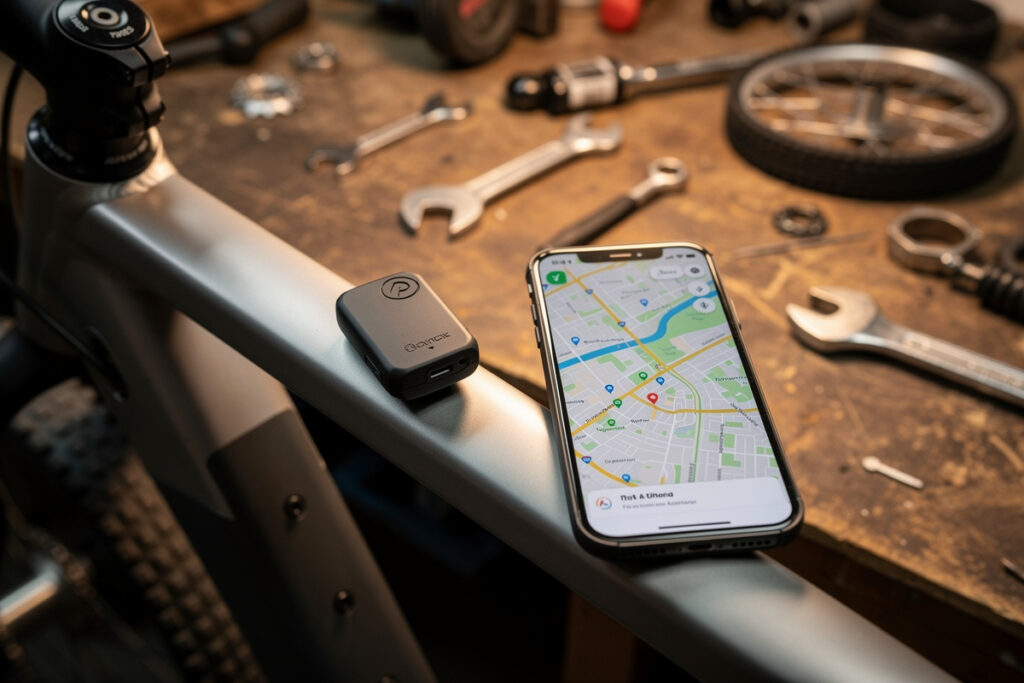
A GPS tracker for an e-bike is recovery insurance, not theft prevention: hidden well, it gives police a live location after a theft, and almost every recovered-bike story involves a tracker the thief never found. For an expensive bike a dedicated cellular GPS tracker is worth the modest device cost and small subscription; for a cheaper bike a crowd-sourced Bluetooth tag is a fair budget option.
I run a hidden tracker on my main bike for the same reason I keep a fire extinguisher I hope never to use: the day it matters, nothing else will do. This article covers what a tracker actually does, the two main types and how they really differ, where to hide one so it survives a thief’s once-over, realistic battery life, and the subscription math. It sits under my e-bike anti-theft guide as the last layer, the one that turns “gone” into “located,” after the locks in the primary-lock guide and the two-lock rule have done the prevention work.
Do GPS Trackers Actually Help Recover Stolen E-Bikes?
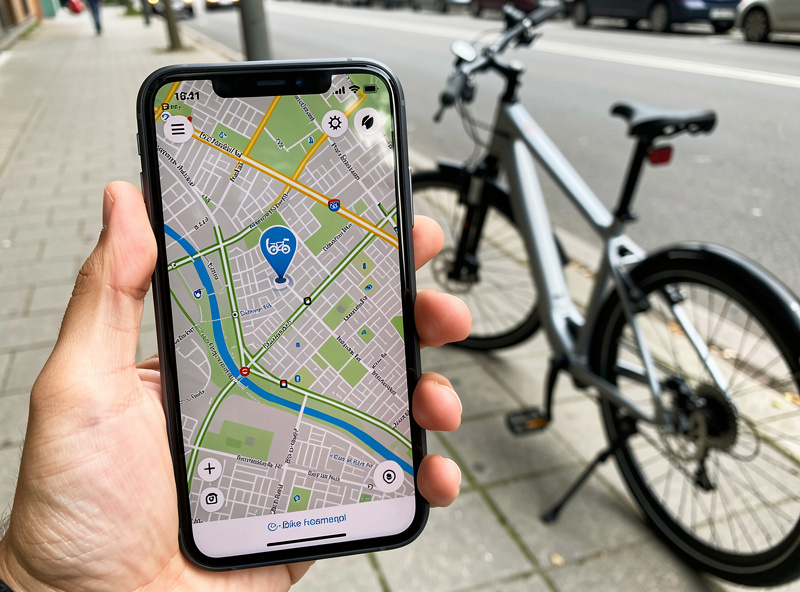
Yes, but only as a recovery tool, not a deterrent: a tracker does nothing to stop the theft happening, and its entire value is giving police a location afterward so the bike can be found and returned. The single biggest factor in whether it works is concealment, because a tracker a thief spots and bins reports nothing, which is why hiding spot matters as much as the device.
The honest framing is that prevention and recovery are two different jobs. Locks and removed batteries handle prevention, raising the effort so opportunists give up. A tracker handles the residual risk, the determined, equipped thief who beats your locks anyway. Against that small group you cannot win the prevention fight, so you change the game to recovery: let them take it, then locate it.
One firm rule comes with this: a tracker is information for the police, never a license to go confront a thief yourself. Recovered-bike stories that end well are the ones where the owner handed a live location to officers and let them act. The tracker’s job is to make recovery possible; your job is to keep yourself out of it.
Bluetooth Tag vs Cellular GPS Tracker: Which Is Better?
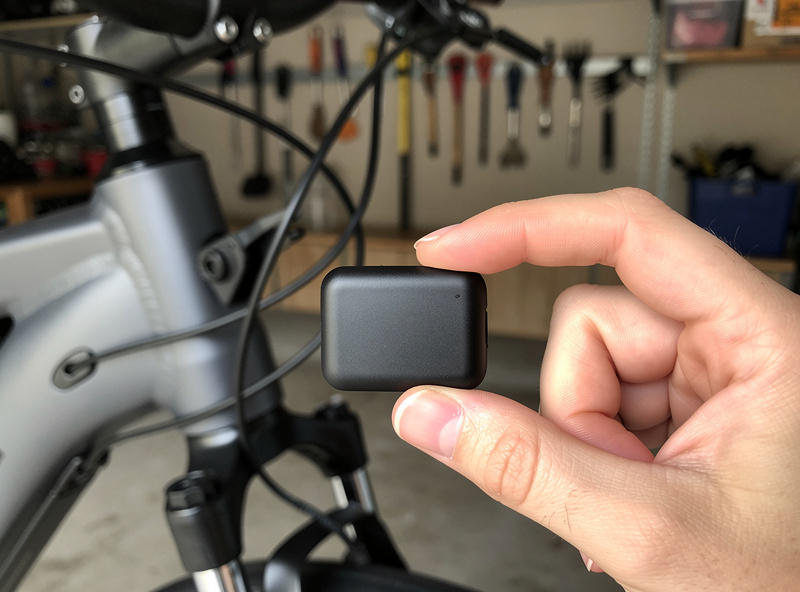
A cellular GPS tracker reports its own position over a mobile network on its own schedule, making it far more reliable for live tracking, while a Bluetooth tag only updates when another phone in its network passes nearby, so it is cheaper and battery-frugal but patchy outside busy areas. For an expensive bike the cellular type earns its keep; for a budget bike in a dense city the tag is a reasonable cheap option.
The difference comes down to who does the reporting. A cellular tracker has its own SIM and talks to the network directly, so it can ping a position anywhere there is mobile coverage, on demand or on a schedule. A Bluetooth tag has no network of its own, it piggybacks on a vast fleet of strangers’ phones, going silent the moment none are near. In a packed city the crowd network is dense and tags work surprisingly well; on a quiet rural road, a tag can stay dark for hours.
There is a cost and effort trade too. Tags are cheap, need no subscription, and run a year or more on a coin cell. Cellular trackers cost more, usually carry a small monthly or annual subscription for the SIM, and need charging or wiring into the bike. For a four-figure e-bike I happily pay for the reliable, network-independent type; for a beater, the tag’s price and battery life win.
Where Should You Hide a GPS Tracker on an E-Bike?
Hide a tracker somewhere a thief will not check in a quick once-over: inside the seatpost, within the frame, under a saddle, or built into an accessory like a rear light or bottle cage, never anywhere visible or obvious. The best spot balances concealment against the tracker’s need for charging access and, for cellular units, a half-decent signal path out of the metal.
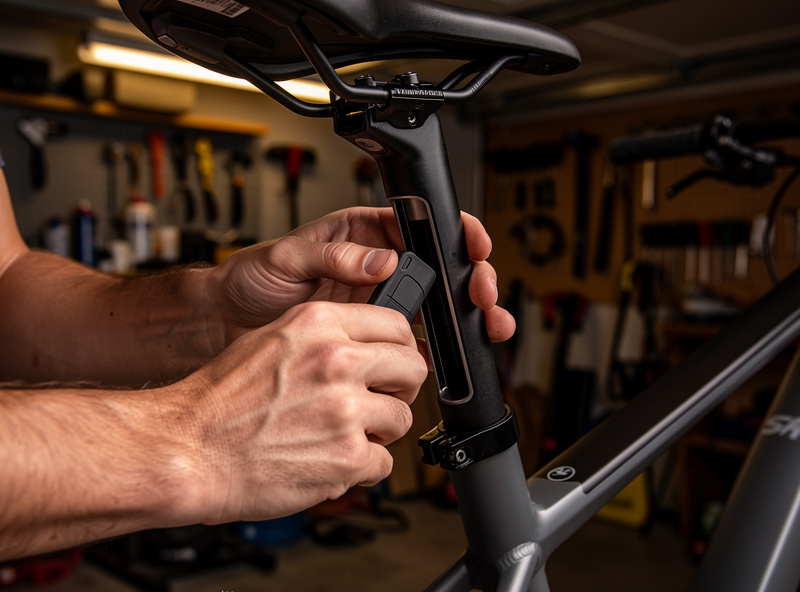
The seatpost is my favorite hiding spot because it is roomy, accessible for charging by pulling the saddle, and not somewhere a thief pauses to inspect during a fast grab. Inside the frame works on bikes with the space, though it complicates charging. Accessory-disguised trackers, the kind that look like a tail light or are built into a bottle cage, are clever because a thief sees a normal part, not a tracker. Avoid anywhere a thief routinely strips or swaps, like the saddle clamp area on a bike they plan to part out.
Concealment fights signal for cellular units, so test it: hide the tracker, then check it can still report a position from inside that spot before you trust it. A perfectly hidden tracker that cannot get a signal out is useless. I pick the most concealed spot that still pings reliably, and I re-check after any change. You can browse hidden GPS trackers for bikes and Bluetooth tracking tags to see both types.
How Long Does an E-Bike Tracker’s Battery Last?
Battery life varies enormously by type and how often the tracker reports: a Bluetooth tag on a coin cell can run a year or more because it does almost nothing until pinged, while a cellular GPS tracker reporting frequently on its own battery may need recharging every few weeks, with units wired into the bike’s own power running indefinitely. Reporting frequency is the lever, more frequent pings mean shorter life.
For a self-powered cellular tracker, you are trading update rate against runtime. Set it to report every few hours and it lasts much longer than one pinging every few minutes, but you get a coarser trail. Many trackers offer a low-power “parked” mode that stays quiet until motion is detected, then wakes and reports, which is the sweet spot: long standby life with live tracking exactly when it matters. That motion-wake behavior is the feature I look for.
The cleanest answer to battery anxiety is wiring a cellular tracker into the e-bike’s own battery system through a proper accessory port, so it runs as long as the bike does, though this should be a plug-in accessory connection, never anything that opens or modifies the pack itself. I keep all tracker power at the accessory-port-and-charge level; the battery pack stays sealed, which is a firm line on this site and across my whole e-bike security approach.
Are GPS Trackers Worth the Subscription Cost?
For a valuable e-bike, yes: the small monthly or annual subscription on a cellular tracker is trivial against the cost of the bike, and it buys you the reliable, network-independent tracking that actually recovers bikes. For a cheap bike, a no-subscription Bluetooth tag is the sensible call, because the recurring cost would be disproportionate to what you are protecting.
The math is simple value-versus-risk. A four-figure e-bike against a subscription that costs less per year than a single tank of fuel is an easy yes, especially if you park it in public daily. The subscription pays for the SIM that makes live tracking possible, which is the whole point of the cellular type. Skipping it to save a token amount defeats the device.
Where I draw the line is the same place I draw it for insurance and second batteries: spend in proportion to the asset. A tracker plus a year of subscription should be a small fraction of the bike’s value, and on a bike worth protecting it always is. On a bike not worth that, drop to a tag or skip tracking and put the money into a better lock instead. The whole layered cost logic lives in the main security guide.
Some links above are affiliate links. If you buy through them I may earn a small commission at no extra cost to you. I only point at gear I would fit to my own bike.
Frequently Asked Questions
Do GPS trackers really help recover stolen e-bikes?
Yes, as a recovery tool. A hidden tracker gives police a live location after a theft, and most recovered-bike stories involve a tracker the thief never found. It does not prevent theft, so it works alongside locks, not instead of them.
Is a Bluetooth tag or a cellular GPS tracker better for a bike?
A cellular tracker is more reliable because it reports over a mobile network on its own schedule. A Bluetooth tag only updates when another phone passes nearby, so it is cheaper and lasts longer but is patchy outside busy areas. Expensive bikes warrant cellular.
Where is the best place to hide a tracker on an e-bike?
Inside the seatpost, within the frame, under the saddle, or built into an accessory like a tail light or bottle cage. The seatpost is ideal: roomy, easy to charge from, and not somewhere a thief checks in a quick grab. Test signal from the spot first.
How often do I need to charge an e-bike GPS tracker?
It depends on type and reporting rate. A Bluetooth tag runs a year or more on a coin cell; a self-powered cellular tracker may need charging every few weeks. A motion-wake parked mode greatly extends life, and units wired to the bike run indefinitely.
Are GPS tracker subscriptions worth paying for?
For a valuable e-bike, yes. The subscription funds the SIM that makes reliable live tracking possible, and it costs little against the bike’s value. For a cheap bike, a no-subscription Bluetooth tag makes more sense than a recurring fee.