Important Disclaimer
eBikeGarageHQ provides educational content and estimates only. We are not certified installers, financial advisors, or electricians. Always consult with licensed professionals.
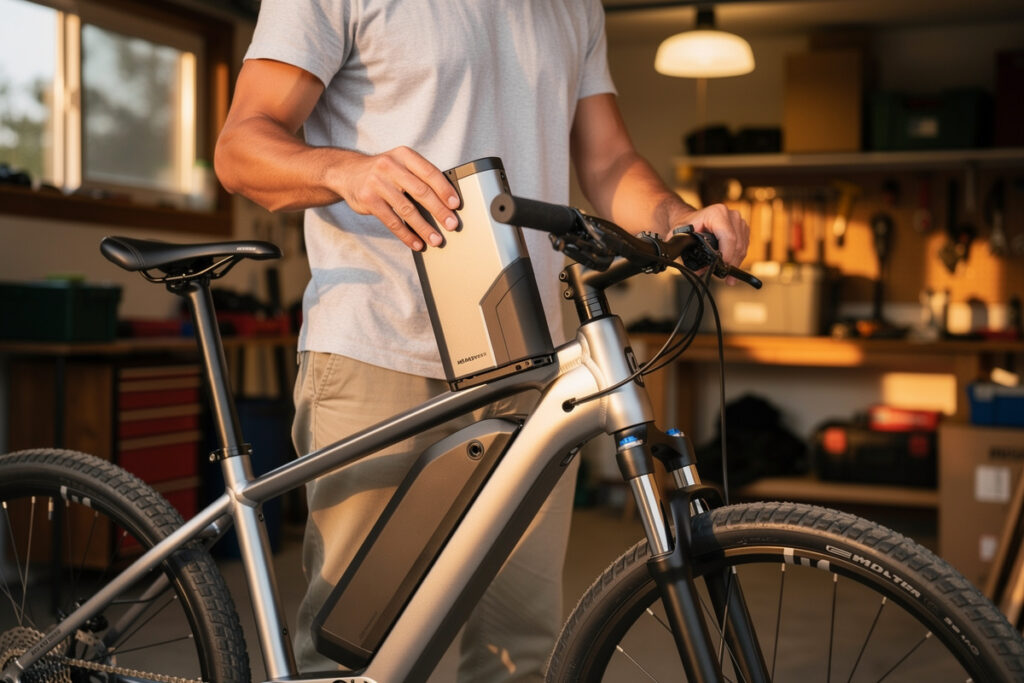
E-bike battery theft prevention comes down to one habit and one piece of hardware: take the battery with you whenever it is practical, and use a battery-lock cable to tie the pack to the frame when it is not. The battery is often the single most valuable removable part on the bike, frequently worth a large fraction of the whole, and the small key lock that holds it in place is a convenience feature, not security.
I have learned to treat the pack the way I treat my wallet: it does not get left on the bike anywhere I would not leave cash. After years of commuting through Swedish seasons, where a removed battery also means a battery I can charge and store properly indoors, pulling it has become second nature. This article covers why the battery is a target, how weak the stock mount lock really is, when to carry the pack versus cable it, and the bikes where removal is not an option. It is the battery layer of my e-bike anti-theft guide, and it works alongside the locks in the primary-lock guide and the two-lock rule.
Why Is the E-Bike Battery a Theft Target?
The battery is a prime target because it is the most valuable easily removable component on most e-bikes, often worth a sizable fraction of the bike, and it has a ready resale market. A thief who cannot beat your locks to take the whole bike can still pop the pack in seconds and walk off with the single priciest part, which is exactly the opportunist theft that good locks alone do not stop.
Two things make the pack attractive. First, value density: it is small, light enough to carry, and worth a lot, the ideal grab-and-go item. Second, demand: replacement packs are expensive, so there is a steady market for used and stolen batteries, which keeps the incentive alive. A locked frame protects the frame; it does nothing for a battery sitting in an unlocked or weakly locked mount above it.
This is why battery security is its own layer rather than something the frame lock covers. You can do everything right with two locks and still hand a thief the most valuable part if the pack is left accessible. Treating the battery as a separate, carry-it-with-you item closes that gap, and it is the cheapest security upgrade there is because the habit costs nothing.
There is a quiet bonus to thinking of the pack this way. The battery you remove regularly is also the battery you can charge in better conditions, store at a sensible charge level over winter, and eyeball for damage before it becomes a problem, so the same habit that defeats theft also extends the pack’s life. The most expensive removable part on the bike is the one that most rewards being treated with a little discipline, and the discipline is identical whether your motive is security or longevity. Pull it, carry it, charge it indoors, and you are protecting both your wallet against thieves and your range against premature capacity fade.
How Secure Is the Stock Battery Mount Lock?
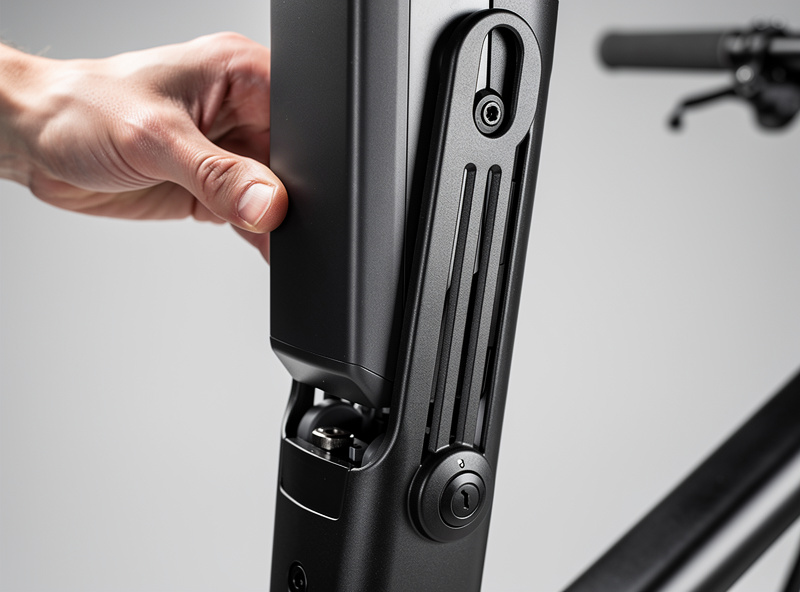
The stock battery mount lock is designed to stop the pack rattling out while you ride, not to defeat a thief: most use a simple lock cylinder, and many bikes within a model line share weak, common keys that offer almost no real resistance. Treat the mount lock as a retention clip with a key, not as a security device, and never rely on it as your only battery protection.
The giveaway is how the lock behaves. It clicks the pack into place and releases it with a small key, the kind of cylinder that prioritizes convenience over strength, and on many platforms the same key pattern repeats across thousands of bikes. That is fine for its actual job, keeping the battery seated over bumps, and useless for its assumed job, stopping theft. Anyone who knows the platform knows how little the mount lock means.
So the rule writes itself: the mount lock keeps the pack on the bike while moving, and your habits keep it safe while parked. Do not let the presence of a lock on the mount lull you into leaving the battery on the bike in a risky spot. It is a clip, not a vault, and security comes from removing or cabling the pack, not from trusting that little cylinder.
Should You Take the Battery With You or Cable It?
Take the battery with you whenever it is practical, and use a battery-lock cable to secure it to the frame when carrying it is not, because a removed pack cannot be stolen and a cabled pack raises the effort enough to deter a casual lift. The decision is simply how risky the spot is and how long you will be away: high risk or long absence means carry it; quick, lower-risk stops can use the cable.
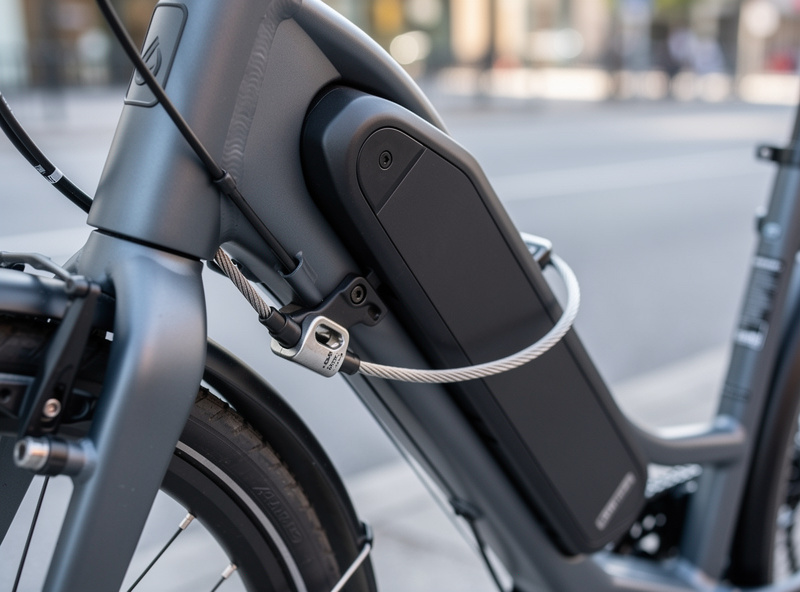
Carrying the pack is the gold standard, it is the only method that makes battery theft impossible, and on a removable-battery bike it takes seconds. The downside is weight and bulk in your bag, which is why I carry mine when I leave the bike anywhere genuinely exposed but cable it for short, lower-risk stops. A battery-lock cable, a dedicated cable that loops the pack to the frame independent of the mount lock, turns a five-second grab into a tool job, which is often enough to send an opportunist elsewhere.
The honest limit is that a cable, like any cable, is cuttable, so it is a deterrent rather than a guarantee, sized to opportunists not to determined thieves. Match the method to the stakes: where the bike and battery really matter, the pack comes with me; where convenience wins and risk is low, the cable does the job. You can browse e-bike battery-lock cables for the dedicated retention type.
What If the Battery Cannot Be Easily Removed?
On bikes with integrated or hard-to-remove batteries, prevention shifts to securing the whole bike well and parking smarter, because if the pack cannot come off quickly it also cannot be grabbed quickly, but it also cannot be brought indoors as a separate item. For these bikes, the locks and parking choices carry more of the load, and a hidden tracker becomes proportionally more valuable.
Integrated packs are a double-edged design. The upside is that a battery hidden inside a sealed downtube is awkward and slow for a thief to extract, which is a real deterrent on its own, often more than a weak external mount lock provides. The downside is that you lose the carry-it-with-you option, so the whole bike has to be secured and parked as if the battery is permanently attached, because functionally it is.
For these bikes I lean harder on the other layers: two good locks, careful anchor and parking choices, and a hidden GPS tracker for recovery if the worst happens, covered in my tracker guide. None of this involves opening or modifying the pack, that line stays firmly drawn everywhere on this site, integrated battery or not. The pack stays sealed; security stays on the outside, and the bike’s overall protection lives in the wider security strategy.
Where Does E-Bike Battery Theft Actually Happen?
Battery theft happens most where bikes sit unattended and accessible: public racks during the work or shopping day, shared apartment bike rooms, and sheds or garages that owners assume are safe once the bike is “home.” The common thread is time and access, a pack left reachable for hours, or in a space many people can enter, is the pack most likely to disappear.
Public racks are the obvious risk because the bike is exposed to everyone passing, but the underrated danger is the home and semi-private spaces. A shared bike room in an apartment block gives dozens of residents and their visitors casual access to your battery, and a shed or garage that gets broken into is a target precisely because owners relax their habits there. I have seen riders lock the frame beautifully at home and leave the pack sitting on it in an unlocked shed, which hands a burglar the most valuable part for free.
The fix follows the pattern of the whole risk: bring the battery inside the actual living space whenever the bike is stored anywhere shared or semi-secure, not just when it is on the street. The pack is small enough to live indoors, where it is also charging and storing in better conditions, so the security habit and the care habit reinforce each other. Where you cannot bring it in, the cable and a well-chosen anchor are the fallback, and the broader home setup is covered in the main security guide.
Some links above are affiliate links. If you buy through them I may earn a small commission at no extra cost to you. I only recommend gear I would use on my own bike.
Keep Building Your Setup
If you take one thing from this, make it the habit of treating the battery as a separate, carry-it item rather than part of the bike. It is the cheapest, highest-return security move you can make, because it costs nothing and removes the most valuable grab from the equation entirely. Cable it when carrying is impractical, lean on locks and a tracker for integrated-battery bikes, and never trust the mount lock to do a job it was never built for.