Important Disclaimer
eBikeGarageHQ provides educational content and estimates only. We are not certified installers, financial advisors, or electricians. Always consult with licensed professionals.
The accessories that actually earn their place on a cargo e-bike are the unglamorous ones: a stout double-leg kickstand, a serious lock, real lighting, load-rated tires kept at the right pressure, and a way to strap the load down that you trust. Get those five right — the essential set runs roughly $200–400 all in — and the bike becomes a tool that replaces car trips. Spend on gadgets first and you have a heavy bike that still tips over when a kid climbs in. After enough loaded kilometres, my buying order is function, safety, then everything else.
I am writing this from the gear bench, which is exactly where my authority on cargo bikes is strongest. I will tell you which accessories change daily usability and which are fashion, and I will point you at honest search links rather than a specific model I have not put under load. Where the topic touches genuinely family-specific choices — which child seat suits which kid at which age — I will flag that as your call and the maker’s spec, not mine to invent. As an Amazon Associate I earn from qualifying purchases.
How I Prioritise Cargo Accessories
My rule is simple: buy in the order that safety and daily friction demand. First the things that keep the loaded bike upright and stoppable, then the things that keep it and its cargo secure and visible, then comfort and convenience. A cargo bike is a platform, and the right accessories turn the platform into a vehicle you reach for instead of the car. The full platform context sits in the cargo and family e-bike guide; this is the gear that hangs off it.
| Accessory | Why It Matters | Rough Cost | Priority |
|---|---|---|---|
| Double-leg centre stand | Loads the bike upright without tipping | $40–$120 | Essential |
| Heavy-duty lock | Loaded cargo bikes are theft magnets | $60–$150 | Essential |
| Front & rear lights | Months of dark Nordic riding | $30–$120 | Essential |
| Load-rated tires | Range, grip, and pinch-flat resistance | $40–$100/tire | High |
| Panniers & cargo straps | Secures the load you actually carry | $30–$150 | High |
| Fenders & rain cover | All-weather usability | $25–$200 | Medium |
The Double-Leg Kickstand: Buy This First
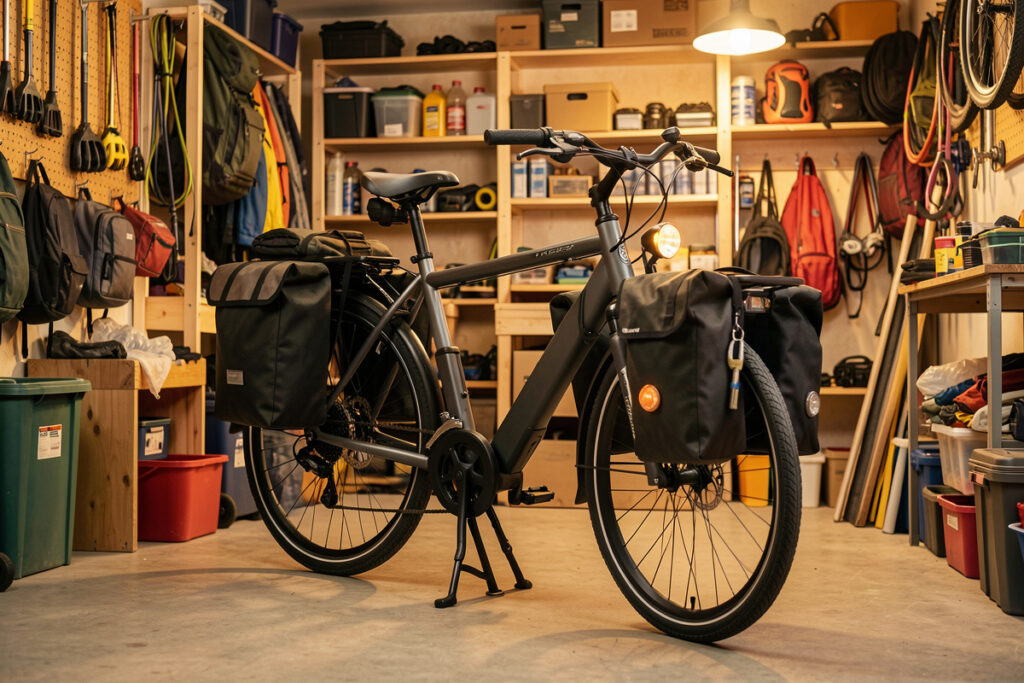
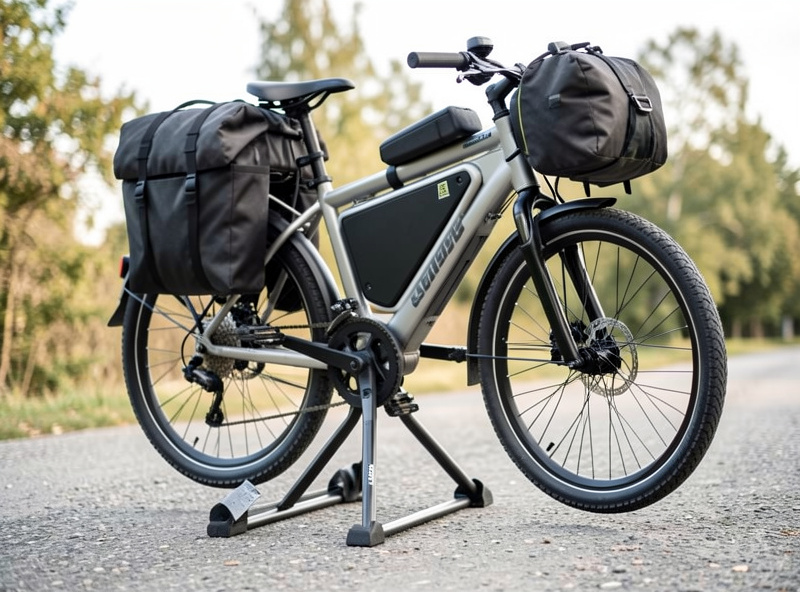
If you change one thing on a cargo bike, make it the kickstand. A loaded longtail on a flimsy side-stand can tip the moment a child climbs the rear deck, and that is precisely the instant you do not want a tip. A proper centre-mounted double-leg stand lifts the bike level and stable so you can load crates or buckle in a kid with both hands free. It is the cheapest upgrade that removes the most daily stress, and on a rear-loader I consider it non-negotiable rather than optional.
Look for one rated for your bike’s total loaded weight and matched to the frame’s mounting — a stand that is too short or too weak just relocates the problem. You can browse a cargo e-bike double-leg kickstand in a few minutes, and it is the rare accessory where spending a little more genuinely buys peace of mind. This is the same stability point I make about loading in front load vs rear load — the layout sets how much stand you need, but every cargo bike needs a real one.
A Lock That Matches the Target
A loaded cargo bike is an expensive, conspicuous, hard-to-replace machine, which makes it a prime theft target — far more than a beat-up commuter. Match the lock to the threat: a hardened chain or a high-rated U-lock, used properly through the frame and a fixed object, not just the wheel. On a cargo bike I also think about where you park it, because the bike’s size means it often lives outside or in shared storage. My full reasoning is in the best lock for e-bike security and the broader anti-theft guide, both of which apply doubly to a cargo bike.
If you want a starting point, a heavy-duty bike chain lock rated for high security is the sensible floor for a bike this valuable. Spend in proportion to what the bike is worth and how exposed it parks — under-locking a cargo bike is a false economy you only make once.
Lights for the Dark Half of the Year
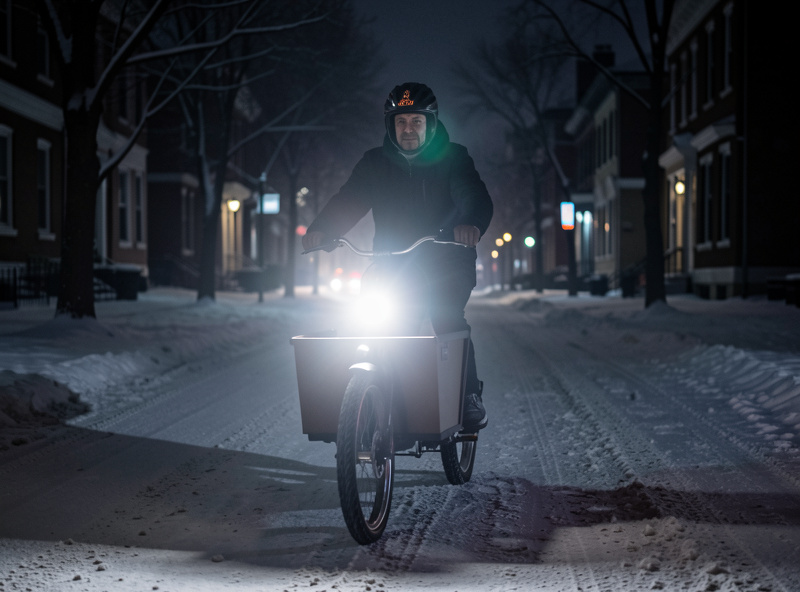
Here in Sweden the commute and the school run happen in darkness for months, and on a bike carrying precious cargo, being seen is not optional. Run a proper front light bright enough to light the path and a rear light that makes you obvious from distance, and treat them as core equipment rather than an afterthought. The lights I run all winter are in the best e-bike lights for winter commuting, and they carry straight over to a cargo bike — if anything you want to be more visible, not less, with a kid on board.
For the deep-winter rider, the same logic extends to grip: studded tires on a loaded bike are the difference between confidence and a white-knuckle crawl on icy mornings. A good set of rechargeable bike lights is a cheap, high-impact buy that I would never skip on a family machine.
Tires, Pressure, and Carrying the Load
Tires are where load quietly steals range and comfort. A cargo bike needs a tire rated for the total system weight, run at a pressure matched to the load — too low and you get squirm, pinch flats and a Wh/km penalty; too high under load and the ride turns harsh on cold tarmac. I run the firmer end of the window when fully loaded and check pressure weekly, because an under-inflated loaded tire is the most common reason a reader’s range “suddenly got worse” with nothing else changed.
For carrying the load itself, the unglamorous winners are good panniers and a couple of quality cargo straps. A flapping, badly secured load shifts the bike’s balance and unsettles the steering exactly the way a tall rear load does. A set of waterproof cargo pannier bags and some bike cargo straps do more for daily usability than any motor tweak, and they cost a fraction as much.
Weather Protection and Family-Specific Gear
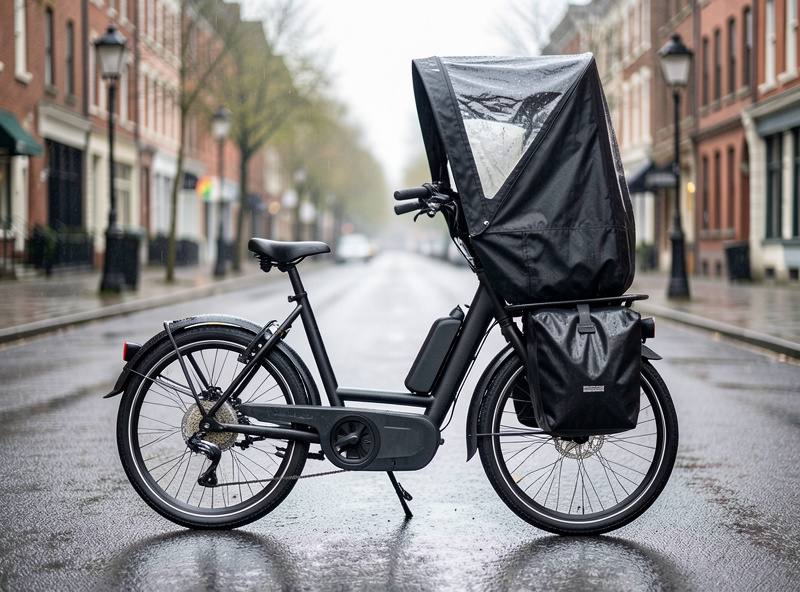
Fenders are mandatory on an all-weather bike — a loaded cargo bike with no fenders soaks you and the cargo on the first wet day. A rain cover or canopy on a front box keeps kids and shopping dry, and good gloves and a windproof layer make the dark, cold commute sustainable rather than something you dread. These are the parts of the Nordic loadout I use every season, and they turn a fair-weather toy into a year-round vehicle.
On the genuinely family-specific gear — which child seat, what age, how many kids — I stay in my lane. I can tell you a seat must be rated and fitted to the maker’s spec and that the bike’s stand and brakes matter more than any seat brand, but the fit and age decisions are yours and the manufacturer’s, not something I will invent a recommendation for. Treat helmets, visibility and a safe route as standard practice, and lean on the gear I actually test for the mechanical side. The cost trade against starting with a trailer is covered in cargo bike vs trailer for the school run, and how all this rides under load sits in the loaded hill test.
Brakes and the Consumables You Will Replace
Finally, budget for the parts a loaded bike eats. Hydraulic disc brakes are the only sensible choice on a bike this heavy, and the pads wear far faster at loaded weight than on a bare commuter — check them often and replace before they glaze. Under cargo torque a mid-drive’s chain and cassette wear quicker too, which I treat as a normal cost of moving real weight rather than a fault. Keeping a spare set of pads and a chain-wear gauge on the bench is the honest version of cargo ownership, and it is far cheaper than the brake or drivetrain failure you avoid by staying ahead of it.
Frequently Asked Questions
What is the most important cargo e-bike accessory?
A stout double-leg centre kickstand. A loaded bike on a flimsy side-stand can tip when a child or load climbs aboard, which is the worst moment for it. A proper double stand lifts the bike level so you can load it with both hands free, and it is the cheapest upgrade that removes the most stress.
Do I really need a more expensive lock for a cargo bike?
Yes. A loaded cargo bike is expensive, conspicuous and hard to replace, making it a prime theft target. Use a hardened chain or high-rated U-lock through the frame and a fixed object, and spend in proportion to the bike’s value and how exposed it parks.
What tire pressure should I run on a loaded cargo bike?
Run a tire rated for your total system weight and set pressure toward the firmer end of its window when fully loaded, dropping it for lighter days. Check weekly, because an under-inflated loaded tire is the most common reason range quietly gets worse with no other change.
Are panniers or a rear deck better for carrying cargo?
Both, used together. A rear deck or box carries the bulk, and panniers plus quality cargo straps secure smaller items and stop the load shifting. A poorly secured load unsettles the steering the same way a tall rear load does, so strapping it down properly matters.
What accessories should I skip on a cargo e-bike?
Skip gadgets that do not improve safety or daily usability until the essentials are covered: a strong stand, lock, lights, load-rated tires and a way to strap the load down. Spend on those first, and treat displays, horns and styling extras as optional once the basics are sorted.