Important Disclaimer
eBikeGarageHQ provides educational content and estimates only. We are not certified installers, financial advisors, or electricians. Always consult with licensed professionals.
A second e-bike battery is worth it if you regularly need more range than one charge gives you, or want a fresh spare to rotate as the original fades. But a quality 500 Wh pack often runs a third to half the price of the whole bike, so the case is strongest for long-distance commuters and tourers who need that extra 40-60 km, not short-hop riders.
I think about this the way I think about every component on my bench: what problem does it actually solve, and is it the cheapest way to solve it? A spare battery is a great answer to “I run out of range”, a decent answer to “I want my bike to outlive its original pack”, and a poor answer to “I have battery anxiety that better numbers would cure”. Here is how to tell which camp you are in.
When a Second Battery Is Genuinely Worth It
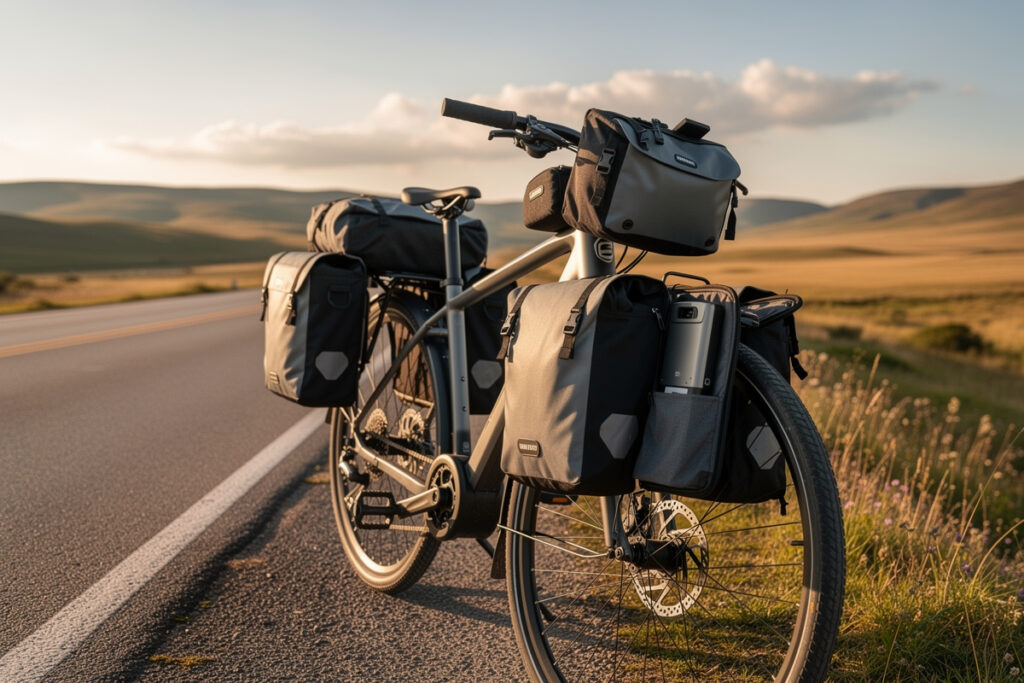
Buy a second pack when your real, regular rides exceed what one charge comfortably covers, when you tour or bikepack beyond charging opportunities, or when downtime to recharge mid-day is a deal-breaker. In those cases a spare is not a luxury, it is the difference between making the ride and not, and no amount of charge-habit cleverness changes the fact that you need more watt-hours than one pack holds.
High-mileage riders get a second benefit: rotating two packs halves the cycle count each one accumulates, spreading the wear so both age more slowly in calendar-adjusted terms. If you would otherwise put a thousand cycles on a single battery in three years, two batteries in rotation each see five hundred over the same period. For someone genuinely racking up the kilometres, that is a real longevity gain on top of the range.
There is also a convenience case that is easy to underrate: keeping one pack charged at home and one at work, or one on the bike and one in a bag, removes the recharge-downtime problem entirely. If your day involves two separate trips with no realistic chance to charge in between, a spare is not about total range so much as about never being caught with a flat pack at the wrong moment. That is a legitimate reason to buy even if a single charge technically covers your daily distance, because it buys you flexibility rather than raw watt-hours.
When You Probably Don’t Need One
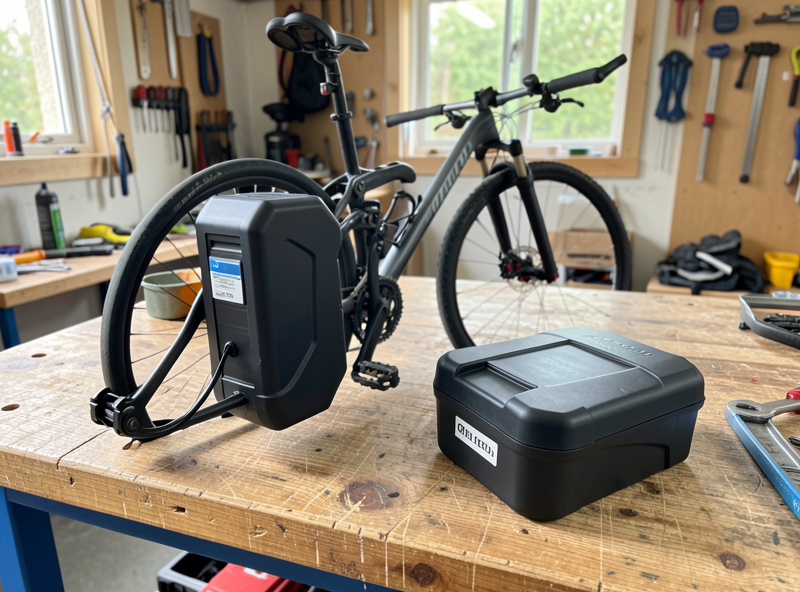
If your daily ride uses only half a charge, a second battery solves a problem you do not have. The money is better spent elsewhere, or kept, because the spare will sit unused, aging on the calendar whether you ride it or not. A pack bought “just in case” is not in suspended animation; it loses capacity on the shelf, so an unused spare can be worse than no spare at all.
The honest first move for most riders worried about range is not a second battery but a better understanding of the range they already have. Once you log your real consumption on a repeatable route, range anxiety usually shrinks to nothing, because the numbers turn out to be fine. I walk through that exercise in my real-world range calculator, and for many people it is the cheaper, smarter fix. If the numbers genuinely fall short, then a second pack earns its place.
It is also worth doing the rough arithmetic before you spend. A second pack is a significant fraction of the cost of the whole bike, and that same money might instead buy years of extra life out of your existing battery simply through better habits, or it might be unnecessary if a charge-limit setting and a more honest read on your real range solve the underlying worry. I am not against spending it, I run the math first. The point of this article is to make sure the second battery is solving a problem you actually have, rather than buying peace of mind that a few logged rides would have given you for free.
Second Battery vs Better Habits vs New Pack
| Your situation | Best move | Why |
|---|---|---|
| Daily ride uses under half a charge | Keep your money | A spare would sit unused and age on the shelf |
| Regular rides exceed one charge | Second battery | You simply need more watt-hours |
| Touring beyond charging access | Second battery | No way to recharge mid-route |
| Very high annual mileage | Second battery (rotate) | Halves cycles per pack, spreads wear |
| Original pack badly faded | Replacement pack | A fresh battery restores range; a spare does not fix a dying one |
| General range anxiety, numbers fine | Log your real range | Often the anxiety, not the range, is the problem |
What to Buy: Genuine Spare vs Aftermarket
If you buy a second battery, buy the pack specified for your bike and your region, ideally the manufacturer’s own or a reputable certified equivalent. Many e-bike batteries are bought direct from the bike maker rather than through general retail, precisely because they must match the bike’s mount, connector, voltage, and BMS exactly. A cheap unbranded pack of unknown cell quality is a false economy and, in the worst cases, a safety risk.
This is where I draw the firm line: a “second battery” means a complete, bought, certified pack, never a home-built one. Assembling packs from loose cells, rewiring a BMS, or modifying a charger to suit an off-spec battery is genuine fire-risk territory and is off the menu on this site entirely. The one accessory genuinely worth adding is a spare charger so you can charge two packs in parallel or keep one at work; a manufacturer-correct e-bike charger matched to your battery is the safe choice there. As an Amazon Associate I earn from qualifying purchases.
One more buying note: capacity matching matters more than people expect. If your bike supports a dual-battery or range-extender setup, the system is designed for the two packs to work together, and you should follow the maker’s guidance on which combinations are allowed. If you are simply buying an identical second pack to swap in, matching the watt-hours and the production era roughly keeps your range predictable across both. Mixing a tired old pack with a fresh high-capacity one as a “matched pair” rarely behaves the way you hope, so think of the spare as a clean second unit rather than a patch for the first.
Does a Second Battery Change My Legal Class?
No. Carrying or fitting a second battery does not change your e-bike’s legal classification, because the rules are about how the bike assists you, not how much energy you carry. An EU pedelec stays a pedelec (pedal-assist limited to 250 W continuous with a 25 km/h cutoff) regardless of battery count, and a US Class 1, 2, or 3 e-bike keeps its class (assist to 20 mph, or 28 mph pedal-assist for Class 3) no matter how many packs you own. More watt-hours means more range, not more speed or power.
The one regulatory caveat is the same as ever: the pack must be a certified battery appropriate for your bike and your market, and on some bikes a dual-battery setup is only supported with the manufacturer’s own range-extender hardware. Check what your specific bike officially supports rather than improvising a second-battery wiring solution, which once again strays into pack-and-electrical territory that is off-limits here. Buy what the bike is designed to take.
How to Live With Two Packs
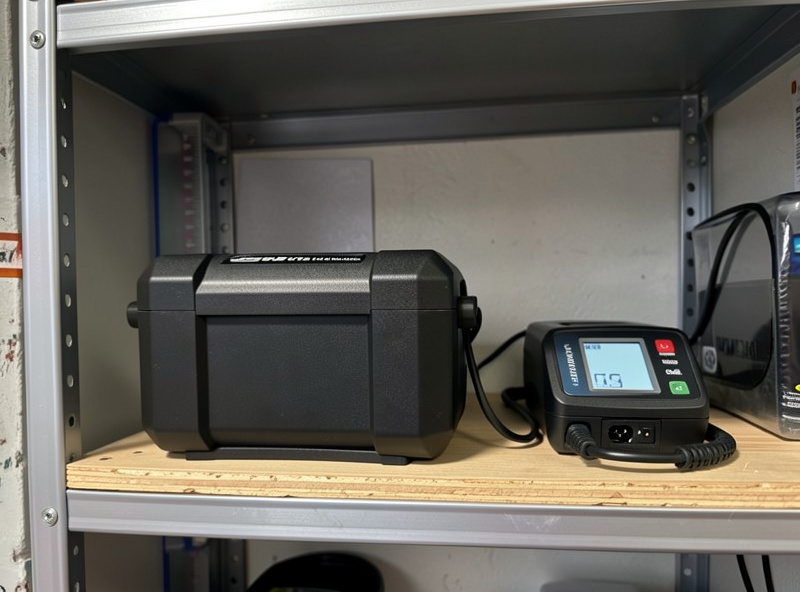
If you do run two batteries, use both in rotation rather than babying one and hammering the other, because a pack left at full on a shelf ages faster than one in gentle regular use. Rotate them so each sees similar use, store the one that is resting at the 40-60% storage charge rather than full, and label them so you can track which is which over time.
Treat both packs to the same care: partial charging, sane temperatures, mid-charge storage for whichever is resting. The whole point of a second battery is more usable life and range, and that benefit evaporates if the spare is mistreated between rides. Everything in my battery care guide applies to each pack independently, and the same charge-level discipline matters doubly for whichever one is sitting idle.
Frequently Asked Questions
Is a second e-bike battery worth the money?
It is worth it if your regular rides exceed one charge, you tour beyond charging access, or you ride very high mileage and want to rotate packs. For short daily commutes that use half a charge, the money is usually better kept.
Does rotating two e-bike batteries make them last longer?
Yes, in calendar-adjusted terms. Two packs in rotation each accumulate roughly half the cycles a single pack would over the same period, spreading the wear. Use both regularly rather than leaving one full on a shelf.
Can I buy any battery as a second pack for my e-bike?
No. Buy the pack specified for your bike and region, ideally the manufacturer’s own or a reputable certified equivalent. It must match the mount, connector, voltage, and BMS. Avoid cheap unbranded packs of unknown cell quality.
Should I store my spare e-bike battery fully charged?
No. Store whichever pack is resting at about 40-60% charge, kept cool and indoors, and top it up every couple of months. A spare left at 100% on a shelf ages faster than one in gentle regular rotation.
Will a second battery fix my faded old pack?
No. A spare adds range alongside the old one but does not restore the faded pack. If your original battery no longer covers your needs, a replacement pack is the fix; a second battery is for extending range, not reviving a dying one.
Related Reading
- E-Bike Battery Care: The Complete Habit Guide
- Charge to 80 or 100? The Daily Charging Answer
- E-Bike Range Guide: How Far You Actually Go
- E-Bike Range Calculator: Real-World Numbers
More from This Cluster
- “E-Bike Charging Cost: The Wall-Outlet Math”
- “Charging Habits That Extend E-Bike Battery Life”
- “E-Bike Battery Lifespan: How Many Years to Expect”
- “E-Bike Winter Battery Storage: The Half-Charge Rule”
- “Charge Your E-Bike Battery to 80 or 100? The Honest Answer”
- “E-Bike Battery Care: The Habits That Make a Pack Last”