Important Disclaimer
eBikeGarageHQ provides educational content and estimates only. We are not certified installers, financial advisors, or electricians. Always consult with licensed professionals.
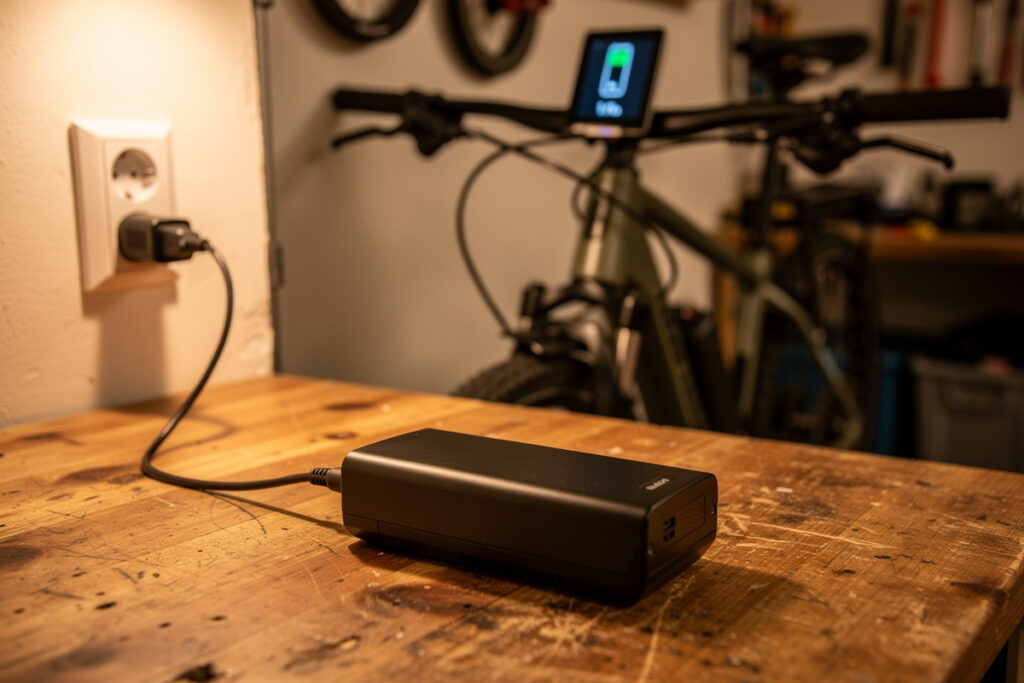
Charge your e-bike battery to about 80% for daily riding and to 100% only when you need the full range. The top 10-15% of the charge window holds the cells at peak voltage, where lithium-ion aging speeds up, so a pack kept near 80% outlasts one parked at full.
That is the short answer, and it is genuinely the right one, but the way most articles deliver it creates needless anxiety. So let me give you the nuance the same way I think about it on my own bench, where the pack on my commuter and the cells on my stationary battery wall obey identical chemistry: the goal is to avoid sitting at 100%, not to fear ever reaching it. This question sits at the heart of the broader e-bike battery care picture, and getting it right matters more for your usable range over the years than almost any other single habit.
Why 80% Is Easier on the Cells
Charging to roughly 80% reduces the time the cells spend at peak voltage, and peak voltage is the main driver of calendar aging in a lithium-ion pack. A cell held near full charges its internal chemistry harder; held at a middling voltage, it relaxes. Over years, the pack that spends less time at the top simply fades slower.
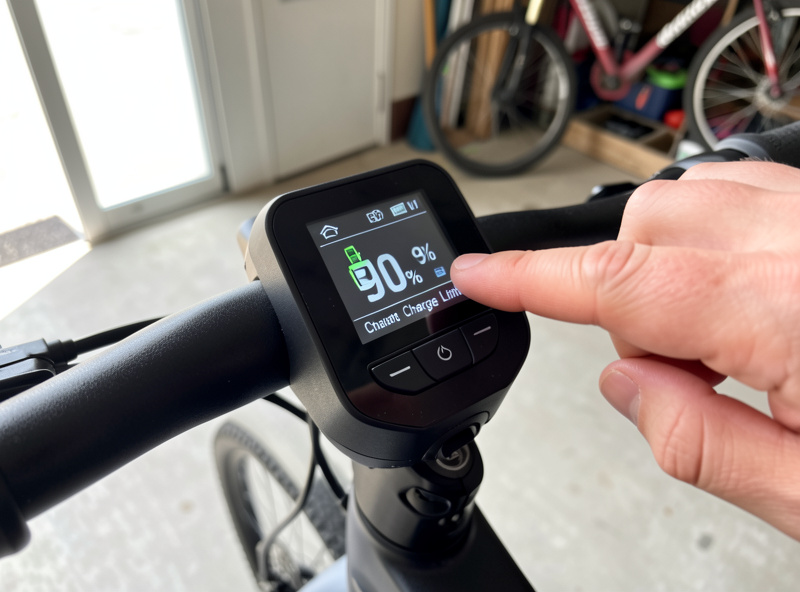
The effect is real but gradual, not dramatic. You will not see a difference in a month, and you will not brick a battery by charging it full once. What you are buying with the 80% habit is a few percent more retained capacity several years down the line, the difference between a pack that still covers your commute in year five and one that has started leaving you short. On my own commuter I leave the charge limit at 90% and only think about it before a long ride.
When You Should Just Charge to 100%
Charge to 100% whenever you genuinely need the range, full stop. Skipping range you actually require to save a sliver of long-term capacity is a bad trade, like refusing to fill your fuel tank to save the gauge. A long weekend ride, a tour, a day you are not sure where you will end up: charge full, ride, and the pack barely notices.
The damage people attribute to “charging to 100%” almost always comes from leaving the pack at 100% for days or weeks afterward, not from the act of reaching full. If you charge to 100% and ride within a few hours, you have lost essentially nothing. The rule is “do not park it full”, not “do not fill it”.
There is a practical version of this for trips: if you want a full pack for an early start, set the charge to finish close to departure rather than topping off the night before. A pack that hits 100% at 6am and rolls out at 7am spent one hour at peak voltage; the same pack charged at 10pm sat full for eight hours overnight. Same charge, very different stress, and on a smart charger or a bike with a scheduled-charge option it costs you nothing to time it well.
Does My Bike Even Let Me Set 80%?
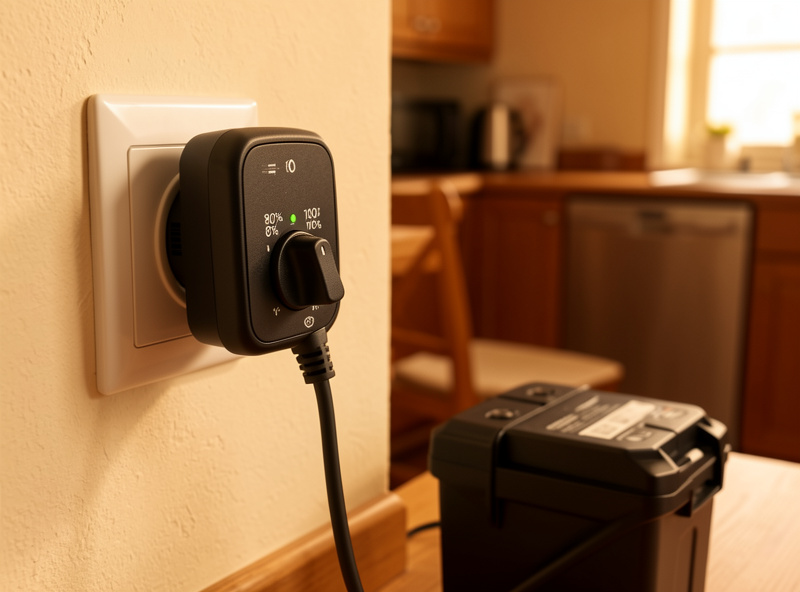
Many newer e-bikes, especially those on major mid-drive systems, offer a charge-limit setting in the display or companion app, and some chargers have a physical 80%/90% switch. If yours does, use it: set 90% as the daily default and override to full when needed. It is the single easiest longevity habit because once set, it just happens.
If your bike has no charge limit and your charger has no switch, you have two honest options: unplug manually when the display reaches roughly 80-90% (workable if you are around), or simply charge full and make sure you ride soon after rather than letting it sit. Do not buy a sketchy aftermarket timer-charger or modify the supplied one to force a partial charge; charger tampering is exactly the kind of risk this site refuses to recommend. A manual unplug or a prompt ride is safer and nearly as effective.
80% vs 100%: The Honest Trade-Off
| Scenario | Charge to 80-90% | Charge to 100% |
|---|---|---|
| Daily commute within range | Best choice | Unnecessary stress on cells |
| Long ride / touring day | May leave you short | Correct choice, ride soon after |
| Bike will sit a few days | Better (mid charge even better) | Avoid leaving it parked full |
| Long-term storage | Drop to 40-60% instead | Worst option for storage |
| Effect on lifespan | Slower calendar aging | Slightly faster if held full |
Does the 80% Rule Cost Me Range I Need?
Yes, deliberately, and that is the whole point of making it a choice rather than a fixed rule. Charging to 90% instead of 100% on a 500 Wh pack leaves roughly 50 Wh on the table, which at a typical 10-12 Wh per km is four to five kilometres of range. For most commutes that is a non-issue; for a ride near the edge of your battery’s reach, it is the difference between arriving and walking.
This is exactly where honest range math beats blanket rules. If you know your real consumption from a logged route, you know whether 90% covers your day with margin or not, and you can decide per ride instead of guessing. I worked out my own numbers using the same repeatable-loop method in my real-world range calculator, and once you have a figure you trust, the 80-versus-100 decision stops being anxious and becomes arithmetic. Terrain changes the answer too, which is why I budget energy by Wh per km by terrain rather than assuming a flat number.
What About the BMS, Doesn’t It Protect Me?
The battery management system protects you from the dangerous extremes: it stops charging at the safe upper voltage and cuts discharge at the safe lower limit, and it balances the cells. That is genuine protection and it is why leaving a pack on a working charger overnight is not a fire-by-overcharge risk on a properly built bike.
What the BMS does not do is manage longevity for you. It will happily let you sit at its defined 100% indefinitely, because that is “full and safe” by its logic, even though that is the state that ages the pack fastest. The BMS keeps you safe; the 80% habit keeps you in capacity. They are different jobs, and only one of them is in your hands.
Does Charge Speed Matter as Much as Charge Level?
Charge level matters more than charge speed for most riders, but speed is not nothing. Faster charging pushes more current through the cells and generates more heat, and heat is an aging factor in its own right. A standard charger that fills a 500 Wh pack in three to five hours is gentle; a high-amp fast charger that does it in well under two trades a little longevity for convenience.
For everyday use I stick with the supplied charger and let it take its time, usually charging in the evening so the pack is ready and cool by morning. If you own a fast charger for occasional top-ups on long days, that is fine, just be aware it runs the pack warmer and avoid stacking it with a hot post-ride battery. The pairing to avoid is fast-charging a hot pack straight to 100%, which combines three stressors at once: high current, high heat, and high voltage. Spread those out and the cells stay happy.
The Anxiety Trap to Avoid
The worst outcome of the 80% advice is the rider who now refuses to ride to a friend’s house because the battery is at 100% and they are “wasting cycles”. That is missing the point entirely. The battery exists to be used; a pack that gives you ten great years of half the rides you wanted was not a success. Use the range you need.
My actual rule is boring on purpose: 90% daily limit if the bike offers it, full before anything long, never store it full, never charge it hot or frozen. Everything else is noise. If you take one thing from this, let it be that partial charging is a gentle default, not a religion, and that the storage habit matters far more than fretting over the last 10% on any given day.
Frequently Asked Questions
Is it bad to charge an e-bike battery to 100% every time?
It is not great for longevity but it is not catastrophic. The real harm comes from leaving it at 100% for long periods. If you charge full and ride soon after, you lose almost nothing. For daily use, 80-90% is gentler on the cells.
How much longer will my battery last if I charge to 80%?
There is no single guaranteed number, but spending less time at peak voltage slows calendar aging, typically buying you a few percent more retained capacity several years out. That can be the difference between a pack still covering your commute in year five or not.
Should I charge to 100% before a long ride?
Yes. Never skip range you actually need to save a little long-term capacity. Charge full, ride within a few hours, and the pack barely notices. The 80% habit is for everyday riding, not for days you need the full range.
My e-bike has no 80% setting, what should I do?
Either unplug manually when the display reaches about 80-90%, or charge full and make sure you ride soon rather than letting it sit at 100%. Do not modify the charger or buy a sketchy timer device to force a partial charge.
Does leaving it on the charger overnight overcharge it?
No. The battery management system stops charging at the safe full voltage, so a properly built bike will not overcharge. The downside of overnight charging is sitting at 100% for many hours, which adds calendar aging, not an overcharge risk.