Important Disclaimer
eBikeGarageHQ provides educational content and estimates only. We are not certified installers, financial advisors, or electricians. Always consult with licensed professionals.
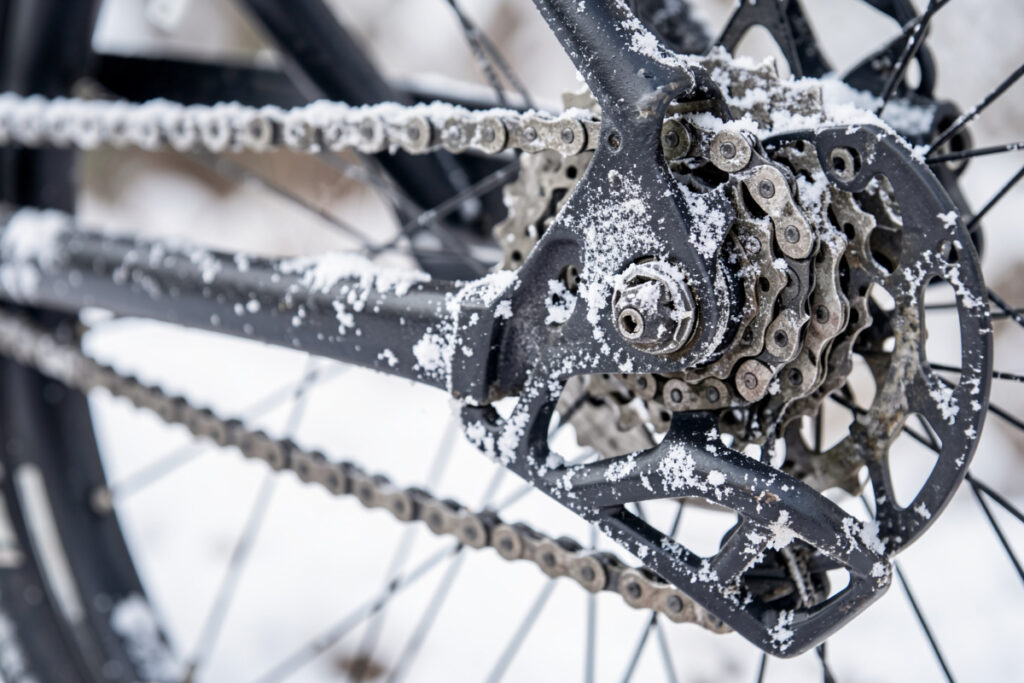
Road salt is the quiet killer of winter e-bikes, and the defense is a rinse-and-lube rhythm, not a heroic deep clean. A quick rinse of the drivetrain and brakes after salty rides, a winter-grade wet lube on the chain, and a film of corrosion inhibitor on exposed hardware will carry a bike through a Nordic winter in good shape. Ice scares you in an afternoon; salt bills you in spring. This is how I keep it from doing that.
This is one of the deep dives under my complete winter e-bike guide, and it matters even more on an e-bike than an acoustic one because the drivetrain runs under motor torque and the bike carries expensive electrical components into the same brine.
What Salt Actually Does
Municipalities salt bike paths hard here, and salt-laden slush is not just dirty water — it is a brine, an electrolyte that accelerates corrosion wherever two metals meet moisture. It works into chain pins, brake pivots, derailleur springs, bolt threads, and bearing seals. None of it announces itself. You notice the damage when the chain skips under power, a pivot seizes, or a bolt rounds off when you try to undo it in March.
The chain is the first casualty. Salt strips lube and then grinds into the pin-and-roller interface, and on a mid-drive that wear happens under motor load, so it compounds faster than most riders expect. A chain that would last a couple of seasons in summer can wear out in one salty winter if you neglect it. The good news is that prevention is cheap and fast once it becomes a habit.
The Post-Ride Rinse
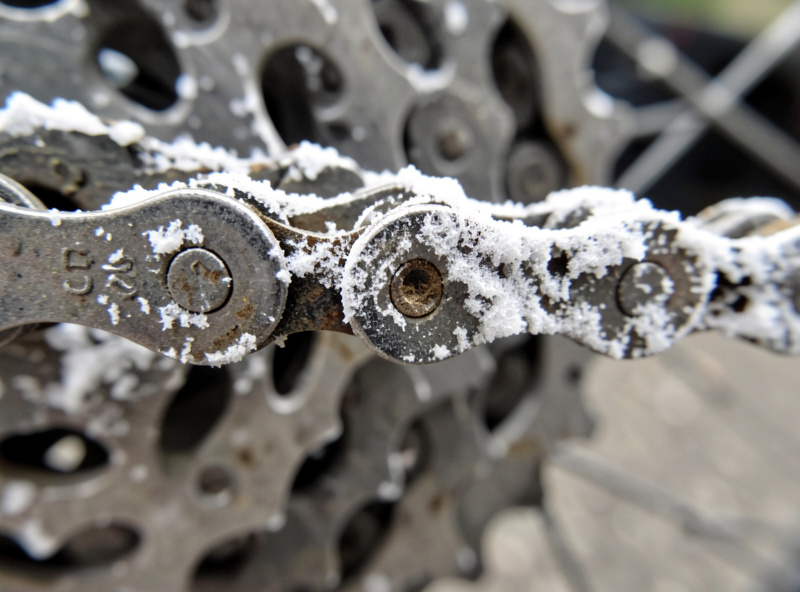
The single most valuable habit is a quick rinse after a salty ride. I am not talking about a full wash — a gentle flow of water over the lower frame, the drivetrain, the brake calipers, and the wheels is enough to carry the brine away before it sits and works. A watering can or a low-pressure hose does the job in two minutes. The point is dilution: get the salt off before it dries into a crust and keeps eating.
The one firm rule is water pressure. Never blast a pressure washer at an e-bike, and keep even a normal hose away from the motor housing, the battery contacts, the bottom bracket, and the wheel bearings. High-pressure water drives straight past seals and pushes salt and water into exactly the bearings and electronics you are trying to protect. Low pressure, low and away from the sensitive parts — that is the whole technique.
Dry, Lube, and Protect
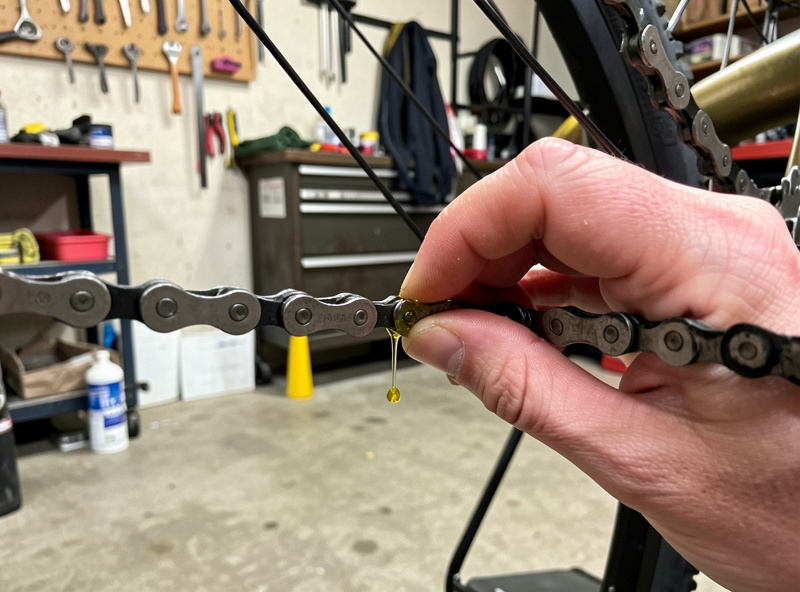
After a rinse the chain is clean but stripped, so it must be re-lubed or it will flash-rust and run dry. This is why winter calls for a wet lube rather than the dry lube many riders run in summer: wet lube clings through water and slush where a dry lube washes straight off. Wipe the chain down, run a wet lube through it, let it soak in, then wipe the excess so it does not fling grit everywhere. I keep this in the same maintenance rhythm I describe in my maintenance system.
For everything that does not move, a corrosion inhibitor is your friend. A light film on exposed bolt heads, the seatpost clamp, rack hardware, and the springs of the derailleur and brakes keeps the brine from getting a foothold. Avoid getting any spray on the brake rotors or pads — oil on a rotor is a serious safety problem. The hub-versus-mid-drive wear differences I cover in hub vs mid-drive maintenance all get worse under salt, so this protective step pays off most on whichever drivetrain you run.
A Realistic Winter Care Schedule
You do not need to do everything after every ride. Here is the rhythm I actually keep through a salting winter — enough to protect the bike without turning maintenance into a second job.
| Task | Frequency | Notes |
|---|---|---|
| Low-pressure rinse of drivetrain and brakes | After every salty/slushy ride | Keep water away from motor, bearings, contacts |
| Re-lube chain with wet lube | Weekly, or after any rinse | Wipe excess to avoid attracting grit |
| Corrosion inhibitor on exposed hardware | Every 2-3 weeks | Never on rotors or pads |
| Check brake pad wear | Monthly | Salt and grit accelerate pad wear |
| Full clean and inspection | End of winter | Check chain stretch, bearings, bolt torque |
Protect the Electrical Parts
The electrical side needs respect but not paranoia. Keep the battery contacts clean and dry — a wipe and the occasional dab of dielectric grease on the connector keeps corrosion off the terminals that carry your current. Bringing the battery indoors anyway, as part of the winter routine, keeps it out of the worst of the salt spray. Display and control connectors are sealed but not invincible, so the low-pressure rinse rule protects them too.
Fenders do a surprising amount of this protective work for you by keeping the spray off the bike and rider in the first place. A good set of full-coverage fenders, covered in my fenders and racks guide, is genuinely a corrosion-prevention tool, not just a comfort one. Less spray reaching the components means less salt to rinse away later.
Brakes Take a Beating in Winter
Winter is brutal on brakes, and salt is only part of it. The grit suspended in slush acts like a grinding paste between pad and rotor, so pads that would last most of a year in summer can wear down in a couple of cold months. I check pad thickness monthly through winter rather than waiting for the squeal, because an e-bike’s weight means you are leaning on those brakes hard, especially on an icy descent where you cannot afford a fade.
Keep the calipers clean with the same low-pressure rinse, and resist the urge to spray any lubricant or corrosion inhibitor near the rotors. Brake contamination from overspray is one of the most common self-inflicted winter problems I see, and a glazed or oiled rotor robs you of stopping power exactly when ice demands all of it. If a rotor does get contaminated, clean it with a dedicated disc cleaner and replace the affected pads rather than trying to ride it out. Clean, dry, salt-free brakes are not optional on winter ice.
Choosing the Right Winter Lube
Lube choice matters more in winter than at any other time of year, because the wrong one simply will not survive the conditions. Dry lubes, which many riders favor in summer for staying clean, wash off almost immediately in slush and leave the chain running dry within a ride or two. A wet lube is thicker and clings to the chain through water and salt spray, which is exactly what a winter chain needs even though it attracts a little more grit.
Wax-based lubes sit somewhere in between and can work well if you are diligent about reapplication, but for most winter commuters a straightforward wet lube is the reliable choice. Whatever you pick, the technique is the same: apply it to a clean chain, let it work into the rollers for a few minutes, then wipe the outside thoroughly. The lube belongs inside the chain, not coating the outside where it grabs grit and flings onto your rims and frame. A well-lubed, well-wiped chain is quiet, shifts cleanly under motor torque, and shrugs off the salt that destroys a neglected one.
The Spring Reckoning
When the salt season ends, give the bike the deeper clean it has earned. Strip and degrease the drivetrain, check the chain for stretch with a wear tool, inspect the brake pads, spin the wheels to feel for gritty bearings, and re-torque the bolts you protected all winter. This is also the moment to swap the studded tires back, a job that pairs naturally with the spring service and the tire choices in my studded tire selection guide.
Pay special attention to the bolts you have been protecting all season. Salt creeps into threads and quietly welds steel hardware in place, so a corrosion-inhibited bolt comes free cleanly in spring while a neglected one rounds off or snaps. A drop of anti-seize on the threads of anything you remove during the spring service saves you that fight next year. The motor mounting bolts, the disc rotor bolts, and the rack hardware are the ones I check most carefully, because those are the expensive or safety-critical fasteners you least want to discover seized.
Done consistently, this rhythm keeps a winter-ridden e-bike looking and running like one that lived in a garage. The whole defense is unglamorous — rinse, lube, protect, repeat — but it is the difference between a bike that shrugs off a Nordic winter and one that needs a drivetrain and a fistful of seized bolts replaced come spring. As an Amazon Associate I earn from qualifying purchases. The two products worth keeping on the bench are a winter wet chain lube and a corrosion inhibitor spray for the exposed hardware. For the rest of the winter picture, head back to the complete winter guide or read up on dressing for the ride.