Important Disclaimer
eBikeGarageHQ provides educational content and estimates only. We are not certified installers, financial advisors, or electricians. Always consult with licensed professionals.
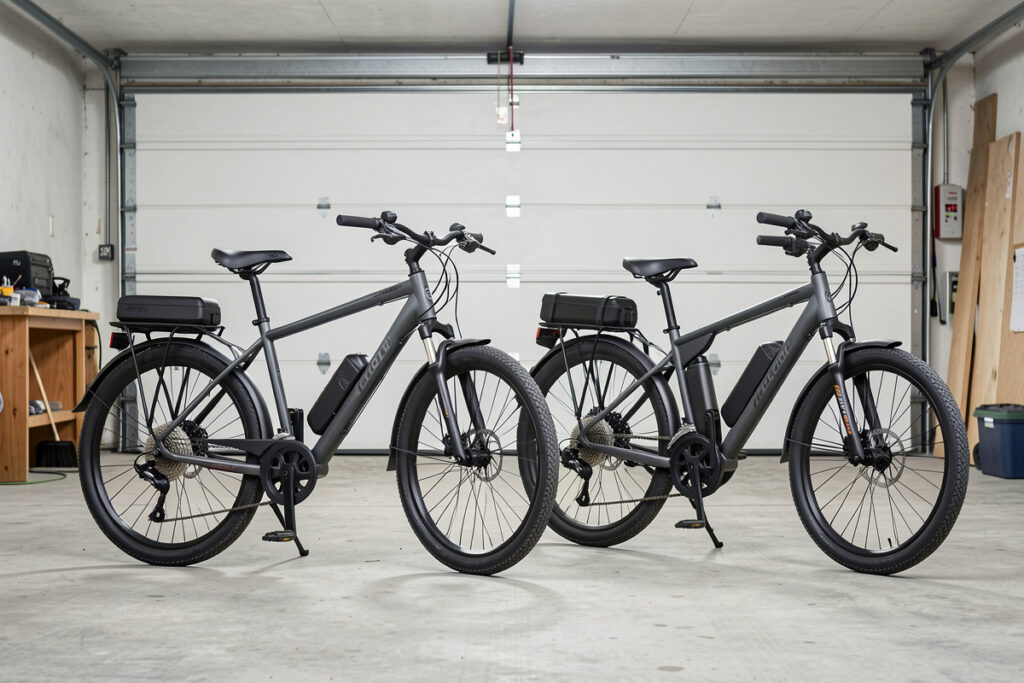
A mid-drive carries its motor low and central at the bottom bracket, so the bike handles close to a normal bicycle; a rear hub motor plus a rack or rear battery pushes weight behind and high over the back wheel, which you feel in cornering, low-speed balance, and every time you lift the bike. This is the most underrated factor in the whole hub-vs-mid decision, because unlike hill climbing — which only matters on hills — weight distribution shapes how the bike feels on every single ride. After years on both, it’s the difference I notice most in daily use.
Weight position has nothing to do with the legal class, by the way — an EU pedelec (250 W, assist to 25 km/h) or a US Class 1/2/3 bike rides under the same rules wherever its motor sits. This is purely about handling and feel, which is exactly the stuff a spec sheet can’t tell you.
Why a Low, Central Mass Feels Better
Frame designers have spent a century learning that a bicycle handles best when its mass sits low and near the middle — close to where your own body weight already is. A mid-drive obeys that instinct perfectly: the motor is a dense lump right at the bottom bracket, the lowest, most central point on the bike, and the battery usually rides in or along the down tube nearby. The result is a bike whose extra e-bike weight is hidden where you barely notice it dynamically. It leans into corners predictably, stays planted, and feels like a slightly heavier normal bike.
On my mid-drive, the only time I’m reminded it’s heavier than an acoustic bike is when I pick the whole thing up — in motion it just feels solid and neutral. That low center of gravity is doing quiet work the entire ride, and it’s the main reason the mid-drive ride gets described as “bike-like.” It pairs naturally with a torque sensor, which I cover in torque sensor vs cadence sensor feel — together they’re what make a premium e-bike feel premium.
What a Rear-Heavy Hub Bike Feels Like
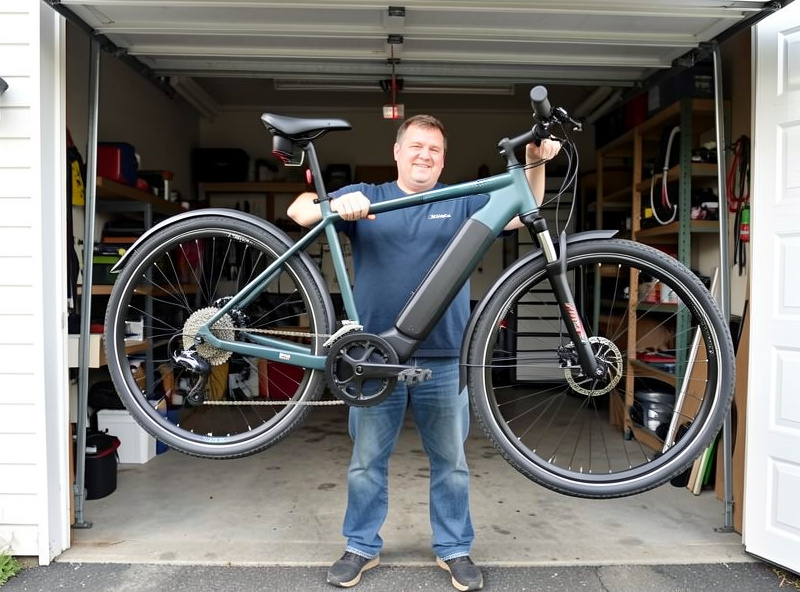
A rear hub motor concentrates a heavy lump at the back wheel, and many hub bikes compound it by mounting the battery on a rear rack or high on the seat tube. Now you’ve got significant mass behind the rear axle and sitting up high — the opposite of where a frame designer wants it. The bike still rides fine on the flat in a straight line, but the rear-bias shows up in specific moments: the front end can feel a touch light and vague on loose or wet surfaces, low-speed balance takes more attention, and the bike feels more like it’s “following” the rear wheel through a corner than carving with you.
It’s not dangerous and you adapt quickly — millions of people ride rear-hub bikes happily. But side by side with a mid-drive, the difference in composure is real, especially the first time you swap between them. A down-tube battery on a hub bike helps a lot; a rear-rack battery is the least flattering setup for handling.
Weight Position Compared
| Situation | Rear Hub (with rear/high battery) | Mid-Drive (central, low battery) |
|---|---|---|
| Cornering | Rear-led, slightly less planted | Neutral, bicycle-like |
| Low-speed balance | Takes more attention | Easy and stable |
| Loaded with panniers | Piles weight onto an already-heavy rear | Better balanced front-to-rear |
| Lifting onto a rack or train | Awkward, tail-heavy | Balanced, easier to handle |
| Loose/wet surfaces | Front can feel light | More confident |
If your riding involves a lot of cornering, low-speed manoeuvring, carrying loads, or hauling the bike up steps and onto trains, weight position should weigh heavily in your decision — arguably more than the hill question for flat-city riders.
The Lift Test Nobody Does Before Buying
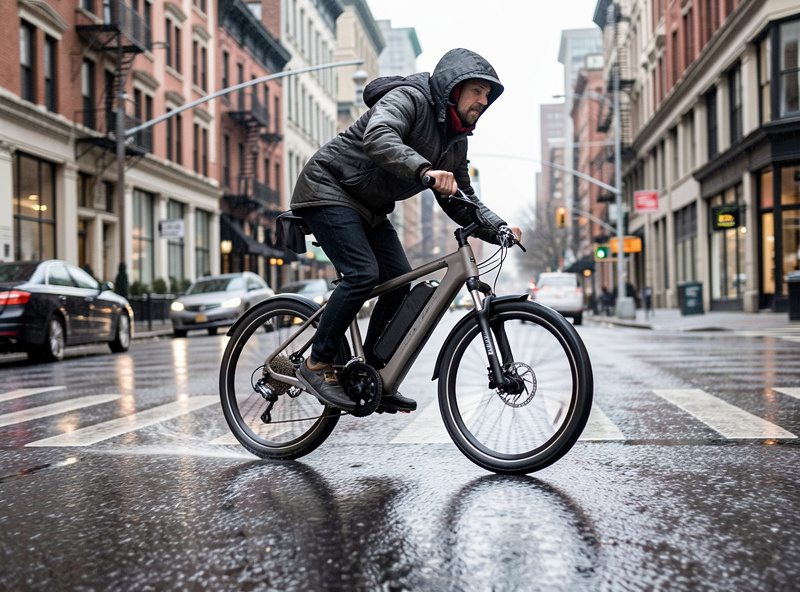
Here’s a practical tip from the garage: before you buy, lift the bike — and while you’re at it, think about how you’ll manage the battery long-term, since a solid e-bike battery care guide covers everything from storage charging to cycle longevity. Pick it up by the top tube and feel where the weight wants to go. A mid-drive comes up balanced; a rear-heavy hub bike swings tail-down and is genuinely harder to wrangle onto a car rack, up an apartment stairwell, or onto a train’s bike hook. If you live somewhere that means carrying the bike regularly — a walk-up flat, multimodal commuting — this single test tells you more than any spec. A heavy, tail-biased bike that’s a chore to lift gets ridden less, and the best e-bike is the one you actually take out.
Does Weight Distribution Affect Range or Safety?
Not range directly — total weight matters a little for energy use, but where it sits doesn’t change your watt-hours per kilometre (that’s terrain, assist, and your effort, covered in the e-bike range guide). Handling is the real stakes. A better-balanced bike is easier to control in an emergency swerve or on a slick corner, which is a quiet safety benefit of the central-mass layout. It’s not that hub bikes are unsafe — they’re not — it’s that the mid-drive’s balance gives you a little more margin when something surprises you.
The Bottom Line on Weight and Feel
If handling and easy lifting matter to you, the mid-drive’s low, central mass is a genuine advantage you’ll feel on every ride. If your riding is mostly straight-line flat commuting and you rarely lift the bike, a rear-hub layout is perfectly livable — and choosing one with a down-tube battery rather than a rear-rack pack claws back most of the handling difference. Weigh this alongside hills, sensor feel, and maintenance, all of which come together in the hub vs mid-drive guide. Don’t let it be the factor you only discover after you’ve bought.
Frequently Asked Questions
Does a mid-drive really handle better than a hub motor?
Generally yes, because of where the weight sits. A mid-drive’s motor is low and central at the bottom bracket, the ideal spot for handling, so the bike feels bicycle-like. A rear hub motor u2014 especially with a rear-rack battery u2014 puts mass high and behind the axle, which makes cornering and low-speed balance slightly less composed. The gap is most obvious swapping directly between them.
Where is the battery on a hub vs mid-drive e-bike?
It varies, and it matters as much as the motor. Mid-drives usually carry the battery in or along the down tube, low and central. Hub bikes range from down-tube batteries (good for balance) to rear-rack or high seat-tube packs (worse for handling). A hub bike with a down-tube battery handles far closer to a mid-drive than one with a rear-rack pack.
Why does my hub-motor e-bike feel tail-heavy?
Because the motor is a dense lump in the rear wheel, and if your battery also sits on a rear rack or high on the frame, you’ve stacked weight behind and above the back axle. That’s the opposite of where a bike wants its mass. It’s normal for the layout and you adapt, but it’s why the bike feels heavier to lift and less planted in corners than a mid-drive.
Does weight distribution affect e-bike range?
Not where the weight sits u2014 only total weight has a small effect on energy use. Your range is driven by terrain, assist level, and how hard you pedal, expressed as watt-hours per kilometre against your usable battery capacity. A rear-biased layout doesn’t cost you range; it costs you a little handling composure instead.
Should I do a lift test before buying an e-bike?
Absolutely, especially if you’ll carry the bike. Pick it up by the top tube and feel the balance: a mid-drive comes up centred, while a rear-heavy hub bike swings tail-down and is harder to load onto a car rack, up stairs, or onto a train. If you live in a walk-up or commute multimodally, that feel tells you more than any spec number.