Important Disclaimer
eBikeGarageHQ provides educational content and estimates only. We are not certified installers, financial advisors, or electricians. Always consult with licensed professionals.
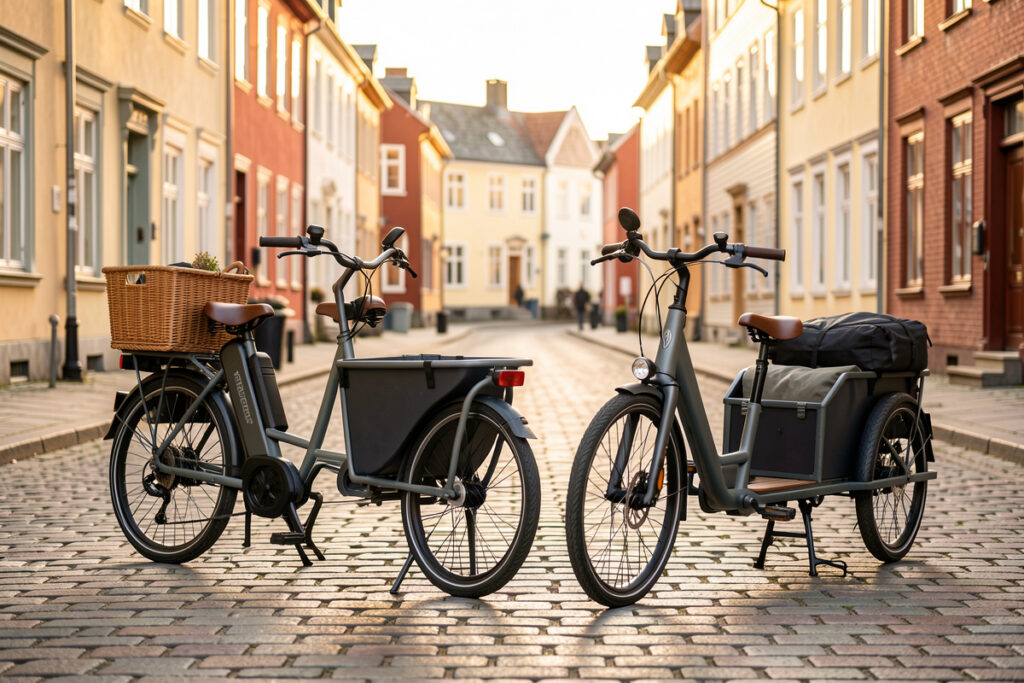
A front-loading cargo bike (bakfiets) puts the load in a box between you and the front wheel, so the steering feels slow and deliberate and the bike is rock-steady when you load it standing still. A rear-loading longtail keeps the weight behind you, so steering feels normal but a tall or heavy load makes the tail want to wag and launches feel heavier. Where the mass sits is the entire ride-feel difference — and after enough loaded kilometres on both layouts — run to a measured 40 kg on my test loop — I can tell you exactly what each one does under you.
This is the cargo question I have the most confident answer to, because it is pure weight distribution — the thing my whole approach to e-bikes is built around. I am not going to tell you how a front box fits three kids’ personalities into a morning routine; that is family-logistics territory I leave to you. I am going to tell you how each layout steers, launches, corners, climbs and parks, because that is measurable, repeatable, and the same physics whether the box says it carries kids or kegs.
The One-Sentence Difference
Front-load = stable but unfamiliar steering you have to learn; rear-load = familiar steering but a livelier tail under heavy or tall loads. Everything else flows from that. A front-loader hides its mass low and forward and asks you to relearn how the front end responds. A longtail keeps the cockpit feeling like a normal bike and asks you to manage what is happening behind your hips. I unpack the underlying principle in weight distribution and ride feel, and this article is that principle applied to the two cargo layouts.
Front-Load Feel: Planted, Low, and a Real Learning Curve
The first thing every rider notices on a front-loader is the steering. Most boxes use a linkage or a long head tube, so the front wheel responds with a delay and a heaviness that feels alien for the first few rides. Within a week your hands recalibrate and it becomes second nature, but I would never hand a front-loader to a nervous first-timer in a car park and expect a good first impression. Give it a quiet street and twenty minutes.
What you get in return is exceptional stability. The load sits low and ahead of you, so the centre of gravity is low and the bike does not feel top-heavy even fully loaded. Loading it is the best of any layout: park it on its double stand, drop the kids or the crates into the box right in front of you where you can see and reach everything, and the bike barely moves. Cornering loaded is confident once you trust the slow steering — you lean the whole machine rather than flicking the bars. The cost is length and width: a front-loader is a big object to store and to thread through a crowded bike rack.
Rear-Load Feel: Normal Cockpit, Livelier Tail
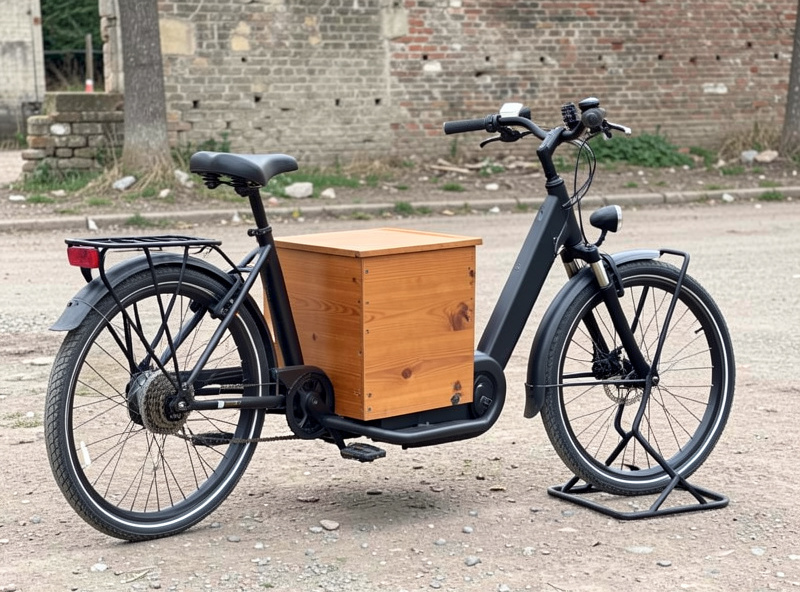
A longtail feels like a normal bike from the saddle, which is exactly why it is the easier sell. The bars steer the way your muscle memory expects, low-speed handling is more nimble than a front box, and mounting is just a slightly longer swing of the leg. For riders coming straight off a commuter, the longtail’s familiarity is worth a lot.
The catch lives behind you. With a heavy load — and especially a tall one, like kids sitting up high — the mass sits behind the rear axle and up off the ground, which raises the centre of gravity and gives the tail a tendency to wag when you launch hard or correct quickly at low speed. You learn to start in a low gear, keep inputs smooth, and let the bike settle. Loaded launches feel heavier than a front box because more of the weight is behind the driven wheel. None of this is a flaw; it is the predictable behaviour of mass that sits high and rearward, and once you know it is coming you ride around it without thinking.
Loading, Parking, and Daily Friction
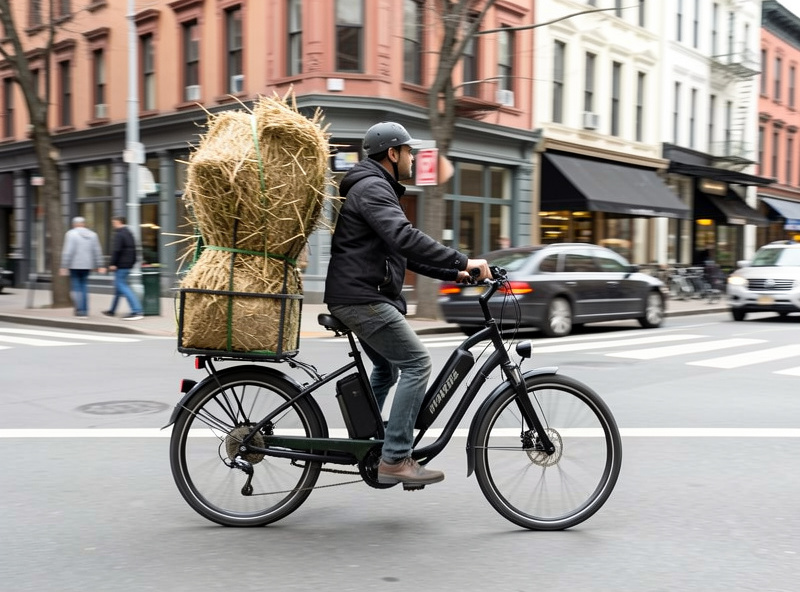
Front-load wins for loading visibility and loses for storage footprint; rear-load wins for nimble handling and tighter parking and loses a little on loaded launch feel. On a front-loader you watch the load go in and you keep an eye on it the whole ride — a genuine comfort with little ones. On a longtail you load behind you, which is faster for crates and bags but means you cannot see the load while riding. Both need a stout double-leg centre stand; a flimsy stand on either layout turns loading into a wrestling match, which is why I treat the stand as core gear in the accessories guide rather than an afterthought.
| Trait | Front-Load (Bakfiets) | Rear-Load (Longtail) |
|---|---|---|
| Steering feel | Slow, deliberate, needs learning | Normal, familiar from a commuter |
| Centre of gravity | Low and forward — very stable | Higher and rearward when loaded tall |
| Loaded launch | Planted, weight ahead of you | Heavier, tail can wag if rushed |
| Loading | See the load, drop it in front | Fast for bags; load is behind you |
| Parking footprint | Large; awkward in tight racks | Long but narrower; easier to thread |
| Best rider | Daily kid-hauler who values stability | Commuter stepping up, mixed loads |
Hills and Weight Transfer
On a climb the layout matters less than the motor, because both serious cargo bikes should be running a torque-sensing mid-drive that feeds power through the gears. What the layout does change is traction and balance. A front-loader keeps weight low and forward, so the front stays planted and the bike feels secure pointing uphill. A loaded longtail puts more weight over and behind the rear wheel, which actually helps rear-wheel traction but makes the front feel light on the steepest pitches — keep your weight forward and it is a non-issue.
Either way, the energy cost of the climb is set by total weight, not box position, and that is where my loaded hill test lives. If you are still choosing the drive system underneath the load, the climb logic in hub motor vs mid-drive on hills and the feel difference in torque sensor vs cadence sensor matter far more to your hill experience than front-versus-rear ever will.
Stability at a Stop and the Kickstand Truth
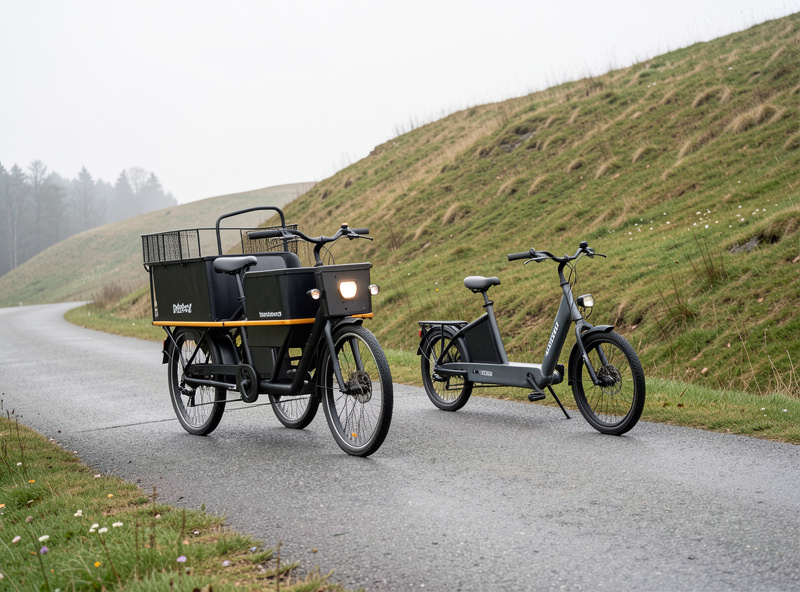
Most of a cargo bike’s loaded life is spent stopped — at the kerb, at the school gate, at the shop — and that is where the two layouts feel most different. A front-loader sits like a table when you park it: the low forward box and a wide double stand mean it barely flinches as a kid climbs in or you stack crates. That stability at a standstill is the single most underrated reason families fall for the front box, and it is real. You can let go of a loaded front-loader on its stand far more confidently than any longtail.
A longtail demands more from its kickstand. Because the load is high and rearward, a loaded longtail on a weak side-stand can tip while a child climbs the rear deck, and that is exactly the moment you do not want a tip. The fix is a proper centre-mounted double-leg stand rated for the bike’s load, and it is non-negotiable on a rear-loader — I would put it above almost any other accessory purchase. A flimsy stand is not a minor annoyance on a longtail; it is a safety issue with weight on board.
Cornering and Low-Speed Control
At speed both layouts corner well once loaded, but they ask for different inputs. The front-loader wants you to lean the whole bike and steer gently — fight its slow front end with quick bar inputs and it feels vague, but commit to leaning it and it carves through a loaded corner with real composure. The longtail corners like a long road bike: natural and intuitive, with the only caveat being that a tall rear load can feel like it is following a beat behind you through quick direction changes.
Low-speed control — walking-pace manoeuvres in a crowded path or a tight gateway — is where the longtail’s familiar steering pulls ahead, while the front-loader’s length and slow steering make tight, slow turns a deliberate act. Neither is hard once learned; it is simply a question of which set of habits you would rather build. If your daily route is full of tight, slow, technical bits, the longtail is the more forgiving learner. If your route is mostly straight runs with kids who need watching, the front box rewards you every trip.
So Which Layout Should You Pick?
Pick a front-loader if your priority is stability and watching your load, you haul kids daily, and you have room to store a big bike. Pick a longtail if you want a bike that still feels like a bike, you carry mixed loads more than tall passengers, and your parking is tight. Both are honest tools; the wrong one is just the one whose quirk annoys you every single day.
If you are at the very start of this decision, read the cargo and family e-bike guide for the full platform picture, and weigh the lower-cost entry point in cargo bike vs trailer for the school run before you commit to either box. Whichever way the load faces, size the battery for the loaded watt-hours and respect the same EU 250 W / 25 km/h and US class limits — the physics of carrying weight does not care which end of the bike it rides on.