Important Disclaimer
eBikeGarageHQ provides educational content and estimates only. We are not certified installers, financial advisors, or electricians. Always consult with licensed professionals.
Assist level is the single biggest lever you control over e-bike battery use. On my own loop, dropping from the top assist setting to a middle one routinely cuts consumption by a third or more — because the motor is multiplying a smaller share of the work. Higher assist isn’t "more powerful" in a way that helps you; it’s mostly just faster battery drain in exchange for less effort.
That trade is worth understanding precisely, because riding one assist level down is the fastest free range gain available to anyone. No new battery, no new bike — just a different number on the display. This guide is the logged, hands-on version of how I manage assist for range, and it’s a core chapter of the broader e-bike range guide. The consumption figures it relies on come from my Wh per km by terrain log.
What Assist Level Actually Does
Pedal-assist multiplies your own effort. At a low assist level the motor adds a modest fraction on top of your pedalling; at a high level it adds a large multiple. The key insight is that the motor’s contribution scales with how hard you’re already working, so on a climb where you’re pushing hard, high assist adds a lot of energy — and burns a lot of watt-hours. On the flat where you’re barely working, the same assist level adds less in absolute terms.
This is why assist choice matters more on hills than on flats. A middle assist level on a climb can still get you up comfortably while spending far fewer watt-hours than the top setting, because you’re contributing a real share of the work yourself. The motor is there to help you climb, not to climb for you — and the riders who treat it that way get dramatically more range from the same pack.
What Each Assist Level Costs
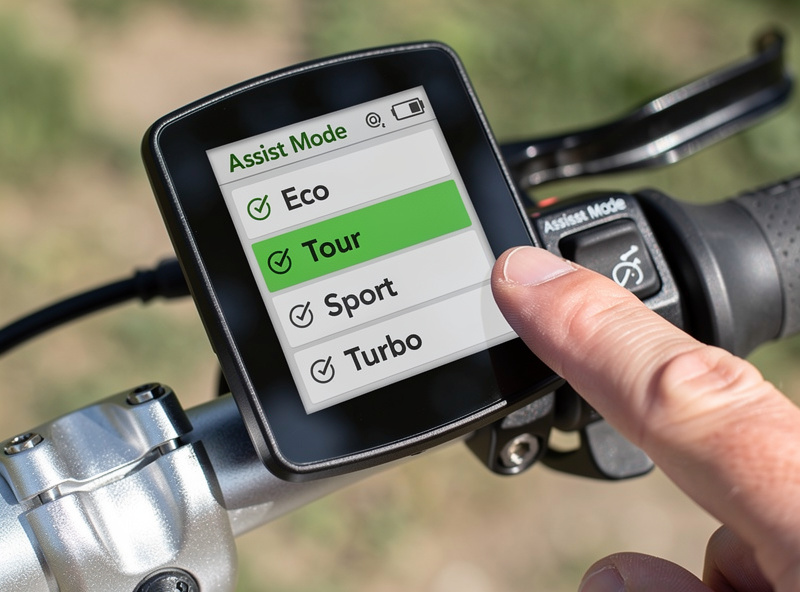
Here’s how assist level maps to consumption on my loop, riding the same route with real pedalling at each setting. Exact figures depend on your bike, weight and terrain, but the pattern — each step up costs progressively more — holds everywhere I’ve measured.
| Assist level | Typical Wh/km (mixed route) | Relative range | Best used for |
|---|---|---|---|
| Eco / low | ~8–10 Wh/km | Longest | Flats, tailwind, fit days |
| Tour / medium | ~11–14 Wh/km | All-round | Everyday commuting |
| Sport / high | ~15–19 Wh/km | Shorter | Hills, headwind, cargo |
| Turbo / max | ~19–26 Wh/km | Shortest | Steep climbs, fully loaded |
The jump from medium to max can nearly double Wh/km on the same road. If you finish every ride with battery to spare, you’re paying for assist you don’t need — range you could bank simply by riding one level down.
My Assist Strategy: Match It to the Ground
The technique that wins the most range is matching assist to terrain rather than picking one level and leaving it. My habit is low assist on flats where I don’t need help, saved-up higher assist for the climbs where it earns its keep. I’m contributing real pedal effort throughout, which keeps the motor multiplying a sensible amount rather than carrying me.
This isn’t about suffering — it’s about spending watt-hours where they actually buy you something. On a long ride I’ll spend most of it in eco or tour, then step up to sport only for the genuinely steep sections. The result is consistently more range than a rider who pins turbo and wonders why the battery’s flat halfway home. It also keeps the bike feeling like a bike rather than a moped, which is the whole point of pedal-assist.
Put numbers on it and the size of the prize is obvious. Take a 500 Wh bike with ~450 Wh usable. Ridden entirely in turbo at ~22 Wh/km, that’s barely 20 km. The same pack ridden mostly in eco/tour at a blended ~11 Wh/km stretches to ~41 km — you’ve roughly doubled your range without changing a single component. Most riders don’t need turbo for most of their ride; they default to it out of habit. Breaking that habit is the cheapest range upgrade there is, and unlike a bigger battery it weighs nothing and costs nothing. The only thing it asks is that you pedal like you mean it on the flats and let the motor save its energy for the hills.
Why the Sensor Type Changes the Maths
How the motor itself is built also shapes this picture. Hub motors and mid-drive motors respond to assist differently because of where they sit in the drivetrain — if you’re weighing up which type suits your riding, the full breakdown is in my hub vs mid-drive guide; and if long-term ownership cost is part of the decision, the hub vs mid-drive maintenance guide logs what each motor position actually costs to keep running over years of real riding.
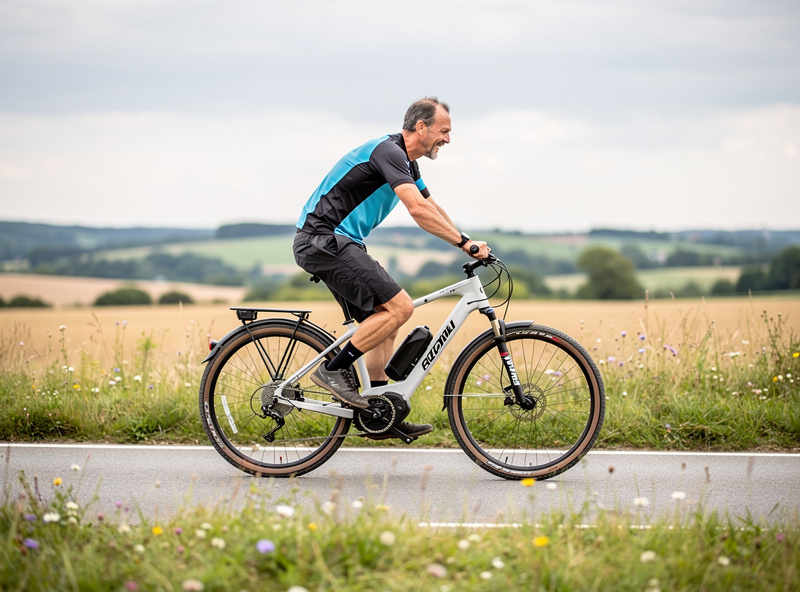
Two bikes at the "same" assist level can use very different amounts of energy depending on their sensor. A torque sensor measures how hard you pedal and assists proportionally — pedal gently and it sips, push hard and it helps more. A cadence sensor just detects that the pedals are turning and delivers a fixed level of assist regardless of your effort, which tends to dump energy whether you need it or not.
I own both kinds, and the torque-sensor bike is consistently more frugal on the same loop because it rewards real input. If you’re on a cadence-sensor bike, you have less fine control over the trade, so choosing a lower assist level deliberately matters even more. It’s one of the reasons the sensor type is worth weighing as heavily as motor power when range matters to you.
Assist, Speed and Legal Class
Assist level interacts with your legal speed cap. An EU pedelec stops assisting at 25 km/h on a 250 W motor, so above that speed the assist level is irrelevant — you’re pedalling unassisted and the battery rests. A US Class 3 bike keeps assisting to 28 mph (~45 km/h), so high assist held at high speed compounds drag and drains the pack fast. On a faster class, easing the assist is an even bigger range lever because you’re more often riding in the zone where the motor is still working hard. Confirm your local rules; this describes how the classes are defined, not legal advice.
Related Guides
- E-Bike Range Guide — the full cluster and planning grid.
- Wh per km by Terrain — how assist and gradient combine.
- Real-World Range Calculator — turn your assist habits into a distance estimate.
Frequently Asked Questions
How much does assist level affect e-bike battery life per charge?
A lot. Dropping from the top assist setting to a middle one can cut Wh per km by a third or more on the same route, because the motor multiplies a smaller share of your effort. Riding one level down is the fastest free range gain.
Which e-bike assist level uses the least battery?
The lowest, usually labelled Eco. It adds the smallest fraction of motor power on top of your pedalling, so it burns the fewest watt-hours per km. The trade is more effort from you and a slightly slower pace.
Should I use high assist on hills?
Use the lowest assist that gets you up comfortably, not automatically the highest. A medium setting with real pedalling often climbs fine while spending far fewer watt-hours than turbo, which can nearly double consumption on the same climb.
Does a torque sensor save more battery than a cadence sensor?
Generally yes. A torque sensor assists in proportion to how hard you pedal, so it sips when you ease off. A cadence sensor delivers a fixed assist whenever the pedals turn, which tends to use energy whether you need it or not.
What is the best assist strategy for maximum range?
Match assist to terrain: low assist on flats where you do not need help, higher assist saved for climbs where it earns its keep, with real pedal input throughout. This spends watt-hours only where they buy you something.
More from This Cluster
- “Manufacturer E-Bike Range Claims
- “E-Bike Range Anxiety vs Range Math: Trusting the Numbers”
- “Cold Weather E-Bike Range Loss: What a Winter Log Shows”
- “E-Bike Wh per km by Terrain: A Field-Logged Energy Budget”
- “E-Bike Range Calculator: Real-World Numbers
- “E-Bike Range Guide: How Far You Actually Go on a Charge”