Important Disclaimer
eBikeGarageHQ provides educational content and estimates only. We are not certified installers, financial advisors, or electricians. Always consult with licensed professionals.
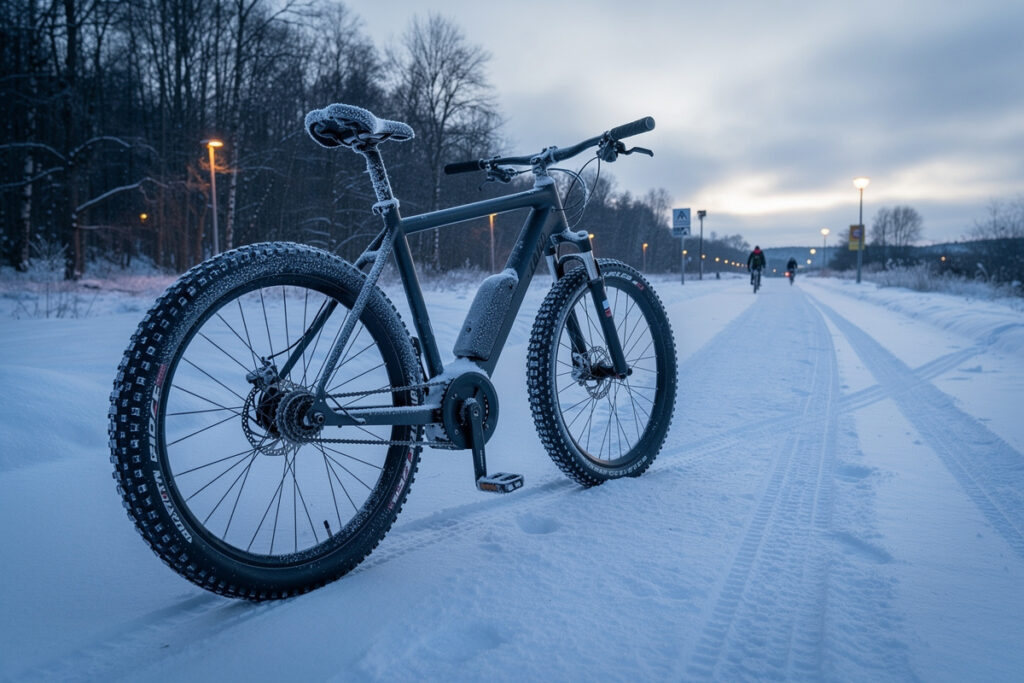
Cold weather noticeably reduces e-bike range, and on my winter range log the hit is one of the largest single variables I track. A lithium pack delivers less usable energy when it’s cold, and at the same time you’re pushing through denser air, often into winter headwind, on stiffer tyres. The same commute that’s comfortable in summer can leave the battery far lower on a January morning — but most of that loss is recoverable with habits, not gadgets.
I commute year-round through real Swedish winters, so this isn’t a forecast — it’s logged from dark, sub-zero mornings on the same loop I ride in July. This guide explains why cold costs range, how much to budget for it, and the simple routine that wins most of it back. It’s the seasonal chapter of the broader e-bike range guide, and it leans on the consumption figures in my Wh per km by terrain breakdown.
Why Cold Cuts E-Bike Range
Two separate things happen at once in winter, and they stack. First, the battery itself: lithium cells rely on chemical reactions that slow in the cold, so a cold pack temporarily delivers less of its rated energy. The capacity isn’t destroyed — it largely returns when the cells warm up — but on a cold ride you simply have fewer usable watt-hours to spend.
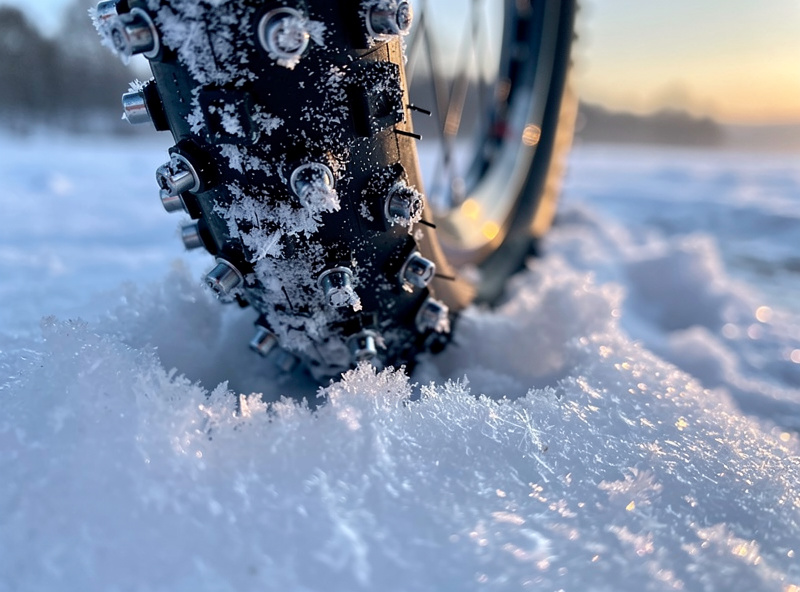
Second, the riding gets harder. Cold air is denser, so aerodynamic drag rises. Winter often brings headwind. Tyres are stiffer and roads may be wet, slushy or studded, all of which raise rolling resistance. So your Wh/km goes up at the exact moment your usable Wh goes down — range gets squeezed from both ends. That double squeeze is why winter range can fall well short of a summer figure on the identical route.
Motor type amplifies this on hilly winter routes. A mid-drive works through the gears and can handle cold-day climbs more efficiently than a hub motor at its limit — a difference that matters most when the road is steep and the battery is already cold. I cover how the two types compare on hills in detail in my hub motor vs mid-drive on hills guide.
How Much Range Should You Budget For?
The honest answer is "measure your own," because the loss depends on how cold, how windy, and how you ride. But for planning, I treat winter as its own column rather than a small adjustment. On my loop, a hard cold morning lands my consumption in the ~20–24 Wh/km range where a mild day would be ~12, so I plan winter distances against that higher number and a lower usable capacity.
| Condition | What happens | Planning approach |
|---|---|---|
| Mild (10–20°C) | Full usable capacity, normal Wh/km | Use your standard logged numbers |
| Cool (0–10°C) | Slight capacity dip, higher drag | Budget a modest range reduction |
| Cold (around freezing) | Noticeable capacity loss + higher Wh/km | Plan against the cold column of your table |
| Hard cold + wind + slush | Largest combined loss | Keep a generous margin; charge at both ends if possible |
The point isn’t a precise universal percentage — it’s to stop using your summer number in January. If you keep a personal log, your own cold-day Wh/km is the figure to trust; my range calculator method shows how to fold it into a distance estimate.
The Single Biggest Fix: Keep the Battery Warm
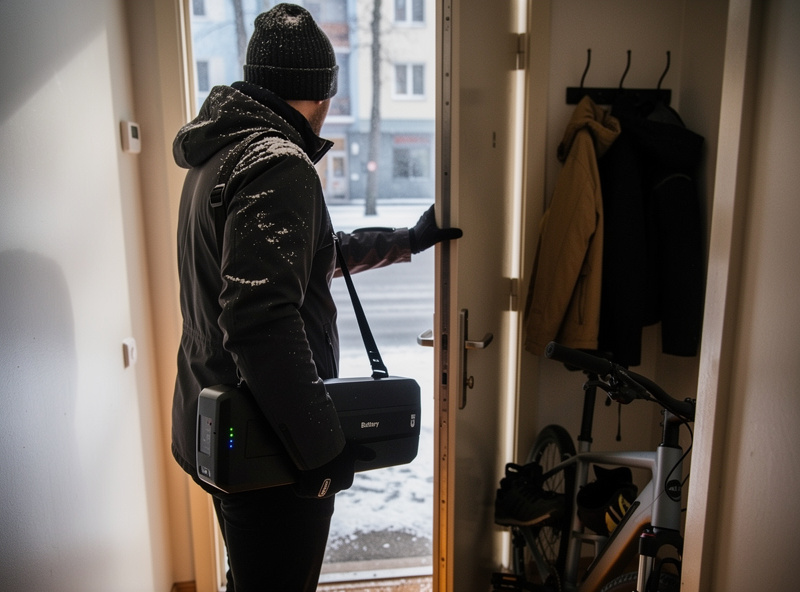
Most of the cold-weather loss is logistics, not chemistry. The biggest lever is simply keeping the battery at room temperature until you ride. I store and charge mine indoors, carry it inside at both ends of the commute, and fit it to the bike warm at the last moment. A pack that starts the ride warm holds more usable energy through the first, coldest part of the trip before the cold soaks in.
An insulated neoprene cover can slow the cooling on a long ride, and there are purpose-made options if your bike lives outside. But the free version — bring the battery indoors — wins the most range for zero cost. This is a gear-care habit, nothing more: I never modify, open, or tinker with the pack itself. Battery internals stay sealed; the only thing I manage is where the pack spends its time.
Winter Charging and Storage Habits
A few simple habits protect both range and the pack’s long-term health through the cold months, and none of them involve touching the cells:
- Charge indoors at room temperature. Charging a very cold pack is hard on it; let it warm up first.
- Don’t store it on a freezing balcony for months. For long winter storage, keep it indoors at a partial charge rather than full or empty — the same storage-charge habit I use on every pack on my bench.
- Fit it warm, ride, then bring it back inside. Minimise the time the pack spends cold.
- Plan the shorter winter distance instead of hoping for the summer range. Range anxiety in winter is almost always a budgeting miss, not a battery fault.
For deeper stationary-pack storage and charge-curve detail beyond bike scope, my battery bench covers the chemistry side — but for the bike, habits are the whole game. To make winter riding less of a fight, a set of studded winter tyres also keeps you upright on ice without the panicked braking that wastes energy.
As an Amazon Associate I earn from qualifying purchases. Gear links are search links; no price is shown beside them.
EU and US Riding in Winter
Cold-weather physics is the same everywhere, but your legal class still shapes consumption. An EU pedelec assists to 25 km/h on a 250 W motor; a US Class 3 bike assists to 28 mph (~45 km/h). Holding the higher speed into cold winter headwind compounds the drag penalty badly, so faster-class riders should budget an even larger winter margin. Whatever you ride, slowing down in winter saves range and improves control on slick surfaces. Confirm your local rules; this describes how the classes are defined, not legal advice.
Related Guides
- E-Bike Range Guide — the full cluster and planning grid.
- Wh per km by Terrain — the consumption figures winter pushes upward.
- Real-World Range Calculator — fold your cold-day number into a distance estimate.
Frequently Asked Questions
How much range does an e-bike lose in cold weather?
The loss varies with temperature, wind and riding style, but it can be substantial near freezing because the battery delivers less usable energy while drag and rolling resistance rise. Budget winter rides against your cold-day Wh per km, not your summer figure.
Does cold weather permanently damage an e-bike battery?
No. Cold temporarily reduces the energy a lithium pack delivers, and that capacity largely returns once the cells warm up. The lasting risks are charging the pack while very cold or storing it frozen for long periods, both avoidable with simple habits.
What is the best way to protect e-bike range in winter?
Keep the battery at room temperature until you ride. Store and charge it indoors, carry it inside at both ends of the commute, and fit it warm at the last moment. This free habit recovers more range than any accessory.
Should I charge my e-bike battery when it is cold?
Let a cold pack warm to room temperature before charging, as charging a very cold battery is hard on it. Charge and store indoors, and for long winter storage keep it at a partial charge rather than full or empty.
Why does my e-bike use more energy in winter?
Cold air is denser so aerodynamic drag rises, winter often brings headwind, and stiff or studded tyres on wet or slushy roads add rolling resistance. Your Wh per km goes up just as the battery’s usable capacity goes down.
More from This Cluster
- “Manufacturer E-Bike Range Claims
- “E-Bike Range Anxiety vs Range Math: Trusting the Numbers”
- “E-Bike Assist Level and Battery Use: Where the Wh Go”
- “E-Bike Wh per km by Terrain: A Field-Logged Energy Budget”
- “E-Bike Range Calculator: Real-World Numbers
- “E-Bike Range Guide: How Far You Actually Go on a Charge”