
Important Disclaimer
eBikeGarageHQ provides educational content and estimates only. We are not certified installers, financial advisors, or electricians. Always consult with licensed professionals.
For a flat-to-rolling commute on a budget, a good torque-sensing hub-drive is the smart-money pick — cheaper, drivetrain-friendly, and reliable. Step up to a mid-drive when your route has real climbs, you carry loads, or you simply want the most bike-like ride and you’re fine paying more and replacing chains. There’s no single “best commuter motor” — there’s the right one for your route and wallet. After years of commuting on both through honest Swedish seasons, here’s how I’d actually choose.
Whichever you pick, the law is the same: an EU commuter pedelec is 250 W continuous with assist to 25 km/h, and a US commuter runs as a Class 1, 2, or 3 bike (20 mph for Class 1 and 2, 28 mph for Class 3). If your commute is long and you want to keep pace with traffic in the US, a Class 3 bike is worth knowing about — but the motor type doesn’t decide the class, the tuning does.
Start With Your Route, Not the Spec Sheet
The honest first question isn’t “hub or mid-drive,” it’s “what does my commute actually look like?” Map it mentally: Is it flat, rolling, or genuinely hilly? How long is it? Do you carry a laptop, groceries, a kid? Will you lift the bike onto a train or up stairs? Those answers point you at a motor far better than any marketing number. A flat 6 km each way with a pannier is a completely different bike from a hilly 20 km ride — and both require thinking carefully about whether to charge your e-bike battery to 80 or 100 percent to preserve cell longevity. from a hilly 20 km with a train leg in the middle.
Be honest about the real daily route, not the occasional big ride. Most commutes are flatter and shorter than people assume when they’re shopping, and that reality usually points toward the value of a hub bike rather than the premium of a mid-drive.
The Case for a Hub-Drive Commuter
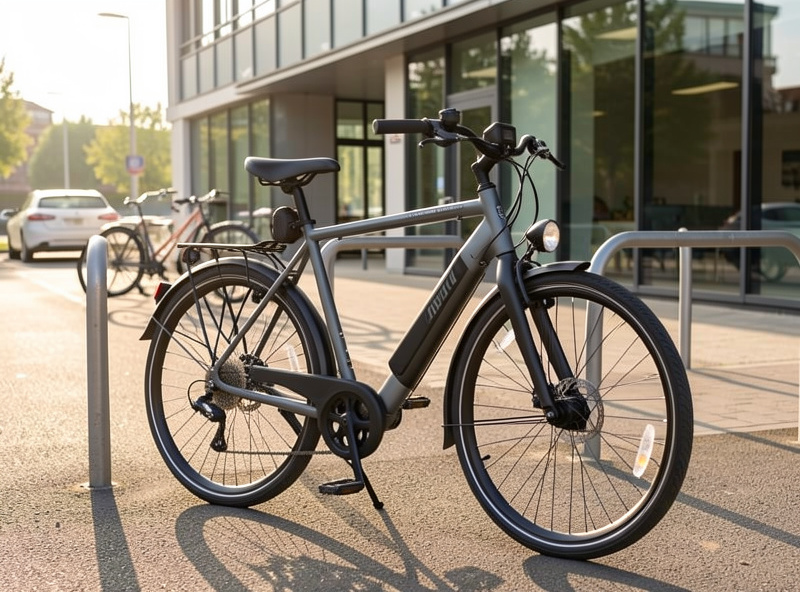
For most everyday commutes, a quality hub-drive is the sensible buy. It’s cheaper up front, its drivetrain wears at normal-bike rates so your running costs stay low, and a geared hub motor handles flat-to-rolling terrain without complaint. Reliability is a strength too — fewer drivetrain consumables to stay on top of means less faffing on a busy weekday morning. If your commute is flat or gently rolling and your budget is finite, the hub bike gives you the most usable e-bike per krona, and on a daily flat ride you’ll rarely feel what the mid-drive offers.
The one thing to insist on, even on a value bike, is a torque sensor if you can get it — it transforms the ride from scooter-like to bicycle-like, as I explain in torque sensor vs cadence sensor feel. A torque-sensing hub bike is the sweet spot for a lot of commuters: most of the nice ride feel, much less of the cost and maintenance.
The Case for a Mid-Drive Commuter
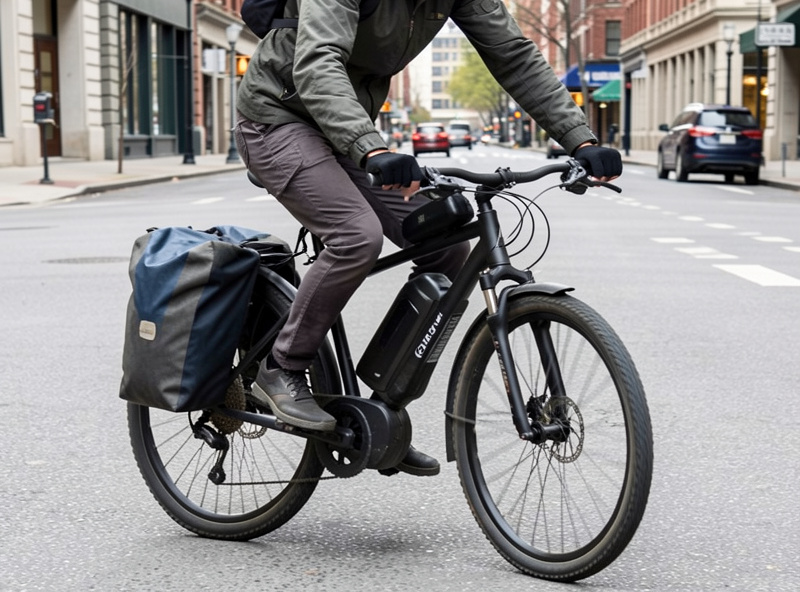
The mid-drive earns its premium when your commute has demands a hub motor struggles with. Real hills are the obvious one — the mid-drive gears down and climbs efficiently and cool, where a hub motor bogs and heats (see hub motor vs mid-drive on hills). But it’s also the better commuter for anyone carrying loads or lifting the bike, because its low central weight handles better laden and is easier to wrangle onto a train (see e-bike weight distribution and ride feel). And it’s simply the nicest thing to ride, day in and day out.
The cost is real money and a bit more upkeep: you’ll pay more upfront and budget for chains and the occasional cassette, as covered in hub vs mid-drive maintenance. For a hilly, loaded, or multimodal commute, that’s a price worth paying. For a flat short hop, it’s paying for talent you won’t use.
Commuter Decision Matrix
| Your commute | Better pick | Why |
|---|---|---|
| Flat, short, on a budget | Hub-drive (torque sensor if possible) | Cheaper, low upkeep, plenty capable |
| Hilly or long climbs | Mid-drive | Gears down, climbs efficiently and cool |
| Carrying heavy loads | Mid-drive | Low central weight handles better laden |
| Lifting onto trains/stairs | Mid-drive | Balanced, easier to carry |
| Maximum range, flat terrain | Either | Energy use is similar on the flat |
| Lowest running cost | Hub-drive | Drivetrain wears at normal-bike rates |
The Commuter Loadout Matters As Much As the Motor
Here’s something both camps share: a commuter bike is only as good as its everyday kit. Fenders to stay dry, decent lights for dark mornings, and a rack or panniers to carry your load turn either motor into a real commuter. On a rear-hub bike especially, where to put your cargo weight matters — but a solid rear rack and panniers work on both, and getting the load off your back makes any commute more pleasant.
As an Amazon Associate I earn from qualifying purchases. The single upgrade that improved my commute most was getting the weight off my shoulders with a proper rear pannier rack for e-bikes — a sweaty back from a rucksack is the fastest way to stop enjoying the ride. It fits hub and mid-drive bikes alike.

So, Which Should You Commute On?
Default to a torque-sensing hub-drive for a flat-to-rolling commute on a sensible budget — it’s the value champion and more than enough. Choose a mid-drive when your route has real hills, you carry serious loads, you lift the bike onto trains, or you just want the best ride and you’ll happily pay for it. Map your honest daily route first, then match the motor to it, and pull the whole decision together in the hub vs mid-drive guide. The best commuter is the one that fits your route and that you’ll actually want to ride every morning.
Frequently Asked Questions
Is a hub or mid-drive better for commuting?
It depends on your route. For flat-to-rolling commutes on a budget, a torque-sensing hub-drive is the smart pick u2014 cheaper, low-maintenance, and plenty capable. For hilly routes, heavy loads, or commutes where you lift the bike onto trains, a mid-drive is worth the extra cost for its climbing ability and better-balanced handling.
Do I need a mid-drive for a flat city commute?
No. On flat or gently rolling terrain a good hub-drive handles the commute easily and saves you money up front and in maintenance. The mid-drive’s advantages u2014 gear-multiplied climbing and central weight u2014 mostly show up on hills and under load. For a flat commute, a torque-sensing hub bike gives you most of the nice ride feel for far less.
Which commuter e-bike is cheaper to run?
A hub-drive, generally. Because its motor doesn’t load the chain, the drivetrain wears at normal-bicycle rates, so you’re not replacing chains and cassettes on an accelerated schedule. A mid-drive costs more in those consumables in exchange for climbing ability and ride quality u2014 a fair trade if your route needs it, an unnecessary cost if it doesn’t.
What e-bike class is best for commuting?
It depends on your country and route. In the EU all road-legal pedelecs are 250 W with assist to 25 km/h, so class isn’t a choice there. In the US, Class 1 suits most commutes, while a longer or faster commute where you want to keep up with traffic may justify a Class 3 (28 mph) bike. The motor type doesn’t set the class u2014 the tuning does.
Does motor type change how much I can carry on a commute?
Indirectly, through handling. Both motor types can take a rack and panniers, but a mid-drive’s low central weight handles better when loaded, whereas a rear-hub bike piles cargo weight onto an already-heavy rear. For regular heavy loads the mid-drive is the more composed carrier, though a well-set-up hub bike with a good rack commutes with loads perfectly well too.