Important Disclaimer
eBikeGarageHQ provides educational content and estimates only. We are not certified installers, financial advisors, or electricians. Always consult with licensed professionals.
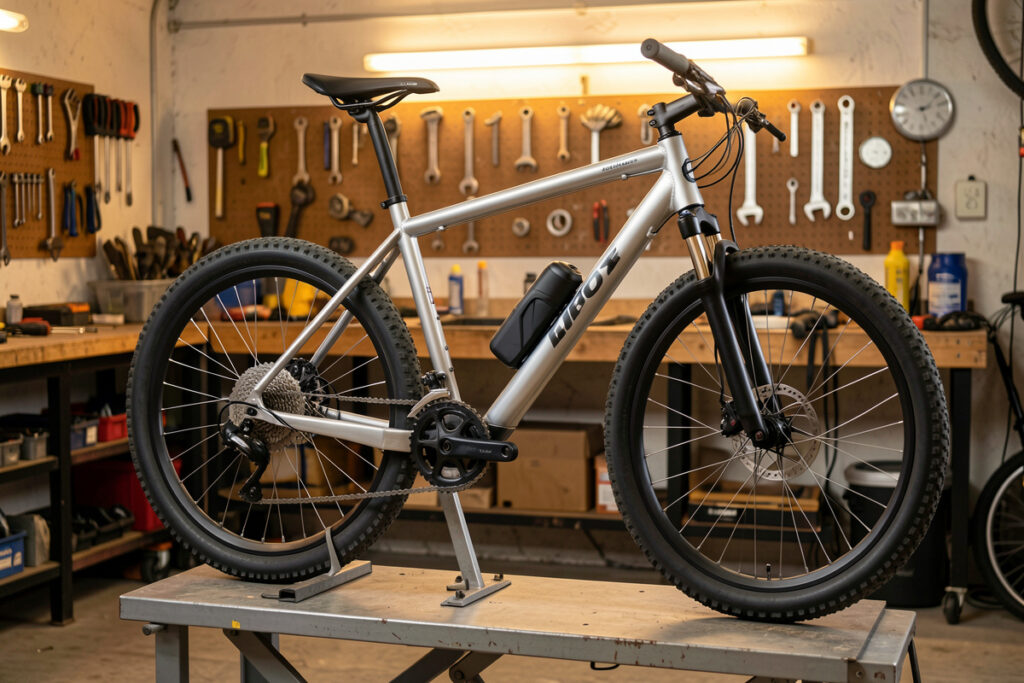
The donor bike is the frame you convert, and not every bike is a candidate. The honest shortlist: a stiff steel or quality aluminium frame, a standard bottom-bracket shell for a mid-drive or strong steel dropouts for a hub motor, disc brakes or strong V-brakes, and tyre clearance for something wider. Get the donor wrong and you’ve built a fast bike on a frame that flexes, brakes poorly, or cracks where the motor loads it.
I pick donors the way I’d buy a used bike I planned to abuse, because that’s effectively what a conversion is. This guide is the checklist I actually run before I commit a frame to a build. For the whole project context, see the e-bike conversion guide.
Frame Material and Stiffness
A motor adds torque the frame never saw from your legs alone, and it adds 6–8 kg of bike-plus-battery weight. Steel is forgiving and easy to inspect — it bends before it breaks and you can see fatigue. Quality aluminium is fine and lighter, but thin-walled budget aluminium can be a poor choice, especially around the dropouts on a hub build. I avoid carbon frames for conversions entirely; clamping and point-loading carbon with motor torque is outside what those frames were designed for.
The test I use is simple: a frame that already feels solid and tracks straight under hard pedalling is a candidate. A frame that flexes noticeably when you stomp on the pedals will flex worse with a motor. A good steel or aluminium hardtail is the safe default, and it is the frame style I steer most first-time converters toward.
The Bottom Bracket and Dropouts
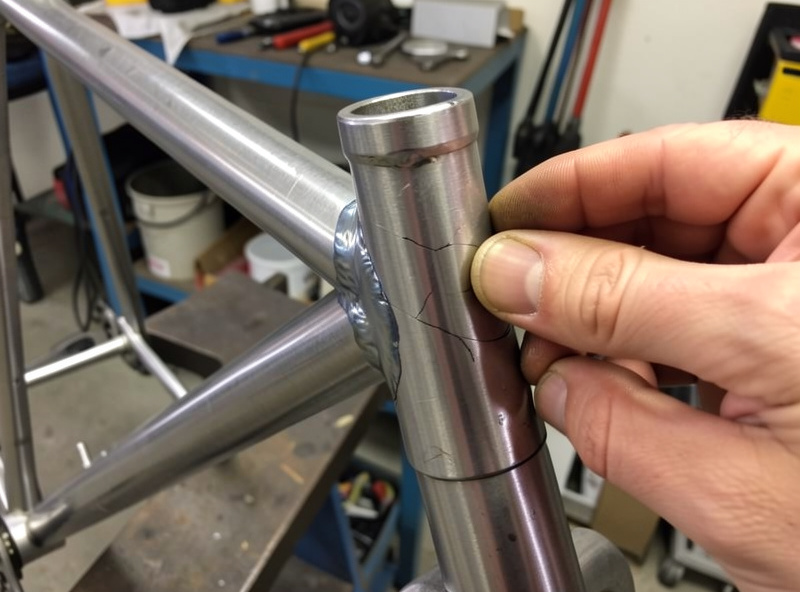
This is where the motor attaches, so it’s the make-or-break detail. For a mid-drive, you need a standard threaded bottom-bracket shell of a compatible width — measure it before you buy a kit, because proprietary, press-fit, or oversized shells can need an adapter or rule the frame out. For a hub motor, the dropouts carry the powered axle, and steel dropouts are strongly preferred over thin aluminium, which can spread or crack under the axle’s reaction torque.
On a hub build, dropouts are also where the torque arm lives — the bracket that stops the axle spinning out. I treat a torque arm as mandatory on any hub conversion, and the donor’s dropout shape and thickness decide which torque arm fits. The full fitting detail is in the torque arm installation guide. If the dropouts look marginal, that frame is a no.
Brakes: You’re Adding Speed and Weight
A converted bike is heavier and holds speed longer, so braking is a safety requirement, not a nice-to-have. Disc brakes — hydraulic ideally — are what I want on a donor. Good V-brakes can work on a lighter, lower-speed build, but rim brakes on a heavy bike in Swedish wet and winter are not enough for me. Whatever the brakes, the kit’s brake cut-off levers must integrate, so the motor stops when you grab a handful.
| Donor Feature | Ideal | Acceptable | Walk Away |
|---|---|---|---|
| Frame material | Steel / quality alu | Mid alu | Carbon, thin budget alu |
| Bottom bracket (mid-drive) | Standard threaded | Adaptable shell | Proprietary press-fit |
| Dropouts (hub) | Thick steel | Robust alu + torque arm | Thin/worn alu |
| Brakes | Hydraulic disc | Mechanical disc / strong V | Worn rim brakes |
| Tyre clearance | Room for wider tyres | Standard | Tight race clearance |
| Overall condition | Sound, low wear | Serviceable | Cracked, rusted, clapped out |
Wheels, Tyres and Clearance
A heavier, faster bike wants more rubber on the road. I look for clearance to run a wider tyre at a sensible pressure — it improves grip, comfort and puncture resistance under the extra load. For a hub conversion, the donor’s rear (or front) wheel gets replaced by the motor wheel anyway, so spoke count and rim strength on the remaining wheel matter, and a stronger rim is worth it. Tyre pressure discipline carries over from my range work; under-inflated tyres cost you both range and control.
Inspecting a Used Donor Before You Commit
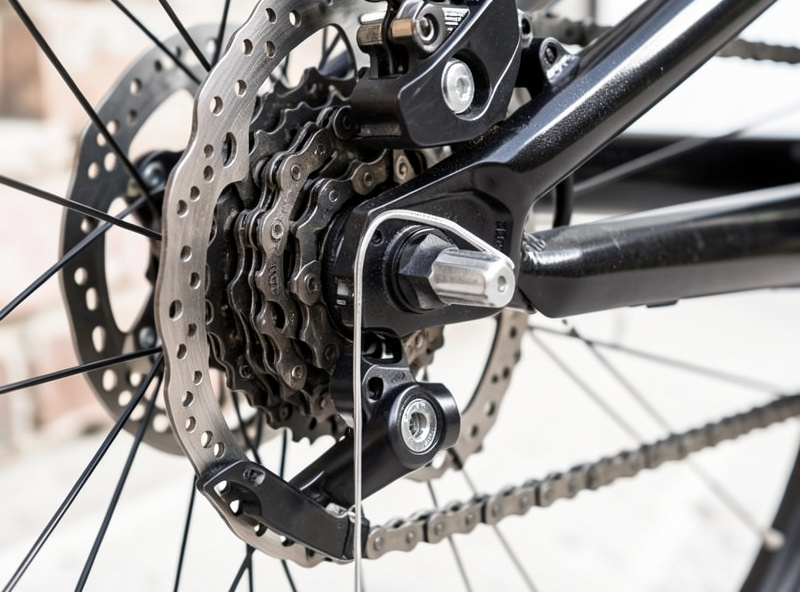
Most good donors are second-hand, so I inspect them like I would any used bike I planned to put under load. I start at the frame: I run a finger along the welds at the head tube, the bottom-bracket junction, and the dropouts, looking for hairline cracks, and I check for rust bubbling under paint on steel frames. A frame that’s been crashed hard or repaired badly is an immediate pass — motor torque finds weak joints.
Then I check the moving parts that affect the build cost. Worn-out dropouts, a seized bottom bracket, dished or cracked rims, and tired brakes all add to the bill on top of the kit. I’d rather pay a little more for a sound frame than save on a project that needs new wheels, brakes and a bottom bracket before the motor even goes on. A test ride tells you the rest: does it track straight, shift cleanly, and stop hard? If the bare bike rides well, it’ll make a good e-bike.
One detail people overlook is the rear spacing and axle standard on a hub build. Older bikes use narrower spacing than many hub motors expect, and forcing a motor into the wrong width stresses the frame. Measure the spacing and match the motor to it rather than spreading the stays — that’s the kind of shortcut that turns a donor into scrap.
Is the Frame Worth It?
The last question is economic. A conversion adds €600–€1,280 of parts to whatever the donor is worth. Putting that onto a cracked, rusted, or worn-out frame is throwing good money after bad — and it can be unsafe. I’d rather convert a solid second-hand quality frame than a brand-new big-box bike with mystery-metal dropouts and rim brakes. A good used hardtail with disc brakes is often the sweet spot: cheap to buy, sound to build on.
Once you’ve chosen the donor, the next decisions are the kit and the battery. The motor choice flows from the frame — a standard threaded shell opens the mid-drive door I prefer, covered in the Bafang kit experience — and the pack decision is in the battery pack buying guide. Match the donor to the build, not the other way around.
Mounts, Routing and the Commuter Fittings
A donor destined to be a four-season commuter needs more than a sound frame — it needs the bosses to carry the kit it will wear. I check for bottle-cage mounts on the down tube, because that is where a clean battery cradle bolts; a frame with no mounts there forces you onto a rear-rack pack, which shifts weight high and back. I also look for rack and fender eyelets at the dropouts and seatstays, because in the Swedish wet a converted bike without fenders is miserable, and a commuter without a rack is half a tool.
Cable routing is the quiet one people forget. A conversion adds a motor cable, a controller, brake cut-off leads and often a display wire, and that loom has to go somewhere tidy. Frames with external cable guides or clean ports make for a neat, rattle-free build; a frame already crammed with internal routing for a dropper post and hydraulic lines gets crowded fast. I dry-fit the kit’s main cables along the frame before I commit, looking for a route that keeps them off the moving parts and away from the chainring. It is five minutes that saves an afternoon of zip-tie regret, and it is the difference between a build that looks factory and one that looks bolted-on.
None of these fittings are deal-breakers on their own — you can add clamp-on mounts and external routing — but a donor that already has them saves money and gives a cleaner result. When I am choosing between two otherwise-equal frames, the one with the bottle bosses, the rack eyelets and sensible cable guides wins every time. It is the frame that wants to become a commuter.
Frequently Asked Questions
What makes a good donor bike for an e-bike conversion?
A stiff steel or quality aluminium frame, a standard threaded bottom-bracket shell for a mid-drive or strong steel dropouts for a hub motor, disc or strong V-brakes, and clearance for wider tyres. Overall the frame should be sound and worth the investment.
Can I convert an aluminium bike?
Yes, if it is a quality aluminium frame with robust dropouts. Avoid thin budget aluminium, especially for hub motors, because the dropouts can spread or crack under axle reaction torque. A torque arm is mandatory on any aluminium-dropout hub build.
Can you convert a carbon bike?
I avoid it. Clamping and point-loading carbon with motor torque is outside what those frames were designed for, and the failure modes are sudden. Choose a steel or quality aluminium donor instead for a conversion.
How do I know if my bottom bracket fits a mid-drive?
Measure the bottom-bracket shell width and confirm it is a standard threaded shell. Proprietary, press-fit, or oversized shells may need an adapter or rule the frame out. Check this before buying any mid-drive kit.
Do I need disc brakes for a conversion?
Strongly preferred. A converted bike is heavier and holds speed longer, so hydraulic disc brakes are ideal. Strong V-brakes can work on a lighter, lower-speed build, but worn rim brakes are not enough for a heavy bike in wet or winter conditions.