Important Disclaimer
eBikeGarageHQ provides educational content and estimates only. We are not certified installers, financial advisors, or electricians. Always consult with licensed professionals.
In the EU, a conversion kit is legal as a normal bicycle only if it meets the pedelec rules: a motor of no more than 250 watts continuous rated power, assistance that cuts off at 25 km/h, and power that only comes while you pedal. Stay inside that box and your converted bike is treated like any pushbike — no registration, no insurance requirement, no licence. Step outside it and the bike becomes a different legal category entirely, with all the obligations that brings.
I ride in Sweden under exactly these rules, and I keep my conversion configured to them on purpose. This guide explains the lines clearly so you can build legally — it’s not legal advice, and the details vary by member state, so check your national rules. For the whole build, see the e-bike conversion guide.
The EU Pedelec Rules, Plainly
The EU framework (Regulation 168/2013, with pedelecs covered by the EN 15194 standard) exempts a specific kind of e-bike from motor-vehicle type approval. To qualify, three things must all be true: the motor’s continuous rated power is 250W or less, the motor assistance cuts off once you reach 25 km/h, and the motor only assists while you are pedalling. A bike meeting all three is an EPAC — an electrically power-assisted cycle — and is legally a bicycle.
There’s one narrow allowance: a walk-assist or start-up function up to 6 km/h that works without pedalling is permitted. Beyond that, an unrestricted throttle that drives the bike up to 25 km/h without pedalling pushes you outside the pedelec definition in most member states. The power figure is “continuous rated,” not peak — a motor can briefly draw more, but its rated continuous output must be 250W. A kit sold and configured to these limits is what keeps your conversion legal.
What Happens If You Go Over the Limits
This is the part I won’t help anyone do, and the reason is consequences, not squeamishness. A bike with more than 250W of continuous power, or assistance past 25 km/h, or full throttle, generally falls into the L1e-B moped category (the speed pedelec, or S-pedelec). That isn’t a bicycle any more. In most EU countries it requires registration, insurance, a number plate, an approved helmet, and often a licence — and it’s typically banned from cycle paths.
If you derestrict a kit and ride it as if it were a bicycle, you’re operating an unregistered, uninsured motor vehicle. If you’re in a crash, your insurance may not cover you, liability falls on you, and a fast heavy bike on a shared path is a genuine danger to pedestrians and other cyclists. That’s why this site stays strictly at kit-and-bought-pack level, configured legally. The performance you gain isn’t worth what you lose.
EU vs US: Different Systems Entirely
Readers in the US work under a different framework, and it’s worth knowing if you’re comparing kits sold internationally. The US uses a three-class system with a 750W (1 horsepower) motor limit, which is why so many kits on the global market are rated well above the EU’s 250W. A kit advertised as “legal” may mean legal in the US, not the EU. Always check the continuous rated power and configure to your own jurisdiction.
| Aspect | EU Pedelec (EPAC) | US Class 1 | US Class 3 |
|---|---|---|---|
| Max motor power | 250W continuous | 750W | 750W |
| Assist cut-off speed | 25 km/h (~15.5 mph) | 20 mph (~32 km/h) | 28 mph (~45 km/h) |
| Throttle | No (6 km/h walk-assist only) | No | No |
| Registration / licence | None (as pedelec) | Usually none | Often restricted by area |
| Treated as | Bicycle | Bicycle | Bicycle (with limits) |
I cover the spec side of this split in more detail in the EU vs US spec differences article. The short version: never assume a kit’s default configuration matches your local law.
Building Legal From the Start
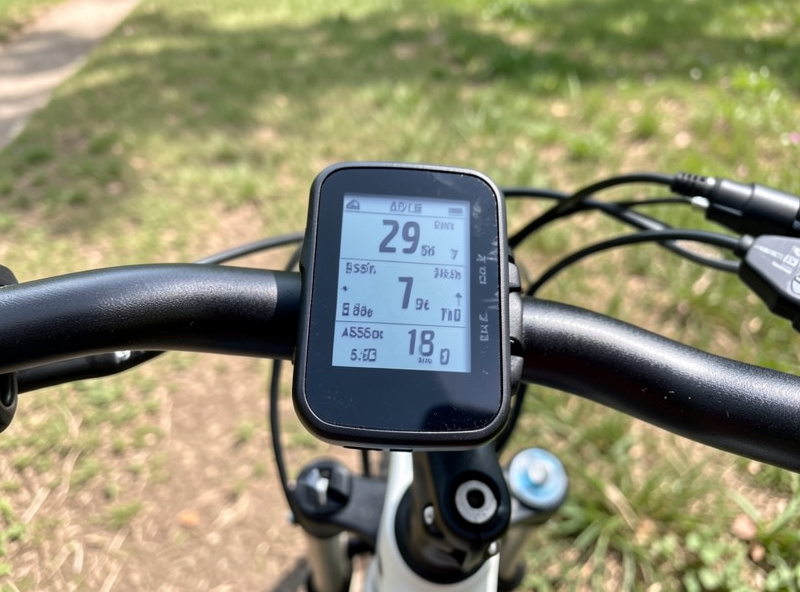
Staying legal is mostly about buying and configuring right, not restricting afterwards. Choose a kit whose motor is rated 250W continuous and that supports the EU pedelec configuration. Set the display’s wheel-size value correctly so the 25 km/h cut-off is accurate — a wrong wheel size makes the cut-off read wrong, which is both illegal and a safety issue. Run it as pedal-assist, leaving only the permitted low-speed walk function if your kit has one.
The kit choices that make this straightforward are in the Bafang mid-drive kit experience, where I describe the legal settings I run. Build it legal once and you never have to think about it again — the bike just works as a bicycle, on cycle paths, without paperwork.
National Variations Within the EU
The 250W / 25 km/h pedelec definition is the shared EU baseline, but member states layer their own rules on top, so I always tell people to confirm locally. Some countries set a minimum age for riding a pedelec; some have specific rules about where walk-assist throttles are allowed; a few treat certain throttle functions more strictly than others. Helmet rules for ordinary pedelecs differ too — recommended in some places, required for younger riders in others.
Where I am in Sweden, a legal pedelec is treated as a bicycle and the 25 km/h assist limit is the line that matters day to day. The practical takeaway is the same everywhere: the EU baseline keeps a properly configured kit legal across the bloc, but the fine print — age, helmet, exactly how throttles are handled — is national. Build to the 250W / 25 km/h / pedal-assist baseline and you’re on solid ground; then check your own country for the details that sit on top.
Insurance, Liability and Peace of Mind
Even on a legal pedelec, I think about liability. A converted bike has no manufacturer standing behind the whole machine, so build quality is on you — which is the real argument for doing the mechanical work properly, fitting a torque arm on hub builds, and using a quality bought battery. For warranty and insurance specifics, I always point people to the actual provider rather than paraphrase from memory, because those terms vary by brand and country and change over time.
Some riders carry bicycle or home-contents insurance that extends to a legal pedelec; an S-pedelec needs dedicated motor insurance. The cleanest path to peace of mind is simple: stay within the pedelec rules, build the bike soundly, and keep your documentation. The legal bike is also the safer bike, and that’s not a coincidence.
What to Document and Check Before You Ride
A converted bike that is legal on paper still needs to prove it if anyone asks, so I keep a small paper trail. Save the kit’s spec sheet showing the 250W continuous rating, note the controller’s configured speed cut-off, and keep the receipt for the battery pack. On a factory e-bike the EN 15194 conformity and CE marking live on a label; on a conversion that responsibility shifts to you, so being able to point to a 250W-rated motor and a 25 km/h limit is what stands in for it.
Before each season I re-check the one setting that quietly drifts a bike out of legality: wheel size in the display. Get it wrong and the 25 km/h cut-off reads fast or slow, which fails both the law and your own range math. I verify it against a GPS speed reading on my test loop — if the display and the GPS agree at 25 km/h, the cut-off is honest. That five-minute check is the difference between a bike that is legal in fact and one that is only legal in theory.
Frequently Asked Questions
Are e-bike conversion kits legal in the EU?
Yes, if the kit meets the pedelec rules: 250W or less continuous rated power, assistance that cuts off at 25 km/h, and power only while pedalling. A bike meeting all three is treated as a bicycle. A low-speed walk-assist up to 6 km/h is the only allowed exception.
What power motor is legal for an EU e-bike conversion?
250 watts continuous rated power is the legal maximum for a pedelec in the EU. The motor may briefly draw more, but its rated continuous output must be 250W. Many kits on the global market are rated higher for the US 750W limit, so check before buying.
Can I have a throttle on an EU conversion?
Not an unrestricted one. EU pedelec rules require power only while pedalling, with assist cutting at 25 km/h. A walk-assist or start-up function up to 6 km/h without pedalling is permitted, but a full throttle pushes the bike into the moped category in most member states.
What is an S-pedelec?
A speed pedelec (L1e-B category) assists beyond the pedelec limits, typically up to 45 km/h or above 250W. It is legally a moped: it generally needs registration, insurance, a plate, an approved helmet and often a licence, and is usually banned from cycle paths.
Do I need insurance for a legal converted e-bike?
A legal pedelec is treated as a bicycle, so no motor insurance is mandated, though some riders use bicycle or home-contents cover. An S-pedelec needs dedicated motor insurance. Always confirm specifics with the provider rather than assume, as terms vary by country.